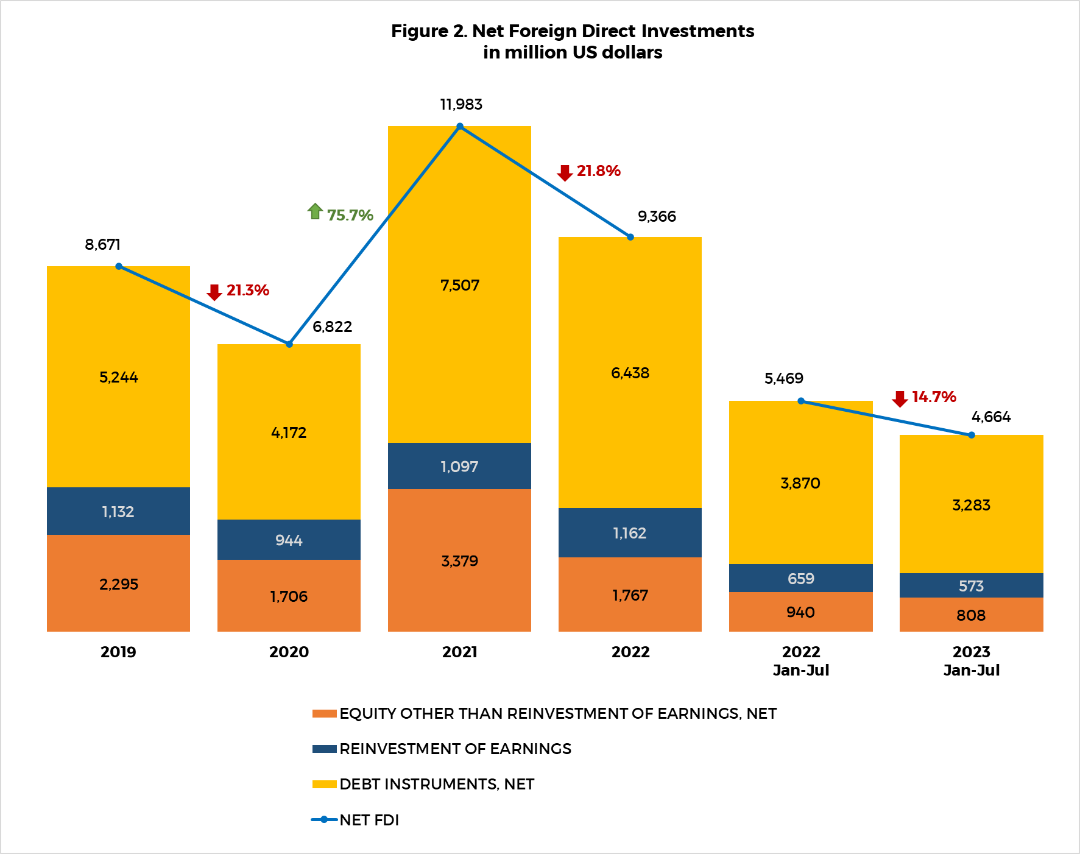
Foreign direct investments (FDI), the kind that stays for the long haul, proved weaker in the January-to-July period this year to $4.7 billion from $5.5 billion last year, the Bangko Sentral ng Pilipinas said on Tuesday.
The decline was attributed to foreign investor reluctance to engage in expansion activities amid concerns over slowing global growth.
But in July alone this year, FDI flows stood as a net inflow amounting to $753 million, up 35.7 percent from net inflows of only $555 million last year.
“The growth in FDI was mainly on account of the 108.4 percent increase in nonresidents’ net investments in debt instruments (to $575 million from $276 million), which more than offset the decrease in nonresidents’ net investments in equity capital (other than reinvestment of earnings) by 52.6 percent (to $65 million from $137 million) and their reinvestment of earnings by 20.1 percent (to $114 million from $142 million),” the BSP said.
By country of source, equity capital placements during the month came mostly from Japan, the United States, and Singapore. The investments were channeled primarily to the manufacturing, real estate and financial and insurance industries.
The authorities encourage FDIs over the more volatile portfolio investments, more known as “hot” money, which typically exits the country at the merest hint of trouble or promise of larger rewards elsewhere.
FDIs are more favored as they not only generate jobs for Filipinos but generate tax revenue for the nation’s coffers as well.