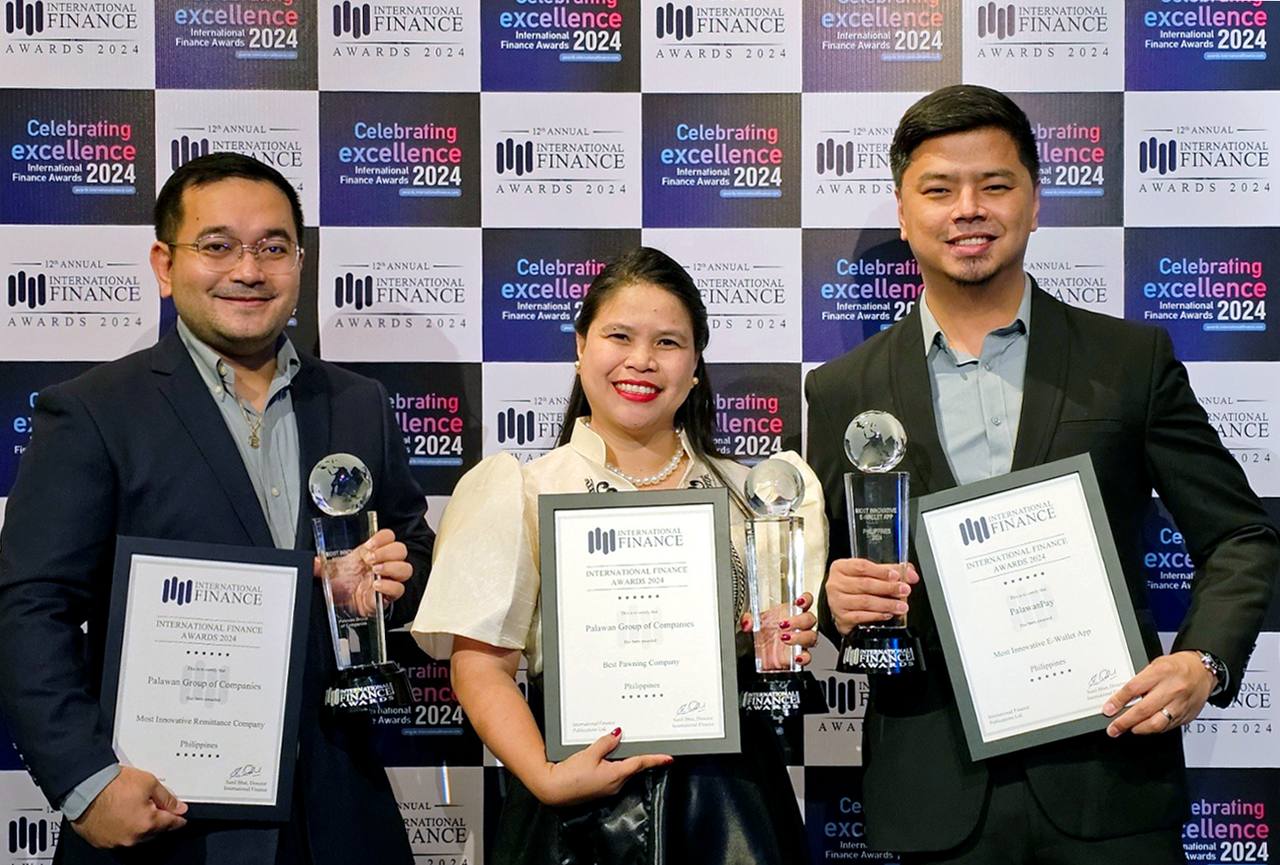
The Palawan Group of Companies capped its 40th anniversary year in 2025 with a record-breaking sweep of local and international awards, underscoring how a once-traditional pawnshop operator has evolved into a central player in the Philippines’ push for inclusive finance.
Spanning pawning, remittances, digital wallets, microinsurance, and B2B services, the recognitions reflect a business model that has stayed closely aligned with the financial realities of everyday Filipinos—especially the unbanked and underbanked.
“We are proud of these recognitions, but our work doesn’t stop here,” said Palawan Group President and CEO Karlo M. Castro. “They inspire us to push further, strengthen our commitment to service, and continue raising the bar for innovation.”
For Castro, the awards are less a victory lap than validation of a long-standing mission: serbisyo para sa Pilipino.
Palawan Pawnshop, often the first point of access to formal finance for many households, was named Best Pawning Company at the 12th International Finance Awards (IFA) 2024. Its digital pivot—through online pawn renewal and gold sales integrated into PalawanPay—also earned a Bronze Stevie Award, signaling how legacy financial services can modernize without alienating core customers.
Meanwhile, Palawan Express Pera Padala, with more than 10,000 branches nationwide, continued to dominate the remittance space, winning accolades for innovation and reach. Its scale remains a competitive moat, particularly in rural and remote areas where banking penetration is thin.
The group’s digital arm, PalawanPay, now boasting over 20 million users, was named Most Innovative E-Wallet at the IFA, reinforcing its ambition to compete with fintech-heavyweights while leveraging Palawan’s physical network.
ProtekTODO and Palawan For Business also drew recognition for innovation and community impact.
Crowned by seven Stevie Awards—including two Golds—the Palawan Group’s milestone year highlights a broader trend: financial inclusion in the Philippines is no longer just policy-driven, but increasingly market-led. As the company looks to 2026, its challenge will be sustaining innovation while staying true to the mass-market trust that fueled its rise.