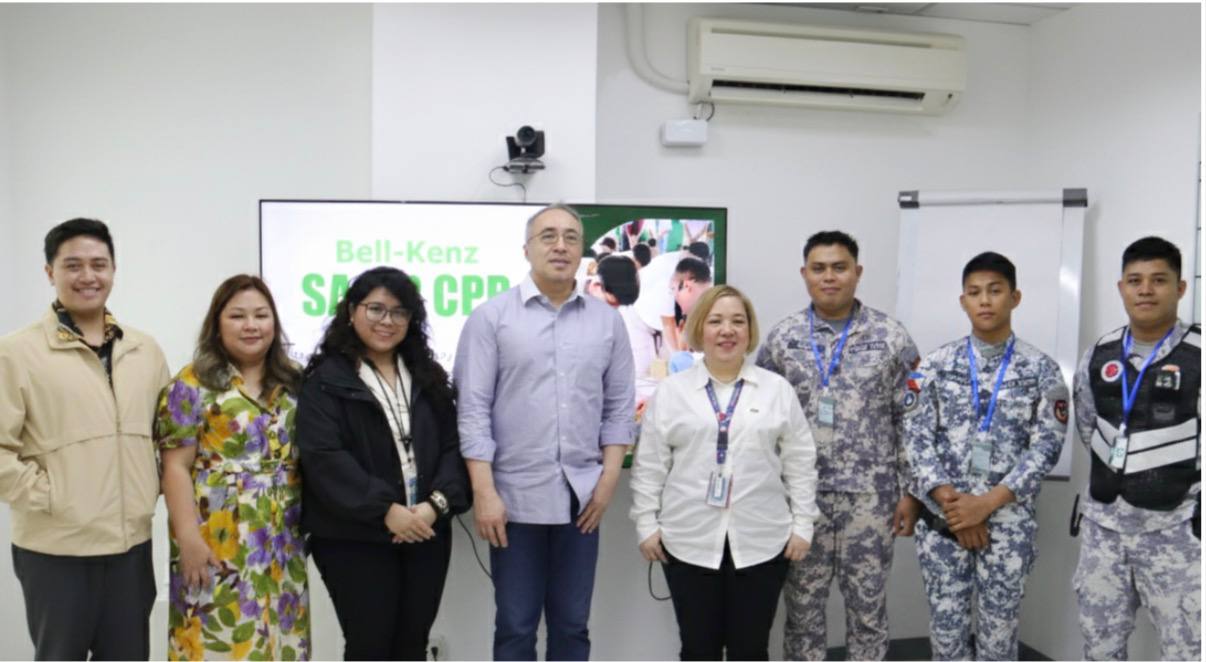
Bell-Kenz Pharma has partnered with the Department of Transportation’s Special Action and Intelligence Committee for Transportation to train one million Filipinos in cardiopulmonary resuscitation and other basic life-saving skills, with an initial focus on the country’s busiest transport hubs.
The initiative, under Bell-Kenz Pharma’s Sagip CPR advocacy, seeks to strengthen emergency response capabilities in high-traffic areas where medical incidents are most likely to occur. According to Anna Leah Morales, DOTr supervising transportation regulation officer, cardiac emergencies are reported with alarming frequency in transport terminals, underscoring the need for trained first responders on site.
Morales said the role of SAICT enforcement personnel has evolved beyond regulation and security, with officers increasingly expected to respond to medical emergencies while on duty. As a result, CPR certification has become a critical requirement for personnel deployed in transport hubs.
The first phase of the program will train 400 members of the SAICT enforcement team, who are responsible for maintaining public safety in major transport facilities. Patrick Larraga, Bell-Kenz head for Corporate Innovation, Strategy, and Experience+, said the goal is to help build a culture of life-saving within the community by prioritizing training for frontline workers.
In addition to SAICT personnel, the program will also include members of the Philippine Coast Guard, forming what organizers described as a broader support network for commuters. Training activities in the initial phase will be concentrated in Metro Manila, particularly in areas with heavy commuter volume, before expanding to cover major bus operators and terminal staff.
The Sagip CPR initiative will be rolled out in phases, with plans to extend nationwide in the coming years. Organizers said the long-term objective is to ensure that commuters across the country have immediate access to trained responders during medical emergencies.
Officials from both organizations said the partnership reflects a shared commitment to improving public safety in daily commutes. By equipping transport personnel with essential life-saving skills, the program aims not only to improve emergency response times but also to foster greater preparedness and shared responsibility among those who serve the commuting public.