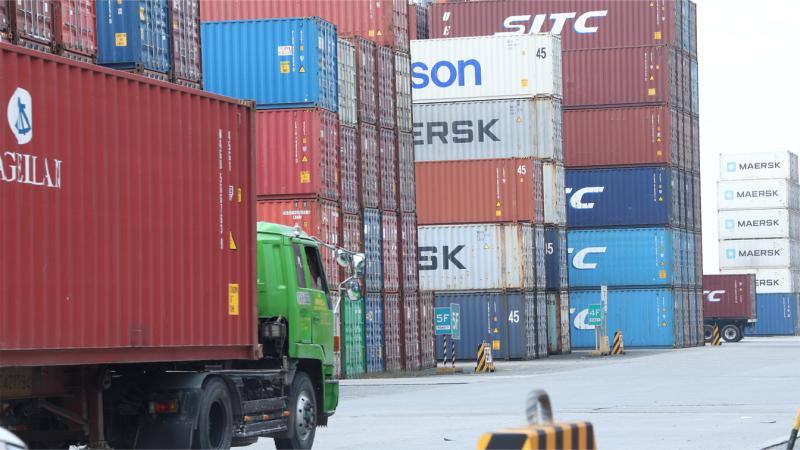
A group of customs brokers has called on the government to address rising congestion at Manila’s main ports, warning that limited space for empty containers is causing truck backlogs and slowing trade.
Data from the Philippine Ports Authority (PPA) show that as of February 12, 2026, yard utilization at the Manila International Container Terminal (MICT) reached 81.6 percent, while Manila South Harbor stood at 72.97 percent.
MICT posted higher utilization rates across all categories. Loaded containers were at 85.4 percent, while empty containers reached 79.92 percent and refrigerated containers (reefers) hit 85.32 percent. In comparison, Manila South Harbor recorded 77.57 percent for loaded containers, 68.96 percent for empty containers, and 70.66 percent for reefers.
The Philippine Chamber of Customs Brokers, Inc. (PCCBI), which represents more than 15,000 licensed customs brokers, said the main problem is the limited capacity of empty container yards. The group said trucks are unable to return empty containers due to lack of space, leaving them stranded and unable to pick up loaded cargo from terminals.
The PCCBI described the situation as a “severe truck deadlock,” adding that the delay in returning empty containers is clogging terminal space and disrupting the flow of goods.
To ease congestion, the group is urging the government to reduce the current 90-day allowance for storing empty containers to 60 days. It said the shorter period would push international shipping lines to remove overstaying containers more quickly, freeing up space and preventing further strain on port operations.
For its part, PPA general manager Jay Daniel Santiago said yard utilization levels remain manageable despite being above optimal levels. He stressed that cargo processing continues without major disruption.
Santiago said the issue lies mainly between shipping lines and truckers or brokers over the return of empty containers. He added that shipping lines should provide sufficient yard facilities to handle empty containers.
The proposal to shorten storage time, if adopted, could lead to tighter rules for shipping lines and possible changes in port policy aimed at preventing future congestion.