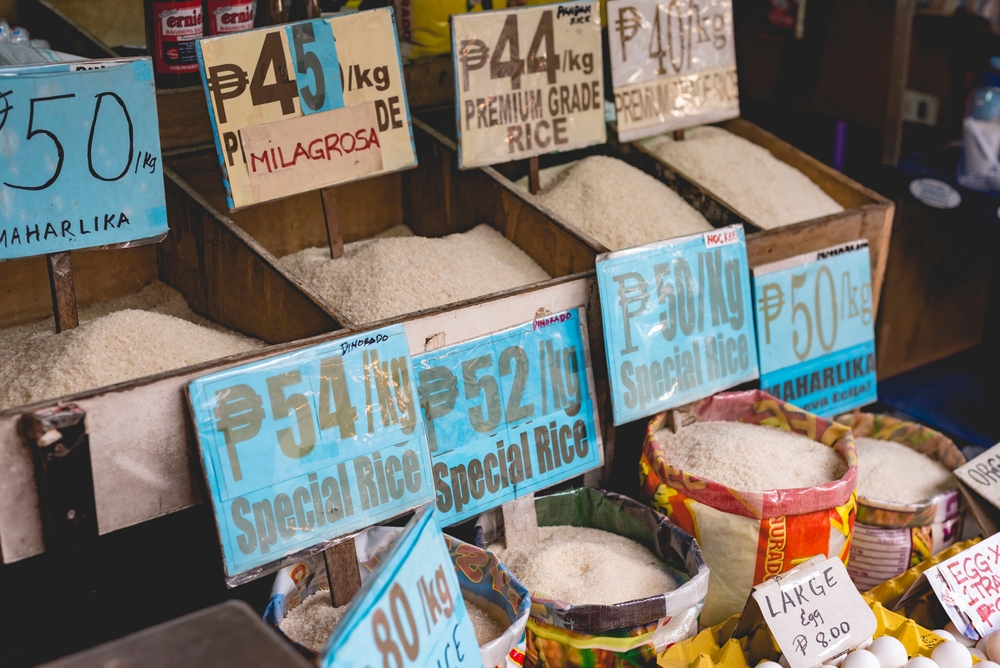
A temporary rice import ban ordered by President Ferdinand Marcos Jr. from September to December 2025 has pushed up farmgate prices of palay (unmilled rice) across the country, helping farmers recover from months of losses but raising concerns about possible higher rice prices for consumers.
Data from the Philippine Statistics Authority show that palay prices were strong in 2023 and early 2024, with dry palay selling for more than ₱22 per kilo and even exceeding ₱25 at times.
However, when rice tariffs were cut from 35 percent to 15 percent in late 2024, imports surged. Total rice imports reached 4.8 million metric tons in 2024—about 1 to 1.2 million metric tons more than needed, according to the Department of Agriculture. The influx led to oversupply and pushed farmgate prices down in 2025 to as low as ₱14 to ₱16 per kilo.
By September 2025, palay prices had dropped to around ₱15.80 per kilo, hurting farmers’ incomes and weakening incentives to plant.
Monitoring by the National Food Authority (NFA) shows that traders were buying fresh palay at ₱14.43 per kilo in early September. Prices dipped further in October due to peak harvest season but began to recover by late October.
A stronger upward trend followed in November and December, as the four-month import pause tightened local supply and changed market expectations.
By January 30, 2026, traders were paying ₱18.42 per kilo for fresh palay—about 28 percent higher than early September levels. Dry palay prices also rose steadily, ending January at ₱21.52 per kilo, nearly 22 percent higher than September.
Agriculture Secretary Francisco P. Tiu Laurel Jr. said excessive imports in previous years depressed farm prices and hurt rice producers. He emphasized that the government is not aiming to stop imports permanently, but to better match import volumes with actual supply gaps.
NFA administrator Larry Lacson welcomed the price increase, saying it benefits farmers even if it means the agency will pay more to procure rice.
While higher palay prices provide relief to farmers, they may eventually lead to higher retail rice prices if not managed carefully. Policymakers now face the challenge of balancing farmer support with consumer protection, particularly for low-income households sensitive to rice price increases.
The government said future import decisions will be calibrated to avoid both oversupply—which hurts farmers—and shortages that could trigger food inflation.
Whether the current rise in farm gate prices signals a long-term correction or a short-term adjustment will depend on how closely future rice imports match domestic demand in the months ahead.