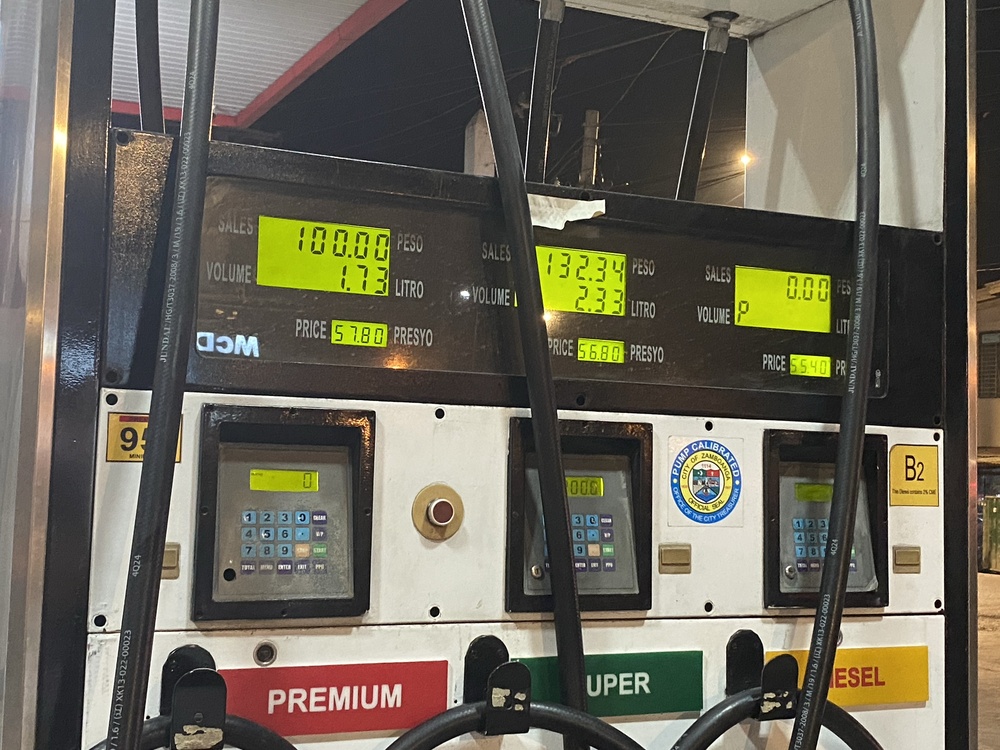
Fuel prices are set to rise again this week, marking what could be the sixth straight increase this year, according to Jetti Petroleum Inc..
The company said gasoline prices may go up by P1 to P1.20 per liter, while diesel could increase by P0.30 to P0.50 per liter based on last week’s global crude oil trading. Kerosene prices may also climb by as much as P0.25 per liter, based on projections by the Department of Energy (DOE).
Jetti president Leo Bellas said the continued increases are largely due to global oil price volatility caused by tensions between the United States and Iran. Western sanctions on Iran and tariff threats against countries buying Iranian goods have tightened global supply, pushing prices higher.
He added that supply disruptions have also affected diesel prices, as Europe shifts away from Russian-origin fuel to comply with sanctions. Gasoline prices, meanwhile, are being supported by strong regional demand and increased seasonal consumption ahead of the Lunar New Year.
The DOE’s Oil Industry Management Bureau director, Rodela Romero, confirmed that kerosene prices are also likely to increase based on recent trading data.
Fuel companies had already implemented price hikes last week, raising gasoline and kerosene by P0.60 per liter and diesel by P1 per liter.
So far this year, gasoline prices have gone up for five straight weeks, while diesel and kerosene have increased for six consecutive weeks. Year-to-date, gasoline prices have risen by P3 per liter, diesel by P6.40 per liter, and kerosene by P4.40 per liter.
As of February 10 to 16, 2026, pump prices in Metro Manila averaged P53.50 per liter for RON 91 gasoline, P56 for diesel, and P82.87 for kerosene.
For households, the continued increases mean higher transportation and electricity costs, as fuel is widely used in public transport and power generation. For businesses, especially those in logistics, agriculture, and manufacturing, rising fuel costs could lead to higher operating expenses, which may eventually be passed on to consumers through higher prices of goods and services.