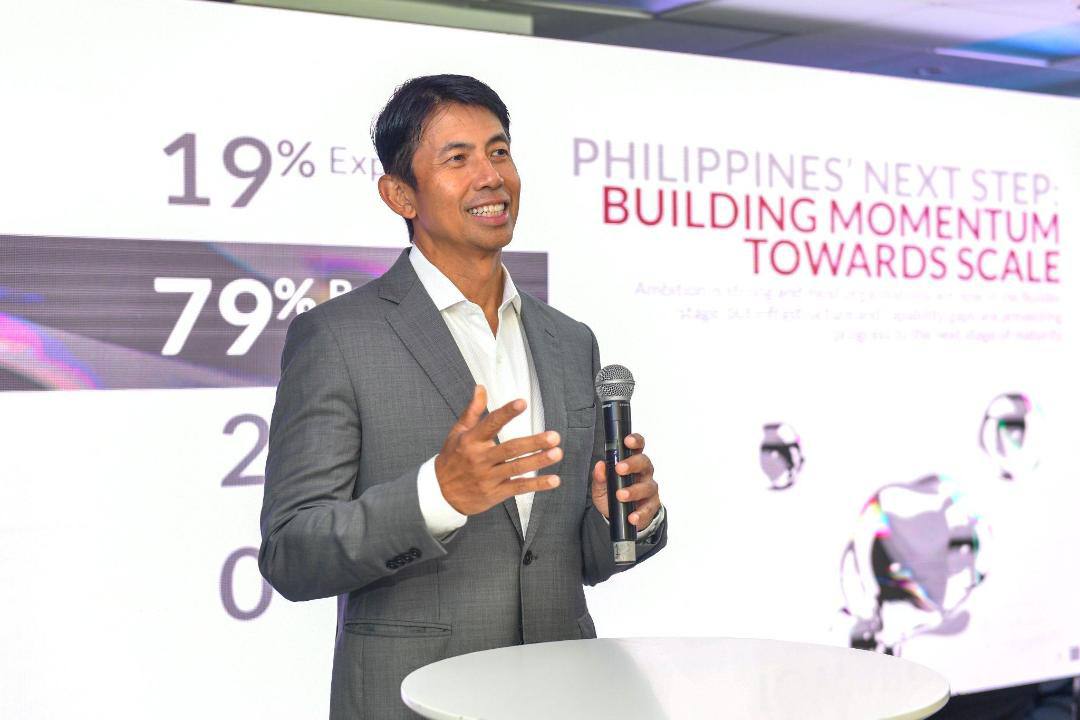
A new study by ST Telemedia Global Data Centres (STT GDC) finds that companies in the Philippines are eager to adopt artificial intelligence (AI) but face major challenges in expanding its use.
The report shows that 79 percent of Philippine organisations are already in the “builder” stage, meaning they are testing and using early AI solutions. However, only 2 percent have advanced to a more mature “integrator” level, and none have reached the highest “leader” stage. Meanwhile, 19 percent are still in the early “explorer” phase.
The biggest obstacle is limited infrastructure. About 71 percent of respondents said they lack enough computing power, storage, or network capacity to support more advanced AI systems. The same percentage also reported issues like slow speeds and network bottlenecks, which affect performance.
A shortage of skilled workers is also a major concern. Around 76 percent of organisations said they lack AI talent, and more than half admitted they do not have enough in-house expertise to manage complex AI systems. In addition, 94 percent described their workplace attitude toward AI as cautious or uncertain.
Carlo Malana, head of STT GDC Philippines, said companies are investing in AI but are hitting limits due to infrastructure gaps and lack of expertise, making it hard to scale projects beyond initial testing.
Looking ahead, demand for AI is expected to rise sharply. Nearly half of respondents expect their AI workloads to grow by more than 50 percent in the next one to three years. However, only 3 percent believe they are ready to handle that level of growth. At the same time, 86 percent of organisations spend 5 percent or less of their IT budgets on AI, raising concerns about future preparedness.
The study, conducted by Ecosystm, surveyed organisations across Asia and assessed their AI readiness based on strategy, infrastructure, and workforce capability.