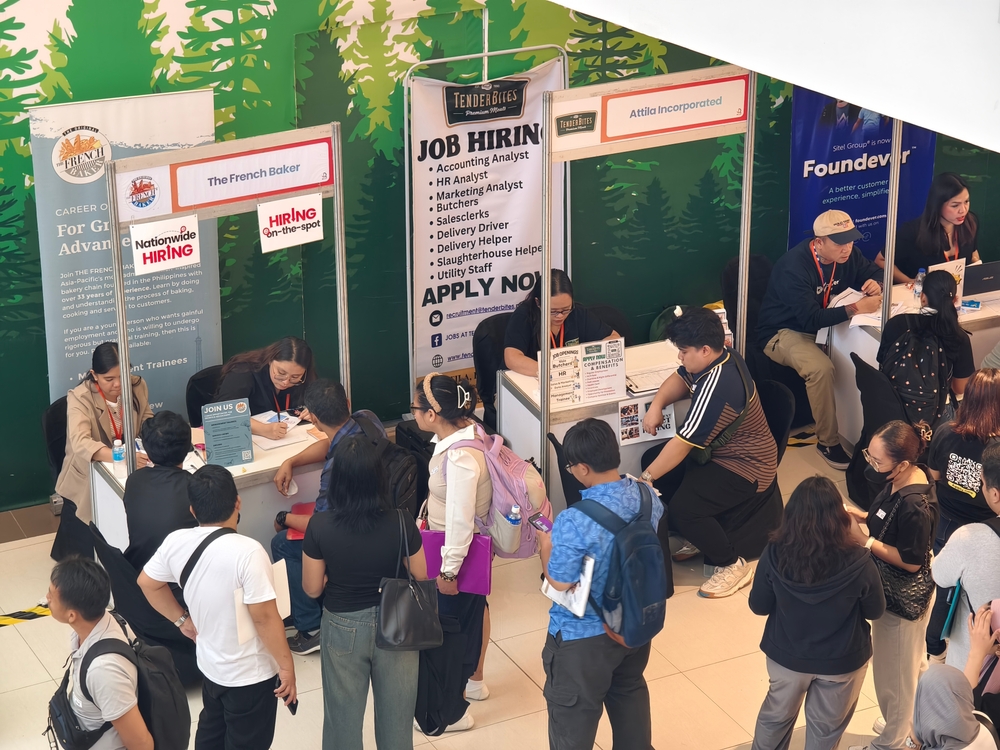
The Philippines’ unemployment rate rose to 4.7 percent in April as the economy failed to keep up with the increase in the number of Filipinos joining the workforce.
Data from the Philippine Statistics Authority showed the unemployment rate increased from 4.1 percent a year earlier, although it improved from January’s 5.8 percent. In actual numbers, 2.41 million Filipinos were unemployed in April, up from 2.06 million a year ago but down from 2.96 million in January.
Employment remained relatively robust, with the employment rate at 95.3 percent. The number of employed Filipinos rose to 48.89 million from 48.67 million a year earlier and 47.94 million in January.
Yet the headline employment figure masks a more nuanced picture.
While more Filipinos found work, a growing number remained dissatisfied with the quality or quantity of available jobs. The underemployment rate climbed to 15.2 percent from 14.6 percent a year ago and 13.2 percent in January, translating to 7.41 million workers seeking additional hours, extra jobs, or better-paying employment.
The figures suggest that job creation continues, but not always in forms that provide sufficient income or stable working conditions.
The services sector remained the country’s largest employer, accounting for 62.3 percent of total employment, followed by agriculture at 19.4 percent and industry at 18.3 percent.
Among industries, accommodation and food service activities led annual job gains with 510,000 additional workers, followed by manufacturing, transportation and storage, mining, and education.
However, some of the country’s biggest employers continued to shed jobs. Wholesale and retail trade lost 450,000 positions year on year, while agriculture and forestry shed 392,000 jobs. Fishing and aquaculture also posted significant declines.
Another area of concern was youth employment. The share of young Filipinos not in education, employment, or training rose to 12.2 percent from 10.6 percent a year earlier.
Taken together, April’s labor data point to an economy that is generating jobs, but still struggling to create enough quality employment to keep pace with a growing workforce.