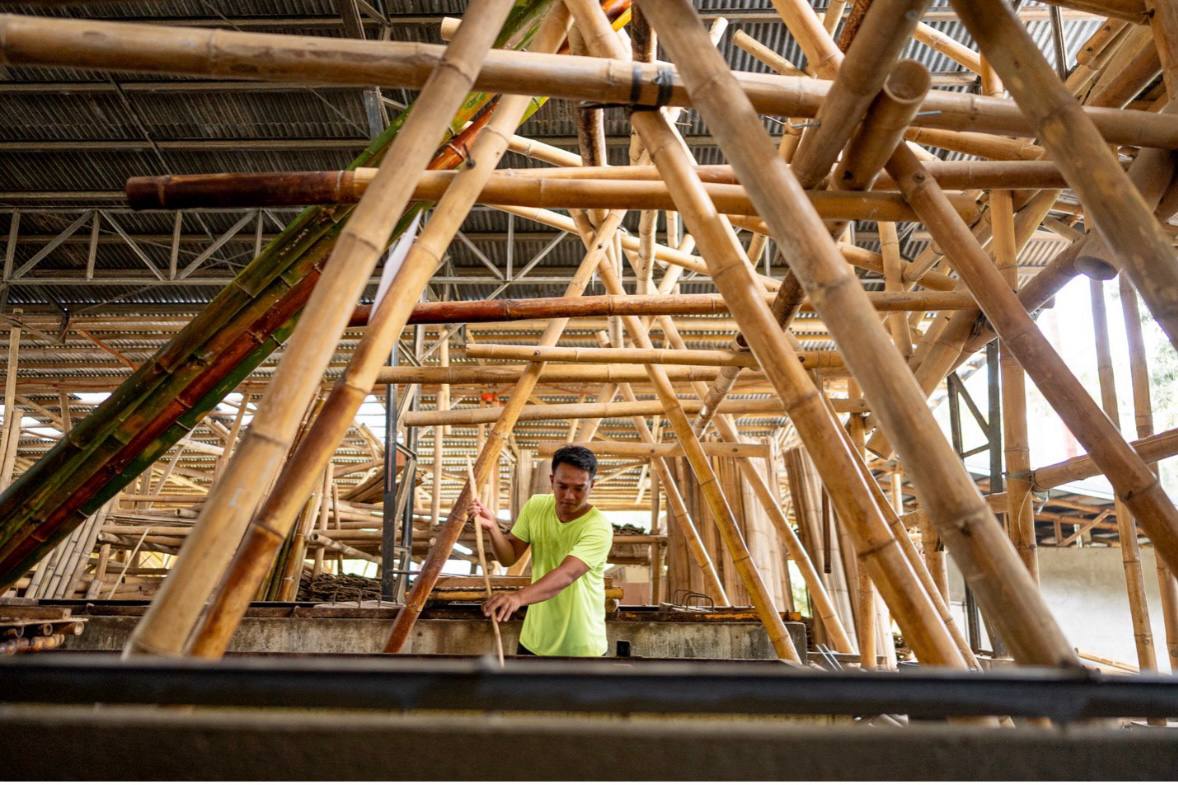
Bamboo is the world’s most renewable building material — it matures in 3–5 years, regrows without replanting, and absorbs carbon. Yet it is rarely used in the Philippines’ growing urban areas, even as the construction industry faces urgent pressure to cut emissions. Globally, buildings account for around 37 percent of energy and process-related carbon dioxide output, making bamboo a promising low-carbon alternative to traditional materials like timber, steel, and concrete.
According to the Base Bahay Foundation (BASE), the problem is not the material itself — but the lack of a proper system to support its use. “We have been asking bamboo to perform inside a construction system that was never designed to support it,” said BASE general manager Luis Felipe Lopez.
To change this, BASE is building a full ecosystem across three key areas:
Reliable engineering: Its Cement-Bamboo Frame Technology and standardized processes ensure consistent performance, meeting safety and quality standards. The group also helps develop official regulations and certifications.
Stable supply chain: Partnerships with businesses create infrastructure for harvesting, treatment, and prefabrication, turning bamboo into a consistent, traceable building resource.
Skilled workforce: Through its Bamboo Academy, BASE trains architects, engineers, and workers in proper bamboo construction techniques.
With the global bamboo industry already worth over US$72 billion and Philippine developers increasingly seeking sustainable options to meet environmental goals, bamboo holds huge untapped economic and climate benefits. As Lopez notes: “We are not just promoting a material; we are engineering an ecosystem.” Now, wider adoption depends on developers, policymakers, and builders embracing this proven green solution.