The Bureau of Internal Revenue (BIR) posted stronger-than-expected revenue collections in May, buoyed by the extended tax filing season and continued taxpayer compliance despite disruptions caused by the recent energy crisis.
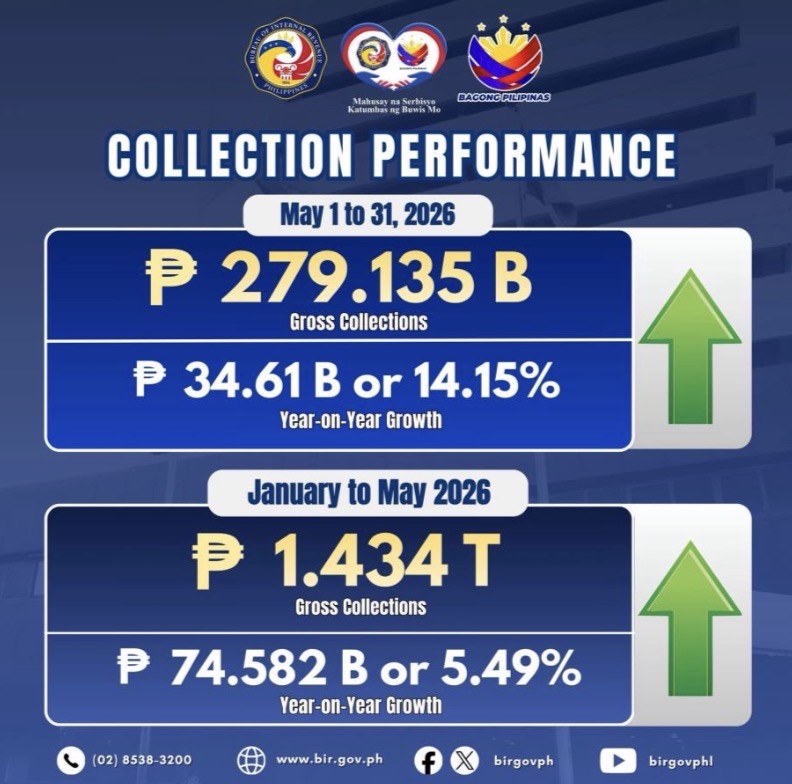
The agency collected P279.14 billion in gross revenues in May 2026, up 14 percent from a year earlier and P34.61 billion higher than collections in the same month last year. The figure also surpassed the BIR’s P279.06-billion target by P78.22 million.
The double-digit growth marks one of the Bureau’s strongest monthly performances this year and suggests that tax collections remain resilient despite economic headwinds, providing the government with a steady source of funding for public spending and infrastructure programs.
BIR Commissioner Charlito Martin R. Mendoza attributed the result partly to the extension of the filing season, which gave taxpayers additional time to meet their obligations during a period marked by power and internet disruptions.
“The extension granted by President Ferdinand R. Marcos Jr. helped taxpayers manage their finances and comply with their tax obligations in a more orderly manner during this energy crisis,” Mendoza said.
He also credited revenue officers and frontline personnel for maintaining services despite operational challenges in several areas.
The strong May performance lifted the BIR’s January-to-May gross collections to P1.434 trillion, an increase of 5.5 percent or P74.58 billion from the same period last year. Collections for the first five months of 2026 also exceeded the agency’s P1.424-trillion goal by P9.71 billion.
The latest figures come as the BIR accelerates its modernization and compliance initiatives under its DARES reform agenda. In May, the Bureau launched a new Taxpayer Portal for large taxpayers, introduced QR-enabled Certificates of Registration for online businesses, streamlined business closure procedures, and rolled out measures implementing the country’s revised mining royalty regime.
“The May results show that revenue growth and BIR DARES reforms can move together,” Mendoza said.
The latest collections suggest that digitalization and process reforms are beginning to complement traditional enforcement efforts, helping the tax agency expand revenues while making compliance easier for businesses and individual taxpayers.