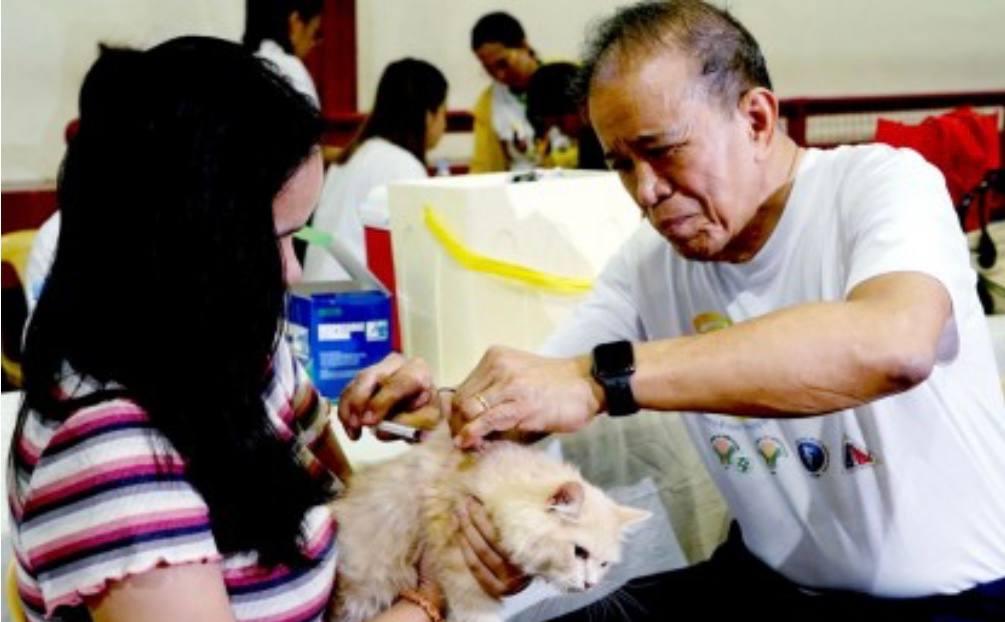
The Department of Agriculture (DA) has launched the Animal Vaccine Development Program to create homegrown animal vaccines, aiming to protect the livestock industry and boost food security.
Agriculture Secretary Francisco Tiu Laurel Jr. led the agreement signing on Monday. Partners include the DA-National Livestock Program, Bureau of Animal Industry, Philippine Carabao Center, and Central Luzon State University.
The program has a P140.9-million budget for 2026–2028: P77.6 million this year, P30.6 million in 2027, and P32.7 million in 2028. It targets vaccines against African Swine Fever (ASF) and foot-and-mouth disease (FMD), plus stronger research capacity.
Local vaccines will be tailored to local virus strains, making them potentially more effective than imported ones. A Biosafety Level 3 facility will also be built to safely handle dangerous pathogens and speed up development.
The move responds to recurring outbreaks: ASF has cost billions and reduced hog numbers, while avian flu has led to mass culling and supply gaps. Though the Philippines is FMD-free, nearby outbreaks remain a threat.
“This shifts our focus from crisis response to long-term protection,” said Tiu Laurel. He added that science and collaboration will help farmers, businesses, and communities.
Latest data shows recovery: first-quarter hog production rose 6.4 percent to 428.92 MT, and chicken output grew 5.8 percent to 585.47 MT. Still, as of June 5, 2026, ASF remains in 5 regions, 7 provinces, and several localities. Bird flu is active in 11 regions, 15 provinces, and more than 200 cities/municipalities and villages.
DA hopes the program will cut future losses, restore confidence, and stabilize meat supplies and prices.