Accelerating power sector reforms could slash electricity prices, create more than 161,000 jobs and lift about 730,000 Filipinos out of poverty by 2030, with the World Bank arguing that lower energy costs may be one of the country’s biggest catalysts for faster and more inclusive economic growth.
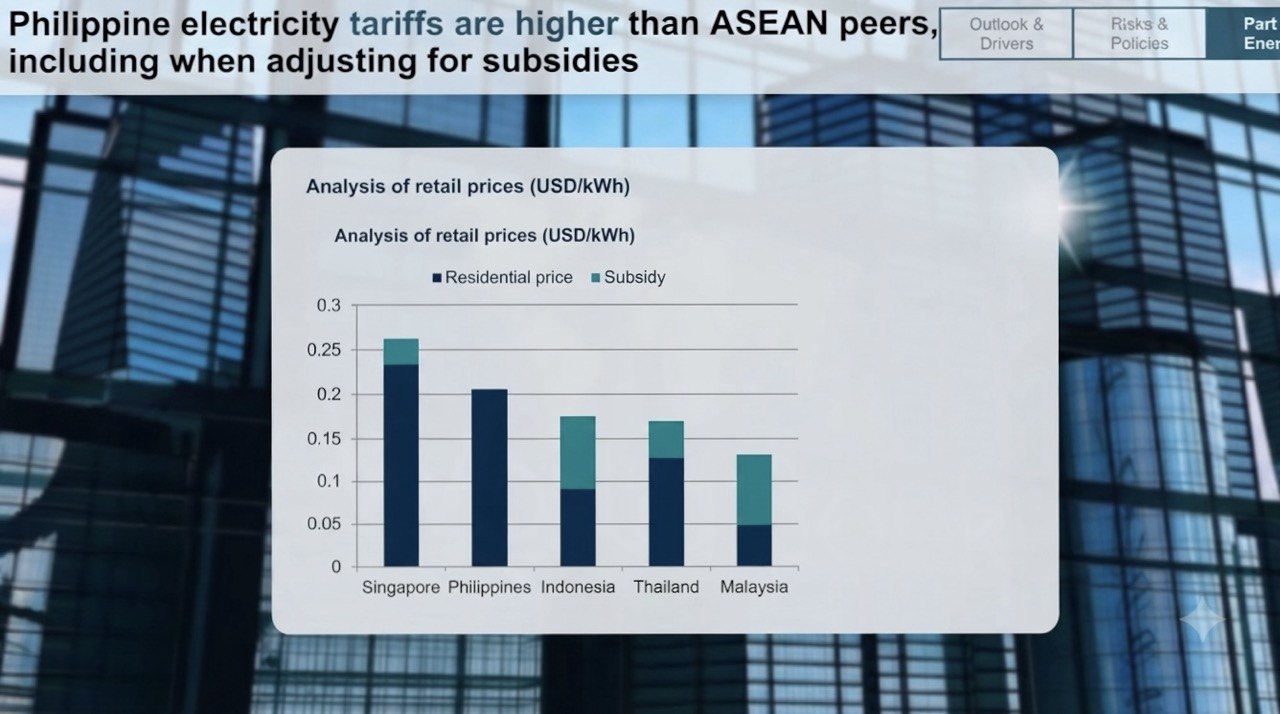
Presenting the latest Philippine Economic Update, World Bank Senior Country Economist Jaffar Al-Rikabi said the Philippines’ high electricity prices are driven by structural inefficiencies, not by a lack of government subsidies.
“It’s not a subsidy story; it’s a how do we lower electricity prices and boost growth story,” Al-Rikabi said, noting that Philippine power rates remain among the highest in the region even after accounting for energy subsidies in neighboring countries.
The report said faster execution of existing energy policies, including speeding up renewable energy projects, expanding transmission networks and strengthening competition in the electricity market, could reduce residential electricity tariffs in Luzon by as much as 28 percent between 2026 and 2030.
The benefits extend well beyond lower utility bills. More affordable electricity would strengthen the competitiveness of manufacturers and other energy-intensive industries, lowering production costs and encouraging business expansion.
“These reforms would add roughly 161,000 jobs in the economy. These are good jobs in sectors like manufacturing that improve productivity and have good wages,” Al-Rikabi said.
The World Bank estimates the reforms would also increase Philippine gross domestic product by more than 1 percent by 2030 while lifting around 730,000 people out of poverty.
Al-Rikabi said the projections are conservative because they do not yet factor in the longer-term gains from stronger investment, higher productivity and increased foreign direct investment that typically follow lower energy costs.
“The key insight is this is about execution of existing plans and existing policies already in place. Should implementation improve, we should expect faster, more inclusive growth and job creation,” he said.
The biggest hurdle is no longer identifying what needs to be done, but delivering reforms already on the books. If implemented decisively, cheaper electricity could become one of the Philippines’ most powerful economic advantages rather than one of its biggest competitive weaknesses.