The Philippine Economic Zone Authority (PEZA) and Oman’s Public Authority for Special Economic Zones and Free Zones (OPAZ) have identified four priority industries for deeper investment cooperation, as both countries seek to strengthen trade and position their economic zones as complementary gateways to regional markets.
The priority sectors include food manufacturing, pharmaceuticals and consumer health, plastics and the circular economy, and high technology and electronics.
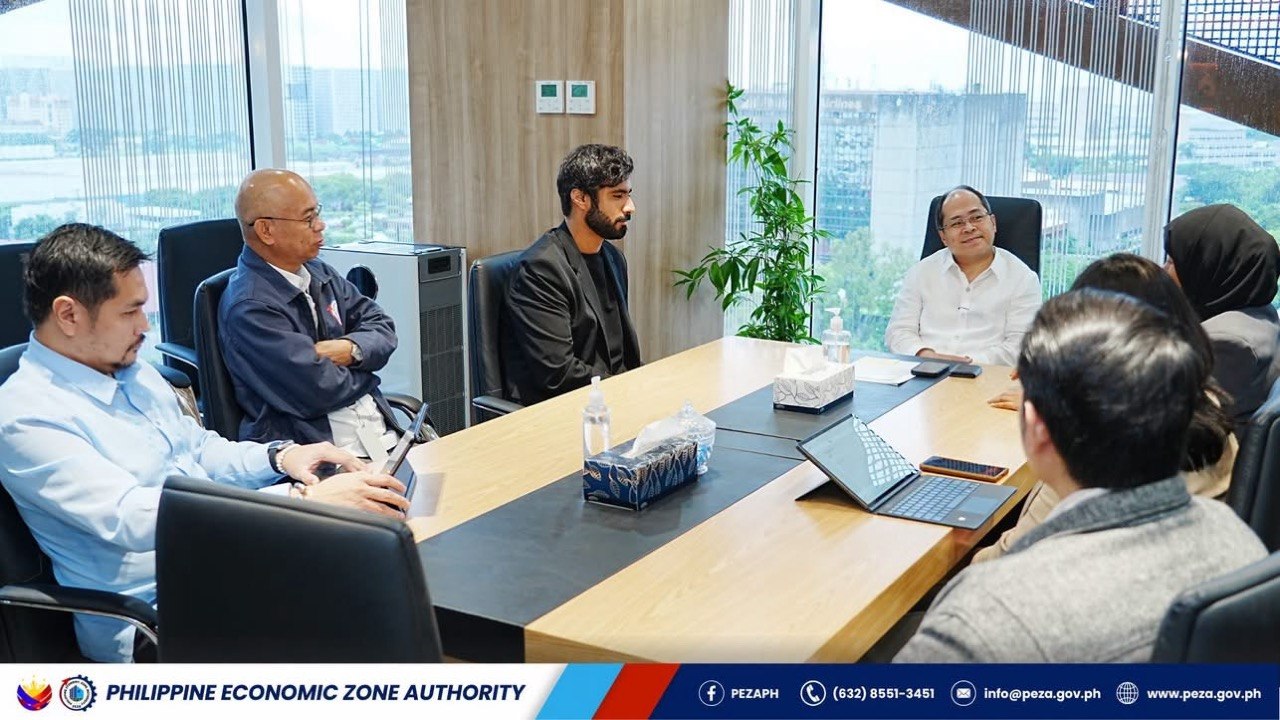
The areas of cooperation were identified during a meeting between PEZA Director General Tereso O. Panga and officials from OPAZ and SOHAR Port and Freezone following the Oman-Philippines Investment Forum 2026 in Makati.
The discussions reflect a broader strategy of linking the Philippines’ manufacturing base with Oman’s strategic location along global shipping routes. Under the proposed partnership, Philippine economic zones would serve as production hubs for Southeast Asia, while SOHAR Port and Freezone would provide Philippine manufacturers access to markets across the Gulf Cooperation Council, the Middle East, Africa and Europe.
PEZA and OPAZ are also exploring a Joint Promotion Memorandum of Understanding that would enable both investment promotion agencies to jointly market their respective economic zones and facilitate greater cross-border business activity.
Panga said the partnership goes beyond attracting capital, with the ultimate objective of generating jobs and expanding economic opportunities for Filipinos.
“Beyond attracting investments, our goal is to create opportunities that translate into jobs, better livelihoods, and greater economic opportunities for our Filipino people,” he said.
PEZA highlighted its network of 436 economic zones hosting 4,388 locator companies, offering investors streamlined government services, modern infrastructure and competitive fiscal and non-fiscal incentives. The agency is actively promoting investments in advanced manufacturing, electronics and semiconductors, renewable energy, pharmaceuticals, medical devices, halal food production, logistics and eco-industrial parks.
For its part, SOHAR Port and Freezone showcased its growing industrial ecosystem covering logistics, petrochemicals, food processing, plastics, pharmaceuticals, high technology and clean energy projects, including hydrogen, renewable energy and carbon capture.
The discussions signal PEZA’s continued effort to diversify the Philippines’ investment partnerships beyond traditional markets, leveraging strategic alliances with Middle Eastern economies to expand export opportunities and strengthen the country’s role in regional manufacturing and supply chains.