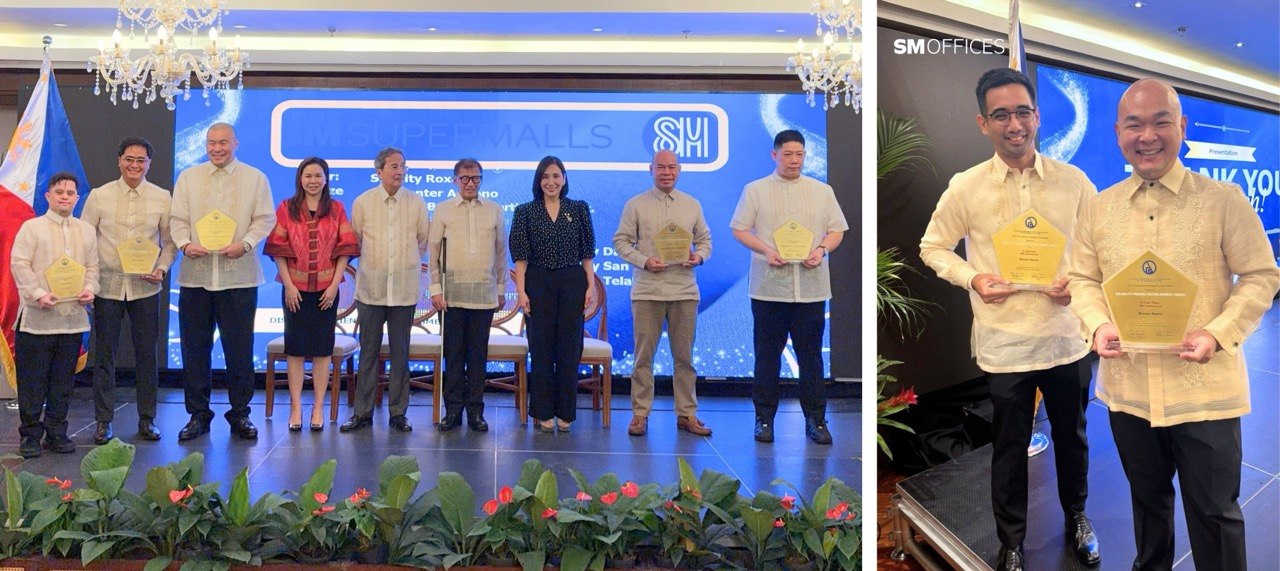
SM Prime Holdings Inc. strengthened its position as one of the country’s leading advocates of accessible infrastructure after receiving 14 distinctions at the 31st Apolinario Mabini Awards, reflecting the growing importance of inclusive design in Philippine real estate.
The recognition, up from 10 awards in the previous cycle, highlights the property giant’s continued investments in making its malls and office developments more accessible to persons with disabilities (PWDs) as accessibility becomes an increasingly important benchmark for modern property developments.
Organized by the Philippine Foundation for the Rehabilitation of the Disabled Inc. since 1974, the biennial Apolinario Mabini Awards honor organizations that promote the rights, welfare, and inclusion of PWDs through barrier-free facilities and accessible design.
“These awards affirm our commitment to creating spaces where everyone can participate fully and independently,” said SM Prime President Jeffrey C. Lim.
“As our portfolio grows, accessibility will remain central to how we design, build and operate our developments,” he added.
SM Supermalls accounted for 12 of the company’s 14 awards, underscoring ongoing investments in upgrading both new and existing properties.
SM City Bicutan and SM City Fairview received Special Awards on Expansion for Substantial Compliance with Batas Pambansa Blg. 344, while SM City Dasmariñas, SM City San Pablo, SM City Telabastagan, SM City Urdaneta Central, and SM City Tarlac earned Special Awards for Correcting Deficiencies.
Bronze Awards went to SM City East Ortigas, SM City Sto. Tomas, SM City Bacolod North Block Extension, and SM Center Angono, while SM City Roxas received a Silver Award.
Beyond retail, SM Offices secured two Bronze Awards for Three E-Com Center and Five E-Com Center at the Mall of Asia Complex. The buildings are part of the six-tower E-Com Campus, which combines Grade A office spaces with accessibility features and sustainable building elements.
The awards underscore a broader shift in the property sector, where accessibility is increasingly viewed not simply as a regulatory requirement under Batas Pambansa Blg. 344 but as a key component of environmental, social, and governance commitments. For developers, designing spaces that are inclusive from the outset is becoming an important measure of long-term asset quality and community impact.