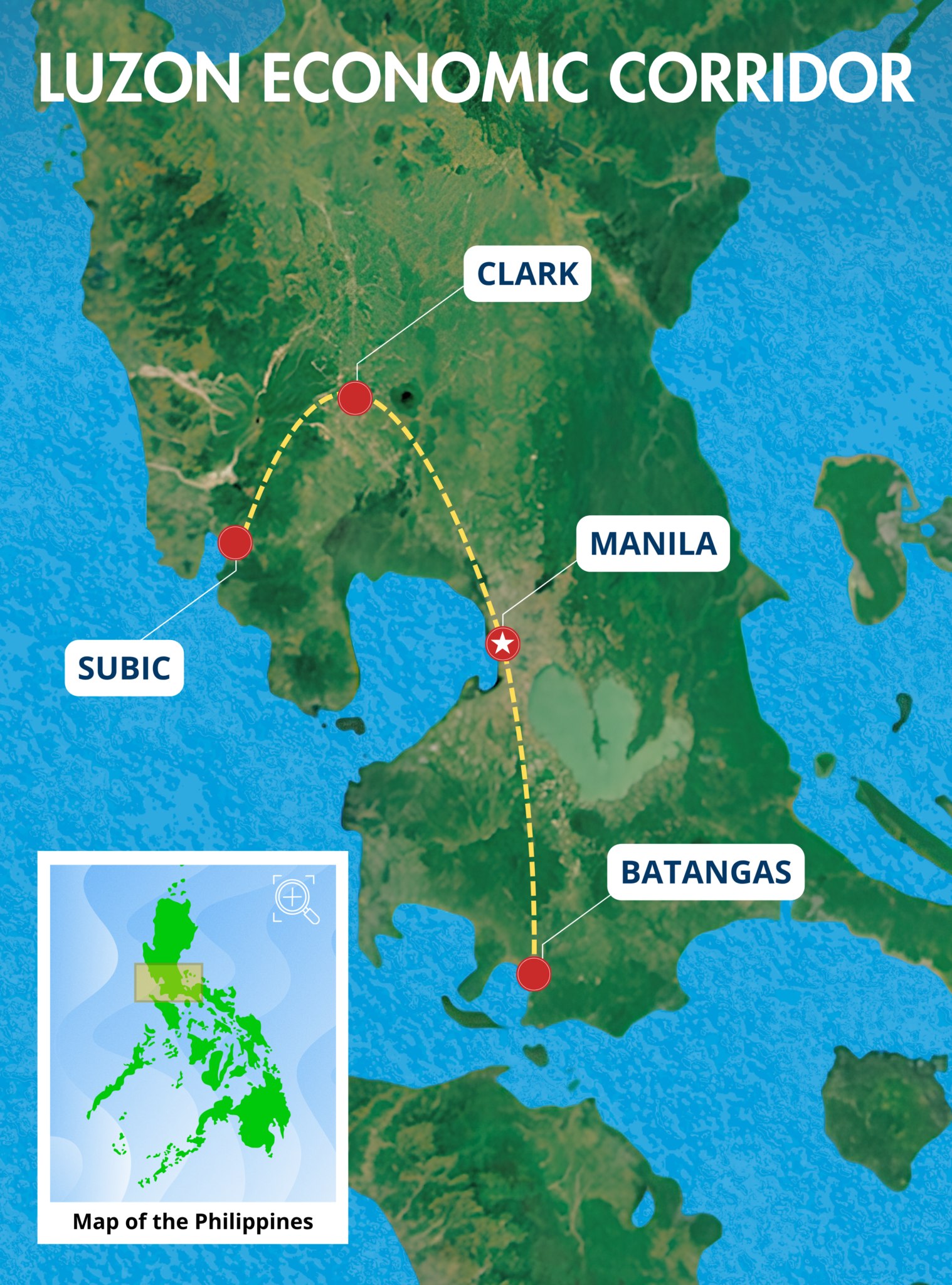
The US, the Philippines, and Japan will bring investors together in Manila in September as they seek to turn the Luzon Economic Corridor into a bigger magnet for private capital and strategic infrastructure projects.
The three countries will co-host the inaugural Luzon Economic Corridor Investment Forum on Sept. 10-11, 2026, with about 600 international investors, industry leaders, project developers, and government officials expected to attend.
Sponsored by the US Trade and Development Agency, the two-day forum will showcase projects and connect potential financiers with investment opportunities in advanced manufacturing, digital connectivity, energy, transportation, and logistics.
“America’s leadership in the Indo-Pacific is built on trusted partnerships and a shared commitment to secure, high-quality infrastructure,” USTDA Deputy Director Thomas R. Hardy said.
The forum will feature project showcases, panel discussions, breakout sessions, an expo, a deal-making room, networking activities, and site visits to prospective projects in Subic Bay, Clark, and Batangas.
Partner countries including Australia, Canada, Denmark, France, Italy, South Korea, Sweden, and the United Kingdom are also expected to participate.
The forum comes as the Philippines seeks to translate its infrastructure ambitions into projects that can attract private financing. Bringing investors into the same room as project developers and government agencies could help narrow one of infrastructure’s perennial gaps, the distance between projects on paper and projects that can actually secure funding.
The corridor links Subic Bay, Clark, Manila, and Batangas, covering an economic belt that accounts for about half of Philippine gross domestic product and serves as a major center for manufacturing, logistics, and trade.
Investors will also receive updates on the country’s investment climate, economic priorities, and policy reforms.
The strategic pitch is clear. The Philippines offers the geography, markets, and workforce, while the United States and Japan bring capital, technology, and infrastructure expertise.
The harder sell will be execution. Turning the corridor into a competitive investment platform will depend not only on the projects showcased in September, but also on whether approvals, financing, and construction can move with enough speed to keep investors interested.