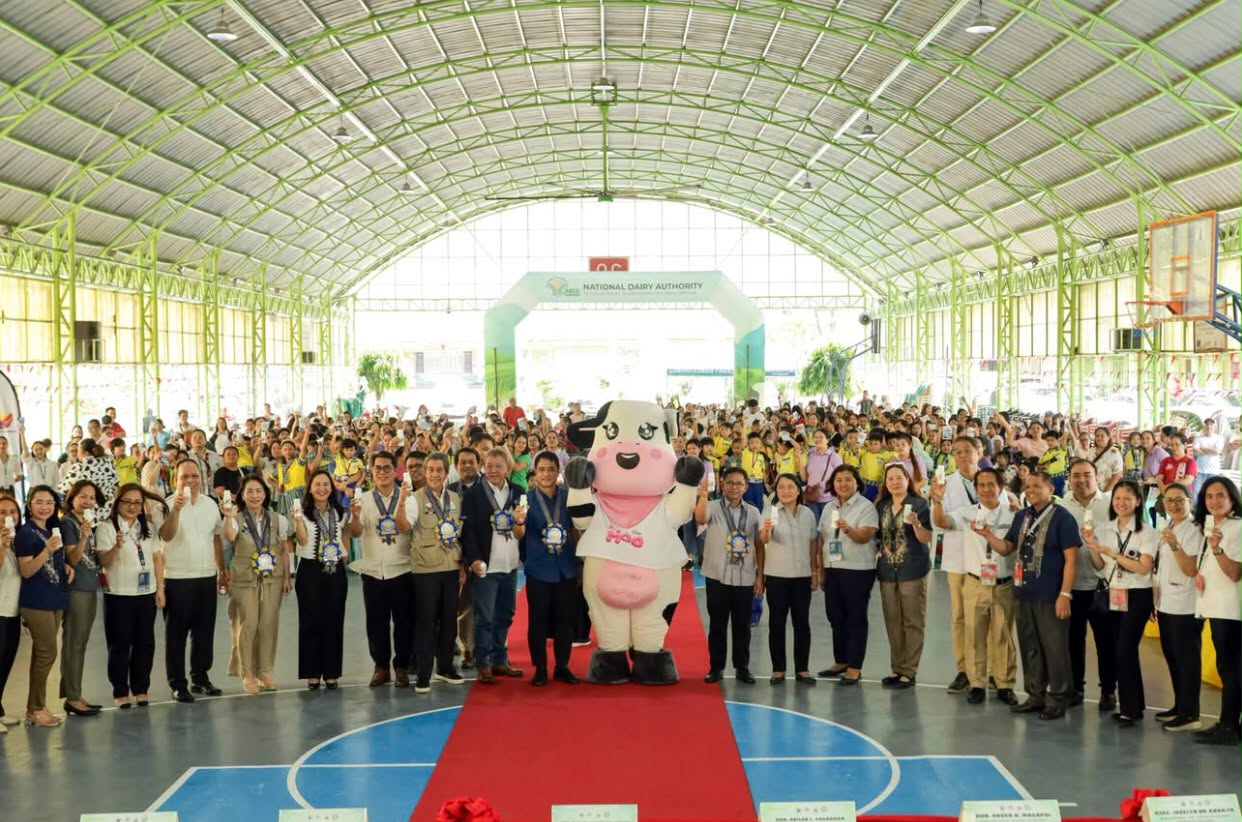
The Philippine government launched the milk component of the 2026 School-Based Feeding Program at Quirino Elementary School in Quezon City on Monday, bringing locally produced milk to about 4.6 million learners nationwide while building a reliable market for Filipino dairy farmers. The initiative carries a total funding of 3 billion pesos, with 1.8 billion pesos going to the National Dairy Authority and 1.2 billion pesos to the Philippine Carabao Center. Both agencies are partnering with the Department of Education, local government units, cooperatives, farmers, and processors to handle procurement, processing, and delivery, working toward the shared goal of ensuring poor nutrition never stops children from learning, growing, and reaching their full potential.
All Kindergarten and Grade 1 pupils are covered, while wasted and severely wasted learners in Grades 2 to 6 will continue receiving nutritional support. Children in community day-care centers will also benefit through complementary government feeding efforts. Beneficiaries will get fresh, pasteurized, and sterilized cow’s milk and carabao’s milk packed with calcium, protein, and energy vital for healthy growth. Supplies are sourced directly from local farmers and cooperatives under the Sagip Saka Act, turning nutrition spending into direct economic opportunities for dairy producers across the country.
National Dairy Authority Administrator Atty. Marcus Antonius Andaya said the program tackles two key goals at once: nourishing children and lifting the local dairy industry. “By prioritizing locally produced milk, we are putting government resources to work not only for better nutrition, but also for stronger livelihoods and a more productive local dairy industry,” Andaya stated. He noted consistent demand will encourage farmers to increase production, expand herds, and improve efficiency. The initiative aligns with the Masustansyang Pagkain para sa Batang Pilipino Act, which mandates milk in supplementary feeding and supports buying local produce. The launch comes as domestic dairy output rises 21.2 percent to 25.38 million liters in the first half of 2026, reflecting steady growth in the sector. With nearly 4.6 million children set to benefit, the program stands as a major investment in both child health and the future of Philippine dairy farming.