Vivant Foundation Inc. (VFI), the corporate social responsibility arm of Cebu-based Vivant Corp., is expanding its flagship Project Liadlaw across Panay Island, broadening the program from school electrification to healthcare, technical-vocational education, and literacy initiatives.
The expansion reflects the evolving scope of the award-winning program, which initially focused on bringing solar power to off-grid and underserved public schools on Bantayan Island in Cebu.
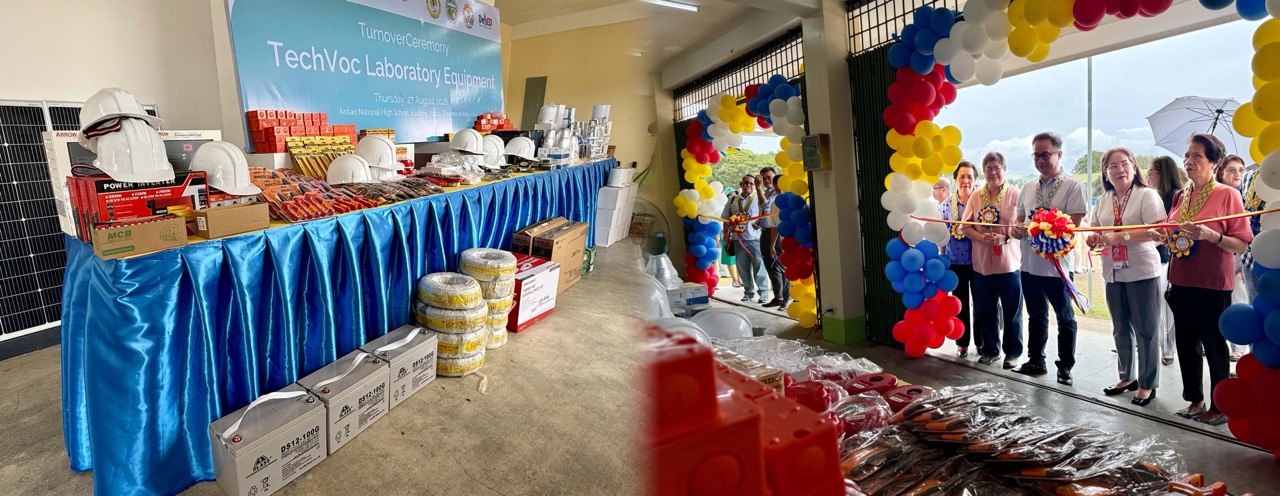
In Iloilo, VFI provided Anilao National High School with Technical Education and Skills Development Authority (TESDA)-standard equipment for Electrical Installation and Maintenance (EIM) and solar photovoltaic (PV) training. The assistance includes retrofitting the school’s EIM laboratory and training teachers in solar technology.
The upgraded facility is intended to give students in the Technical-Vocational-Livelihood track hands-on experience with technologies used in the renewable energy sector, potentially strengthening the link between classroom training and emerging job opportunities.
In Antique, VFI installed a 3.78-kilowatt-peak rooftop solar system at the Anini-y Rural Health Center. The system is designed to supply daytime electricity for medical equipment and clinical services while helping the facility manage power costs.
The foundation also donated a library package to San Ramon Elementary School, adding an education and literacy component to the initiative.
“Project Liadlaw has grown beyond providing solar power to schools. Today, it is also helping prepare young learners for careers in renewable energy while supporting public facilities that communities rely on every day,” VFI Executive Director Shem Jose Garcia said.
VFI Assistant Vice President Benjamin Chiu said the projects are designed around specific community needs while delivering longer-term benefits.
“In Anilao, we’re helping equip students with practical skills for an evolving energy sector. In Anini-y, we’re helping ensure that essential health services have a more reliable source of electricity,” Chiu said.
Through partnerships with the Department of Education and TESDA, Project Liadlaw integrates renewable energy into technical-vocational instruction while helping public institutions adopt more sustainable operations.
The approach positions solar infrastructure not simply as an energy solution, but as a tool for education, skills development, healthcare delivery, and broader community resilience.