The Philippine Chamber of Commerce and Industry (PCCI) is calling for concrete policy responses to the country’s energy and food security challenges, warning that mounting business costs, global economic volatility, and trade disruptions are putting pressure on local enterprises’ competitiveness.
PCCI President Perry Ferrer said businesses must contend with overlapping risks, from inflation, interest rate movements and currency fluctuations to geopolitical tensions, climate threats and rapid technological change.
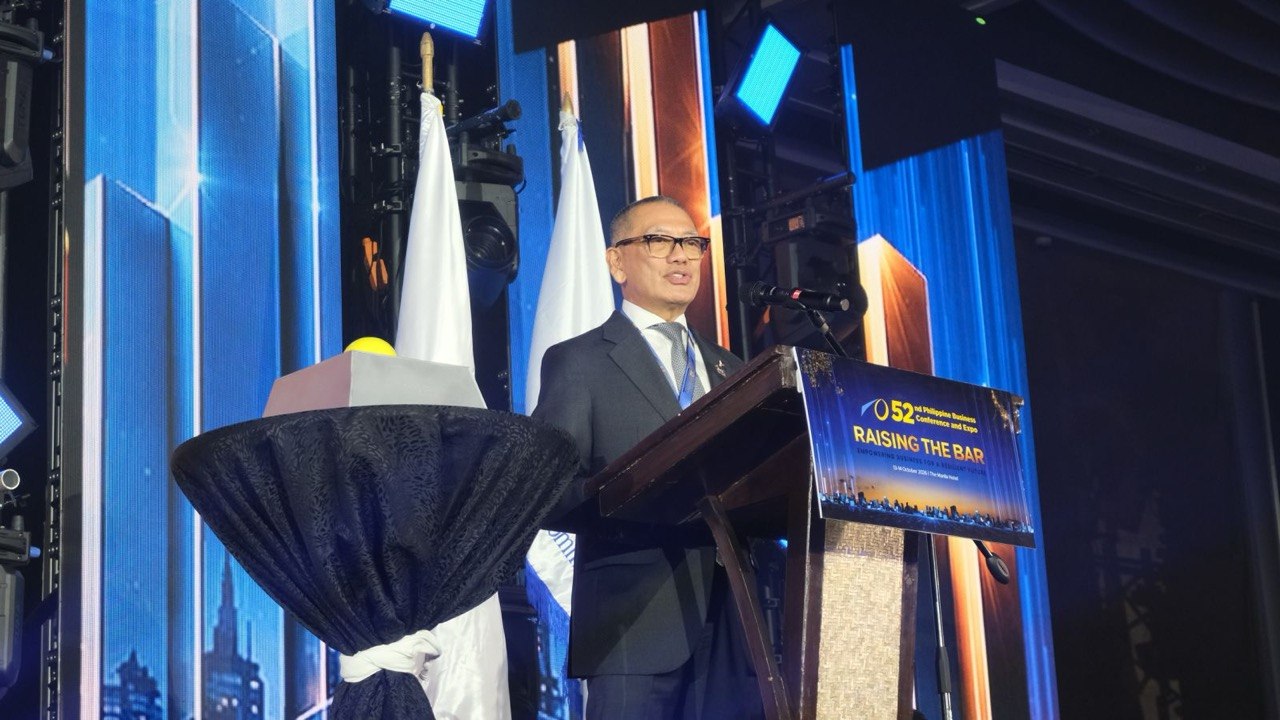
“Uncertainty, therefore, is not a passing condition. It is the environment in which we must lead,” Ferrer said at the opening of the 52nd Philippine Business Conference on Tuesday.
His remarks underscored the need to strengthen the domestic economy as Philippine businesses navigate an increasingly unpredictable global environment. While access to international markets remains important, Ferrer said the country must first address structural weaknesses at home, particularly in infrastructure, energy security, human capital development, digital transformation and governance.
“Before the Philippines can compete with confidence beyond its shores, it must first fortify what lies within them,” he said.
The emphasis on domestic fundamentals comes as businesses face pressure to manage operating costs and maintain competitiveness amid shifting economic conditions. Energy and food security, in particular, have implications that extend beyond individual industries, influencing production expenses, household purchasing power and the broader business climate.
Conference Chairman Butch Guerrero said the two-day gathering would focus on identifying practical responses to the most pressing challenges facing the economy, with energy and food security among the priority issues.
Guerrero described the energy sector as both critical and controversial, while food security remains a major national concern. Discussions will seek to move beyond conventional presentations and encourage candid exchanges among business leaders and other stakeholders on possible solutions.
He said the conference should generate meaningful partnerships and actionable responses rather than simply revisit problems that have long confronted the Philippine economy.
The challenge, however, lies in translating discussions into policies and initiatives that can deliver tangible results for businesses and consumers. Addressing energy and food security requires sustained coordination among government, industry and other stakeholders, alongside broader efforts to improve the country’s economic foundations.
Beyond domestic concerns, the conference will also examine opportunities arising from ASEAN integration and deeper participation in the global economy.
For the business community, the agenda reflects a dual imperative: reducing vulnerabilities at home while positioning Philippine enterprises to benefit from expanding regional and international opportunities. Whether the discussions yield concrete commitments and implementable solutions will be a key measure of the conference’s impact.