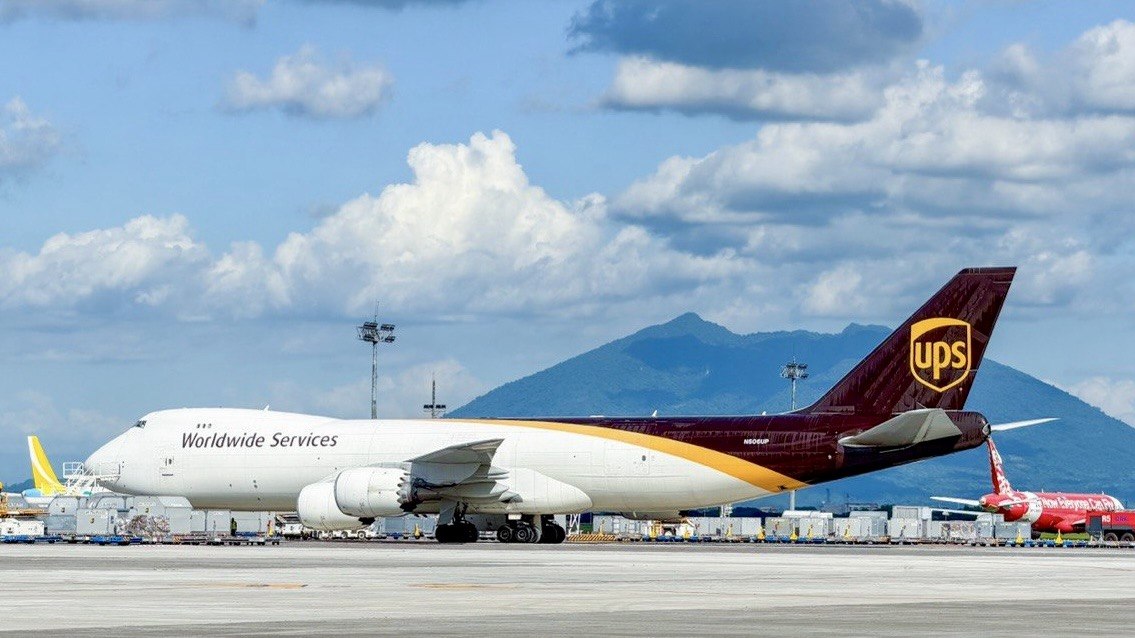
Clark International Airport is seeking a larger share of high-value healthcare and manufacturing cargo as United Parcel Service (UPS) expands its logistics infrastructure, adding specialized cold-chain facilities and automated sorting capacity to the Philippine gateway.
Luzon International Premiere Airport Development (LIPAD) Corp. said the US$80-million UPS hub could help attract pharmaceutical companies and manufacturers whose shipments require tighter temperature controls, faster processing and more reliable tracking.
The 30,000-square-meter facility includes three refrigeration and freezer units operating at temperatures ranging from minus 20 to 25 degrees Celsius, dedicated re-icing facilities and radio-frequency identification technology for shipment tracking and priority handling.
These capabilities could improve Clark’s appeal to businesses moving temperature-sensitive medicines and high-value industrial components. However, converting additional handling capacity into sustained cargo growth will depend on shipper demand, network connectivity and the availability of supporting logistics services.
UPS has increased its average daily package-handling capacity at the facility more than ninefold, from 5,000 to 46,000 packages. Maximum hourly processing capacity has risen twelvefold to 15,000 packages, while an automated small-package sorting system, the first of its kind for UPS in the Philippines, can process 9,000 packages an hour.
LIPAD President and CEO Noel Manankil said the investment reinforces Clark’s role in global trade and logistics. UPS operates 170 weekly flight segments through the airport, linking Philippine businesses to more than 1,100 international trade lanes.
The expansion also aligns with LIPAD’s planned 759-hectare Clark AeroDistrict, envisioned as an integrated hub for cargo operations, aircraft maintenance, aviation services and commercial development.
Clark’s longer-term opportunity lies in connecting manufacturing centers to overseas markets, including through the Luzon Economic Corridor. The UPS investment adds infrastructure to that proposition, although its broader economic impact will depend on whether the improved capacity draws new exporters, higher-value shipments and sustained business activity.