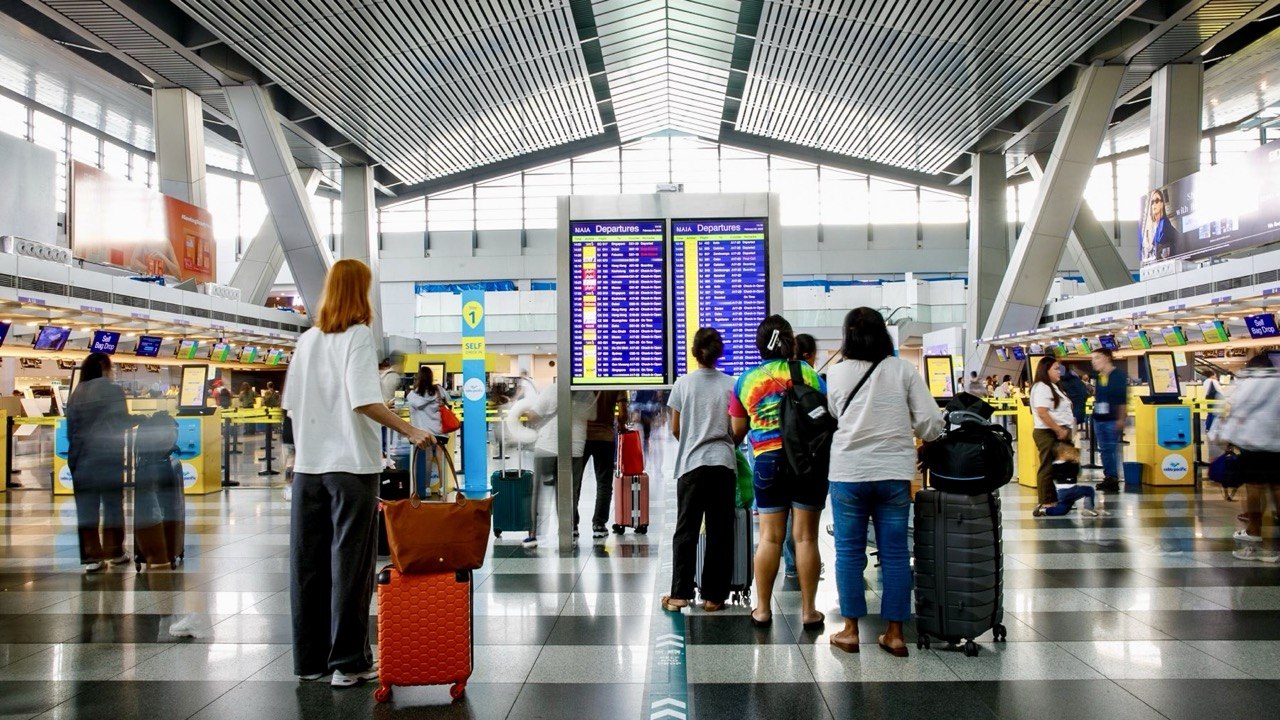
International passenger traffic at Manila’s Ninoy Aquino International Airport (NAIA) rose 2.6 percent year-on-year to 19.93 million from Jan. 1 to Oct. 22, 2026, as demand held firm despite disruptions to global aviation from the Middle East conflict.
Airport operator New NAIA Infra Corp. (NNIC) said international traffic increased by 507,772 passengers from 19.42 million a year earlier. Passenger volume also grew 2.05 percent in the first 22 days of October to 1.39 million.
“It’s encouraging to see international passenger traffic continuing to grow despite the challenges affecting aviation worldwide,” NNIC General Manager Lito Alvarez said, citing the need for improved facilities, more reliable operations and a better passenger experience.
International travelers accounted for 48.1 percent of NAIA’s total traffic, up from 46.6 percent last year. Domestic passenger volume, however, fell 3.4 percent to 21.49 million, pointing to an uneven recovery across market segments.
Airline expansion is reinforcing Manila’s international growth prospects. Air France has resumed Philippine services, while Philippine Airlines plans to launch nonstop flights to Chicago in November and to Delhi and Mumbai in December, subject to regulatory approval for the Indian routes.
Delta Air Lines is scheduled to introduce Los Angeles-Manila nonstop flights in March 2027, initially three times weekly before increasing to daily service in June. India’s IndiGo is also expected to enter the Manila market, widening connectivity with overseas destinations.
NAIA ranked sixth worldwide for international low-cost carrier connectivity in OAG’s 2026 Megahubs index, underscoring its role as a regional gateway for budget travel.
Operational performance has improved alongside passenger growth. System-wide on-time performance reached 81.07 percent in the first 10 months of the year through Oct. 22, up from 77.92 percent a year earlier. Arrivals averaged 82.09 percent on time, compared with 80.05 percent for departures.
The gains come as NNIC modernizes an airport that handled a record 52 million passengers in 2025, far exceeding its original annual design capacity of 35 million.
Sustaining growth will depend on whether infrastructure upgrades and operational improvements can keep pace with rising demand.