



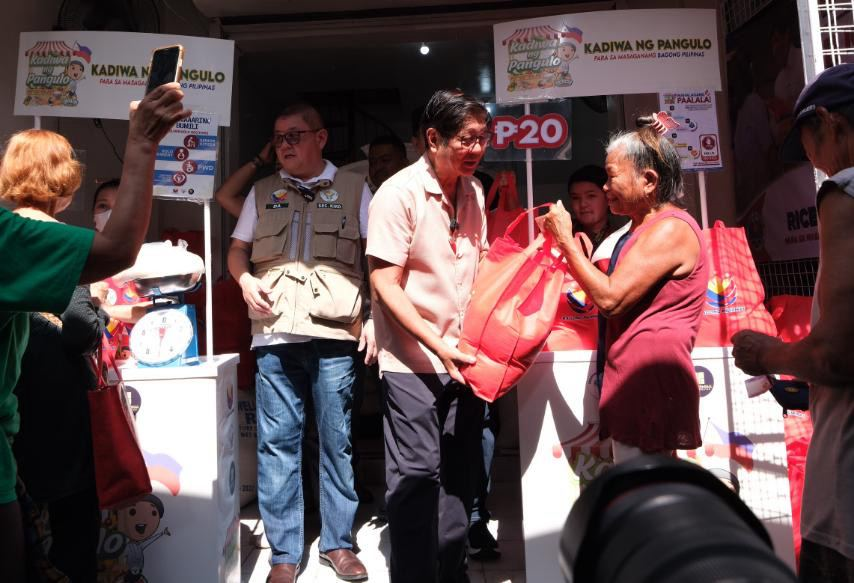
Nearly 1 million Filipinos benefited from the Marcos administration’s Benteng Bigas, Meron Na! program in September, the highest monthly turnout since the affordable rice initiative was launched in May last year, as the government seeks to ease food costs for households struggling to make ends meet.
A total of 961,346 beneficiaries bought 21.4 million kilos of locally produced rice at prices well below prevailing market rates under the government’s Rice-for-All initiative, according to Department of Agriculture data.
Rice accounts for about 9 percent of the average Filipino household’s budget, with the share doubling among poor families—the very households the program is designed to help. President Ferdinand Marcos Jr. made P20-per-kilo rice a campaign promise and wants the initiative sustained until the end of his term in June 2028.
September’s turnout eclipsed the previous monthly record of 838,695 beneficiaries set in April. Buyers included senior citizens, indigents, solo parents, persons with disabilities, farmers, fisherfolk and minimum-wage earners.
“This year alone, from January to the end of September, the P20-per-kilo rice program has directly helped over 5.6 million Filipinos ease the pressure on their wallets, while helping local farmers secure a higher price for their palay from the NFA,” Agriculture Secretary Francisco P. Tiu Laurel Jr. said.
If each beneficiary represent an average Filipino household, this means around 22.4 million have been fed by the P20 rice program.
The program’s twin objectives are to make the country’s staple more affordable for consumers and provide local farmers a market for their harvest. The National Food Authority purchases palay from farmers and supplies rice for the subsidized initiative.
From January to September, the program sold 135.98 million kilos of rice, primarily through selling centers operated or accredited by the Food Terminal Inc. KADIWA ng Pangulo outlets accounted for nearly two in every 10 kilos sold, while local government units handled about 15% of the total.
The record turnout points to strong demand for cheaper rice, but sustaining the program’s reach will require procurement and distribution to keep pace with household needs.
To make room for additional local palay purchases, Tiu Laurel has ordered a December policy change allowing vulnerable beneficiaries—including senior citizens, persons with disabilities, solo parents and indigents—to claim their monthly 30-kilo allocation in a single transaction.
The measure is intended to ease access for beneficiaries while freeing up NFA warehouse space for more harvest purchases.
With the program meant to run through June 2028, the challenge is to keep affordable rice flowing to households while ensuring local farmers also benefit from government support.