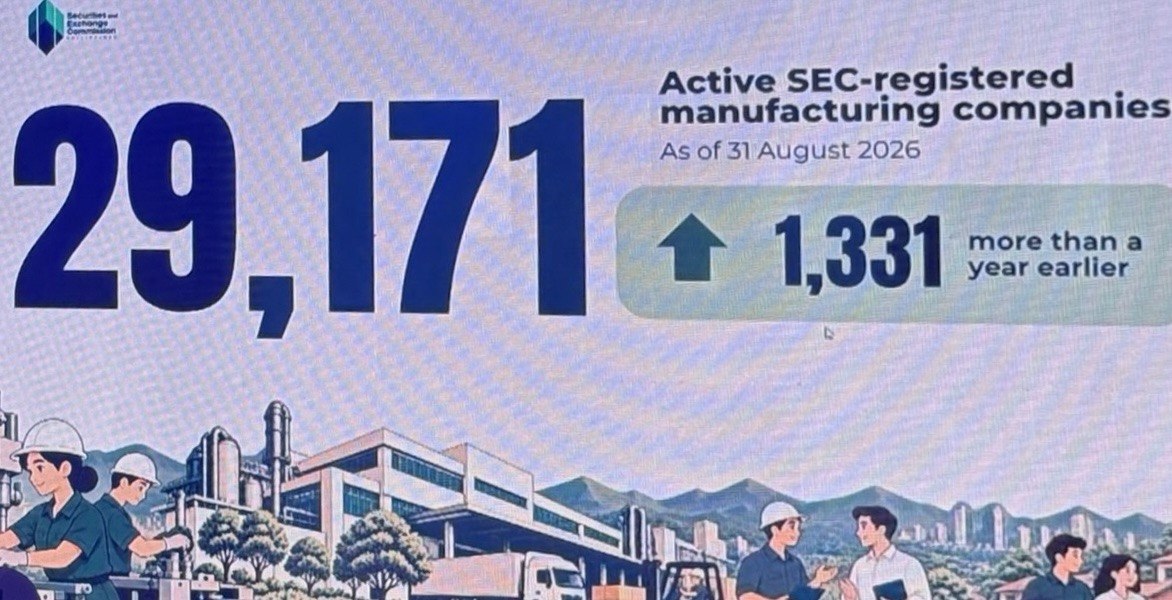
For Philippine manufacturers, the next factory may require more than retained earnings and a friendly bank. The Securities and Exchange Commission (SEC) is urging them to look beyond traditional financing and prepare to tap the capital markets as they scale up.
SEC Chairman Francis Lim told members of the Federation of Philippine Industries that companies facing bigger orders, new machinery ok purchases or plans to build additional factories should consider a wider range of funding options.
“Kaya kapag handa na kayo, bukas ang capital market para sa inyo,” Lim told industry leaders.
For growing companies, the menu includes securities-based crowdfunding, private placements and the Philippine Stock Exchange’s SME Board. More established manufacturers can consider initial public offerings, bond issues and additional equity offerings, he said.
The SEC is also developing financing channels tailored to industries such as agribusiness, hospitals, real estate rental pools and power, reflecting an effort to match funding structures with the needs of different businesses.
“The message is clear: capital formation should not be one size fits all,” Lim said.
But getting through the capital-market door requires more than a promising product or a healthy balance sheet. Lim said investors also scrutinize management, governance and the integrity of corporate records.
“So even if an IPO is years away, maghanda na kayo ngayon,” he said.
That preparation includes clearly defining responsibilities, building a pipeline of future leaders and putting systems in place so companies can outlive their founders.
For manufacturers accustomed to financing growth internally, the shift could require a change in mindset. Raising capital from a broader investor base means opening more of the business to scrutiny, but it can also provide larger pools of funding for expansion.
Lim said the SEC is pursuing reforms to make capital raising more efficient, deepen market liquidity and widen investment choices while protecting investors.
He also urged FPI to support a financial literacy bill pending in Congress, arguing that deeper capital markets ultimately depend on Filipinos who understand how to save, invest and manage financial risks.