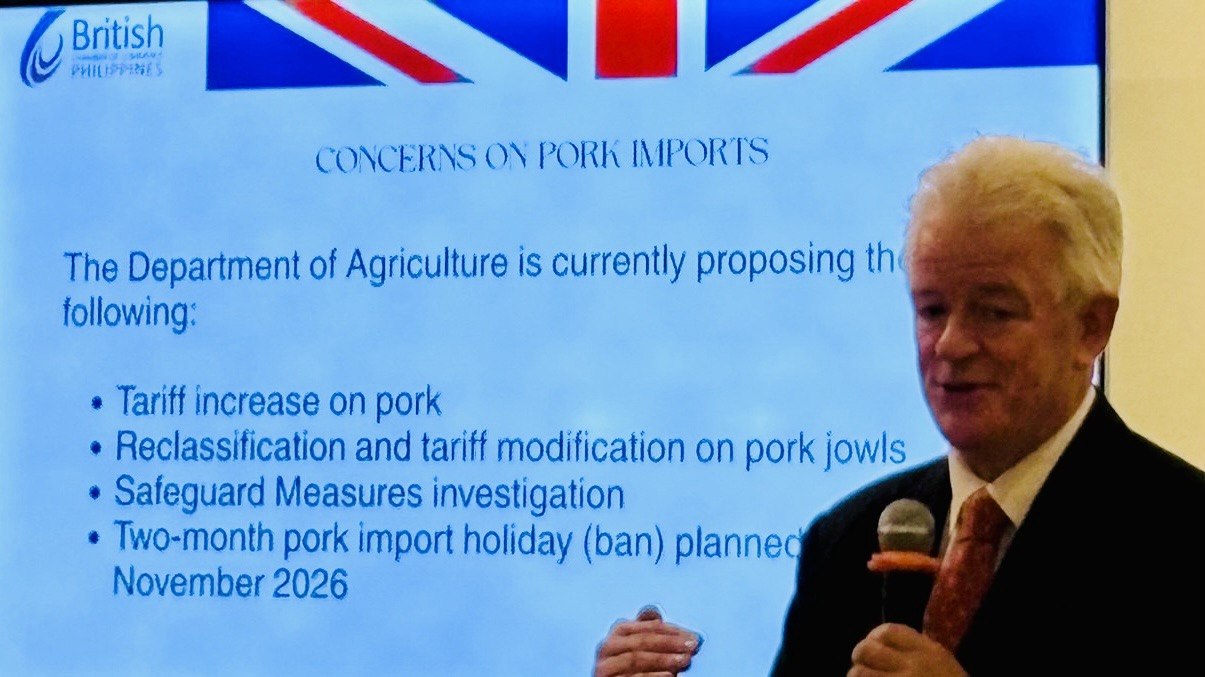
Philippine exporters are leaving room for more trade with Britain, with the British Chamber of Commerce Philippines putting greater use of tariff preferences high on its agenda after exporters utilized only 68 percent of available benefits in 2025.
The chamber’s yearend presentation identified fuller use of the United Kingdom’s Developing Countries Trading Scheme (DCTS) as a near-term opportunity to expand bilateral commerce, following the Sept. 22 Joint Economic and Trade Committee ministerial meeting.
The utilization rate suggests Philippine exporters are not yet capturing the full value of preferential access to the British market, making better use of existing arrangements an immediate way to boost trade while longer-term market-access initiatives are pursued.
The chamber, led by Executive Vice Chairman Chris Nelson, also supported preparatory discussions on potential Philippine accession to the Comprehensive and Progressive Agreement for Trans-Pacific Partnership (CPTPP).
Membership could provide exporters with broader market access, lower tariffs and more predictable trading rules while strengthening supply-chain links with other member economies, according to the presentation.
Beyond trade, the chamber is seeking deeper British participation in Philippine economic zones, renewable energy, cybersecurity and infrastructure, areas it sees as potential drivers of investment and commercial activity.
Data from the Philippine Economic Zone Authority cited in the presentation showed 49 British companies had invested P26.03 billion in the Philippines as of April 2026. These firms generated 76,063 jobs and accounted for USD661 million in exports.
The chamber also pointed to up to GBP5 billion in financing capacity from UK Export Finance for eligible Philippine projects, potentially giving British companies another route into major infrastructure and other investment opportunities.
Its priorities for 2027 include helping British small and medium enterprises enter or expand in the Philippine market, promoting public-private partnerships and infrastructure development, and supporting legislation covering cybersecurity, digital payments, open finance and the blue economy.
The chamber said these measures would help improve the business environment while broadening the areas in which British and Philippine companies can work together.
The immediate opportunity for Philippine exporters, however, may be less about negotiating new access than making better use of what is already available. Raising DCTS utilization could provide a relatively direct boost to bilateral trade while discussions on broader trade agreements continue.