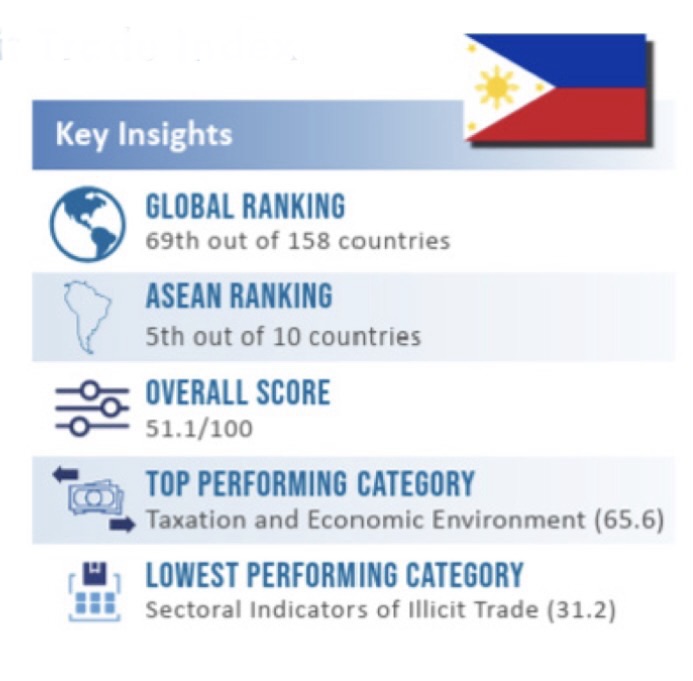
The Philippines ranked 69th among 158 countries in the 2025 Illicit Trade Index, with weak enforcement and porous supply chains leaving it exposed to illegal goods despite a relatively strong regulatory.
The country scored 51.1 out of 100, slightly above the regional average of 49.7, according to the Transnational Alliance to Combat Illicit Trade (TRACIT).
TRACIT classified the Philippines as a moderately high-risk jurisdiction, citing its large informal economy, persistent corruption risks and extensive maritime borders that are difficult to police.
The country’s strongest performance was in regulatory framework and enforcement, where it scored 66.3. Its weakest category was sectoral illicit trade indicators, at 31.2, reflecting vulnerabilities in tobacco, alcohol, pharmaceuticals and counterfeit goods.
The report estimated that illicit products accounted for 86 percent of vapes sold in the Philippines in 2024 and 2025, resulting in about P23 billion in lost government revenue. It cited widespread violations involving product labeling, health warnings, tax stamps and safety requirements.
Online commerce presents another enforcement challenge. Although digital platforms are increasingly identifying illegal listings proactively, inconsistent reporting and inadequate safeguards against repeat sellers and relisted products undermine the effectiveness of takedowns.
TRACIT recommended strengthening customs integrity and anti-corruption safeguards, expanding risk-based monitoring of maritime cargo and small-parcel shipments, and improving the handling of intellectual property violations.
It also urged authorities to shift from removing individual listings and shipments toward disrupting repeat offenders and the networks behind illicit trade.
The findings highlight how gaps in enforcement can allow illegal markets to persist across multiple industries, undermining legitimate businesses, government revenues and consumer protection.