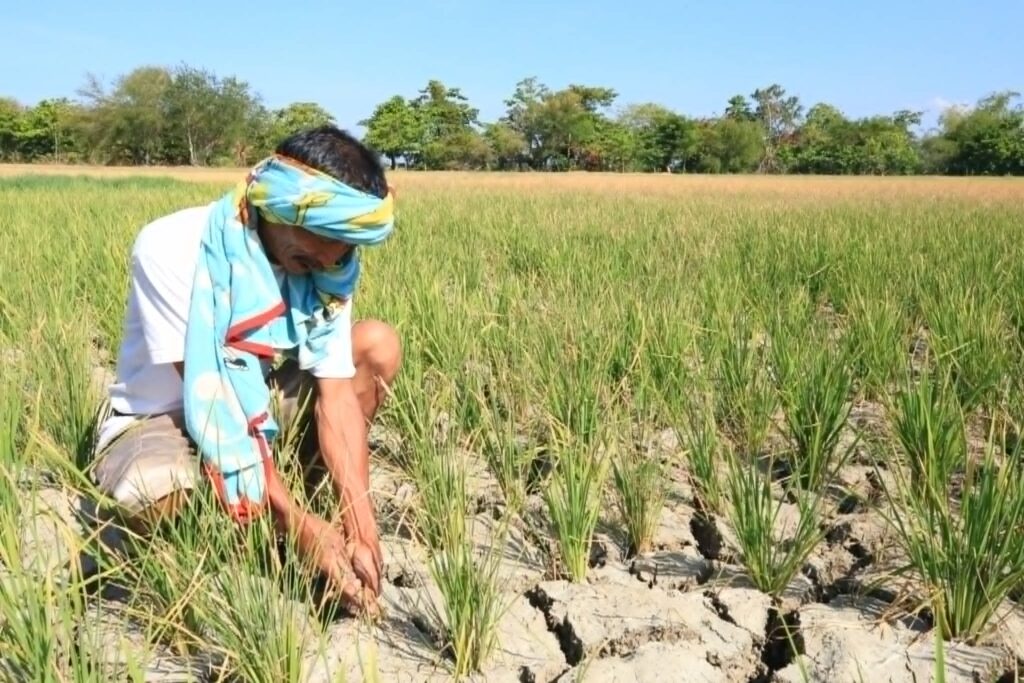
Damage to Philippine agriculture from the ongoing El Niño weather anomaly has climbed to P9.99 billion as of November 11, according to the Department of Agriculture (DA), rising more than 16 percent from the P8.57 billion reported just three weeks ago. This growing toll underscores serious risks to farm output, farmer livelihoods, and national food security at a time when authorities warn the dry spell could worsen into next year.
Nearly 324,000 farmers across over 323,000 hectares of farmland have been affected, with total production losses reaching 288,424 metric tons. While roughly three-quarters of the affected areas still have potential to recover, the remaining 23 percent — about 75,000 hectares — are considered beyond saving, meaning those lands will not contribute to harvests in the near term.
Corn bears the brunt of the losses at P5.63 billion, followed by rice at P3.65 billion, together accounting for more than 90 percent of total damage. These two staples are central to both household food supply and the livelihoods of millions of smallholders across the country. High-value crops, livestock, poultry, and cassava have also suffered significant losses, hitting not just major grain producers but also vegetable growers and livestock raisers nationwide.
Across 15 regions from Luzon to Mindanao, farmers are grappling with parched fields, stunted crops, and lost harvests — blows that ripple through local economies where agriculture remains a key source of jobs and income.
To help farmers cope, the DA said it has rolled out P18.64 billion in interventions, including seeds and fertilizers, financial aid, crop insurance payouts, livestock distribution, irrigation support, and cloud seeding operations. Still, these efforts face a stern test: state weather bureau PAGASA warns a Super El Niño is likely from late 2026 through the first half of 2027, with the harshest dry conditions expected between November and April. With the dry spell far from over, further losses and continued pressure on food prices and farm incomes remain a major concern for the country’s economic recovery and food security.