The Department of Agriculture (DA) is advancing a practical, inclusive approach to farm mechanization, aiming to boost agricultural productivity and build stronger food systems without leaving small-scale farmers behind.
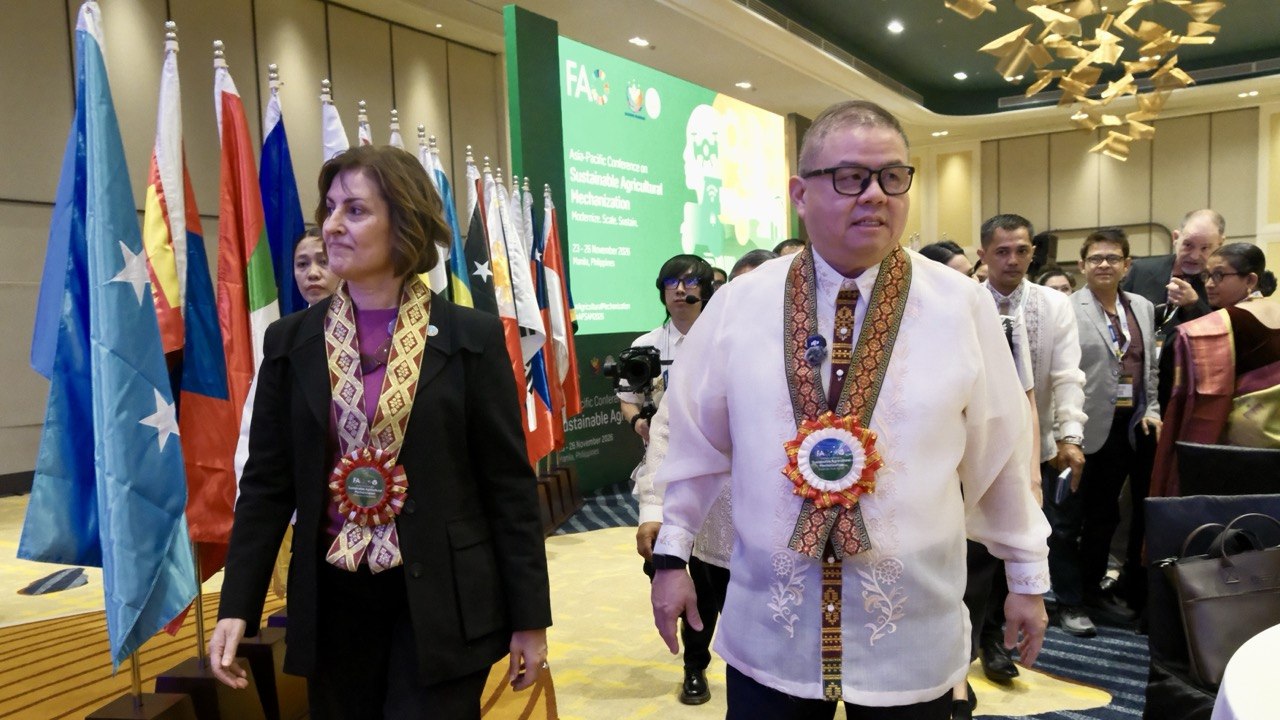
Speaking at the opening of the first Asia-Pacific Conference on Sustainable Agricultural Mechanization (APSAM) 2026 in Parañaque City, Agriculture Secretary Francisco P. Tiu Laurel Jr. emphasized that sustainable modernization goes far beyond simply distributing tractors and harvesters. He noted that equipment offers little benefit if farmers cannot afford it, spare parts are unavailable, operators lack proper training, and after-sales support is unreliable.
“Sustainable agricultural mechanization is not simply about putting more machines in farmers’ hands,” Tiu Laurel explained. “Modernization must be practical, accessible, and responsive to the realities of our farmers. It requires appropriate technologies, affordable financing, supportive policies, reliable after-sales services, and just as importantly, the skills to operate and maintain these machines.”
The drive comes at a critical time, with rising fuel costs, geopolitical tensions, and the looming threat of a Super El Niño putting additional pressure on food production and supply chains. Mechanization offers clear benefits, including reduced postharvest losses, better labor efficiency, higher farm incomes, and more stable food prices. Still, Tiu Laurel stressed that progress should never be counted by the number of machines purchased, but by improved livelihoods.
“Machines should make farmers more productive, not make farmers irrelevant,” he said. He also highlighted the need for an inclusive transition, ensuring women and young people are active partners and innovators, not just beneficiaries.
Hosted by the DA and organized by the Food and Agriculture Organization of the United Nations, the four-day conference serves as a platform for the Philippines to share experiences, learn from other countries, and attract investments that make sustainable mechanization truly accessible. The country seeks to emerge as a regional leader in this area, with one clear goal guiding all efforts.
“Ultimately, the measure of modernization is not how many machines we acquire, but how much better the lives and livelihoods of our farmers become,” Tiu Laurel added.