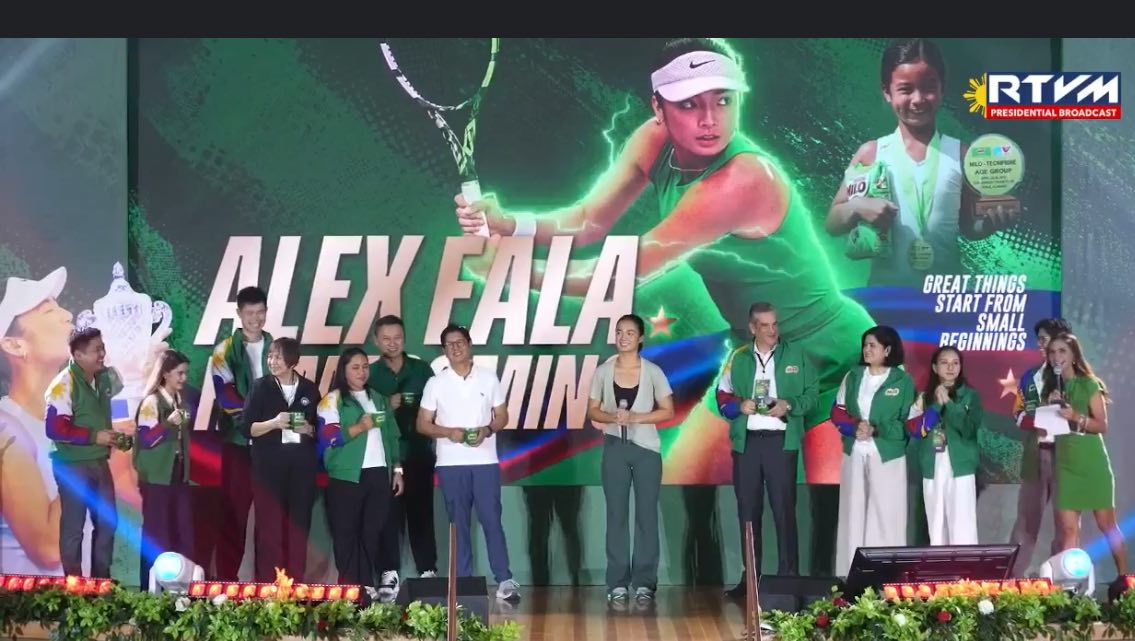
Alex Eala has given Filipinos plenty of reasons to cheer on the tennis court. At her homecoming in Pasig City on Tuesday, November 24, however, the bigger message was about getting more young Filipinos onto the playing field, whether or not they dream of becoming champions.
President Ferdinand Marcos Jr. used the occasion to propose that students spend at least two hours a week playing sports, arguing that the value of athletics goes well beyond medals, rankings, and national anthems played on foreign soil.
Speaking at a Milo-organized homecoming celebration at Pasig Central Elementary School, Marcos praised Eala not only for her achievements on the international tennis circuit but also for the character she displays away from competition.
He grouped her with Olympic weightlifting champion Hidilyn Diaz and pole vaulter EJ Obiena as athletes whose accomplishments inspire national pride.
“You remind Filipinos to be proud to be Pinoy,” Marcos told Eala.
But there was more to the President’s message than celebrating sporting victories. He said sports teach discipline, camaraderie, respect for opponents, and perhaps one of the hardest lessons in competition: how to congratulate someone who has just beaten you.
He also recalled watching Eala compete with her knee wrapped in protective tape and reminded her to take care of herself. Even champions, after all, need to know when to look after their bodies.
Marcos said every student should have the opportunity to play sports, including those who may never compete professionally or bring home a trophy. Schools, he said, should give children enough time to try different activities and discover what they enjoy.
“If they are doing athletics, if they are doing any kind of sport, they must be playing at least two hours of sport a week,” he said.
The administration is working with the Department of Education and the Philippine Sports Commission (PSC) to expand school sports participation, Marcos said. He cited the Batang Pinoy Games, continued government support for the Palarong Pambansa, and improvements to PSC facilities.
He also acknowledged Milo’s role in encouraging young Filipinos to take up sports.
The proposal reflects a challenge that goes beyond producing the country’s next Eala, Diaz, or Obiena. Developing elite athletes begins with giving children opportunities to play, access to facilities, and proper coaching. Not every child will become a national team player, but every child can benefit from learning to compete, cooperate, and keep going after a setback.
For Eala, whose own journey has taken her from the Philippine tennis circuit to the international stage, the homecoming was a reminder of how far sporting dreams can travel.
For the children watching, the more immediate lesson may be simpler: the next big sporting achievement could begin with showing up on the court, finding a game they love, and playing.
And unlike a Grand Slam final, that is a match every student should get the chance to enter.