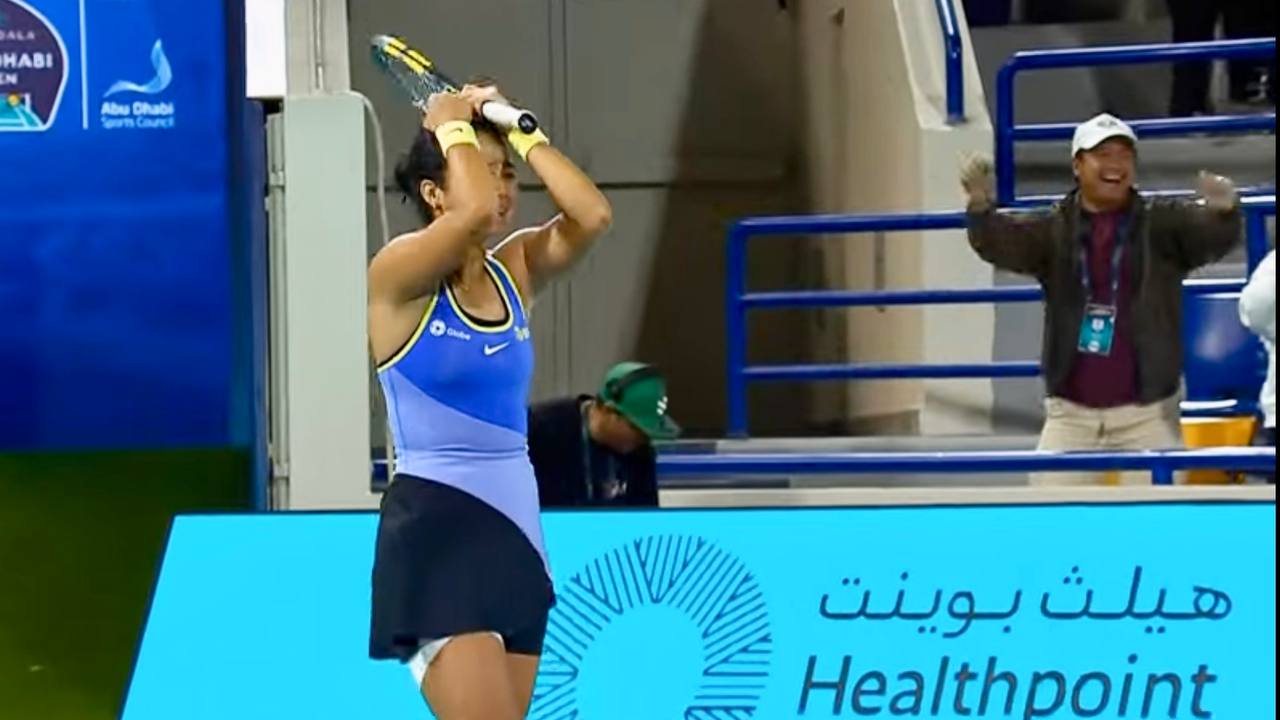
Manila stayed awake. Abu Dhabi felt it.
For many Filipinos who pushed past the first hour of Thursday morning, sleep was a negotiable luxury. The real question was whether Alex Eala would keep them company. An hour past midnight, the answer was a resounding yes—and the vigil was worth every yawn.
Inside the International Tennis Center in Zayed Sports City, the match unfolded to a soundtrack that felt wildly out of place yet perfectly right—Filipino voices bouncing off concrete, flags draped over railings, and chants that turned a neutral Abu Dhabi night into something unmistakably homegrown.
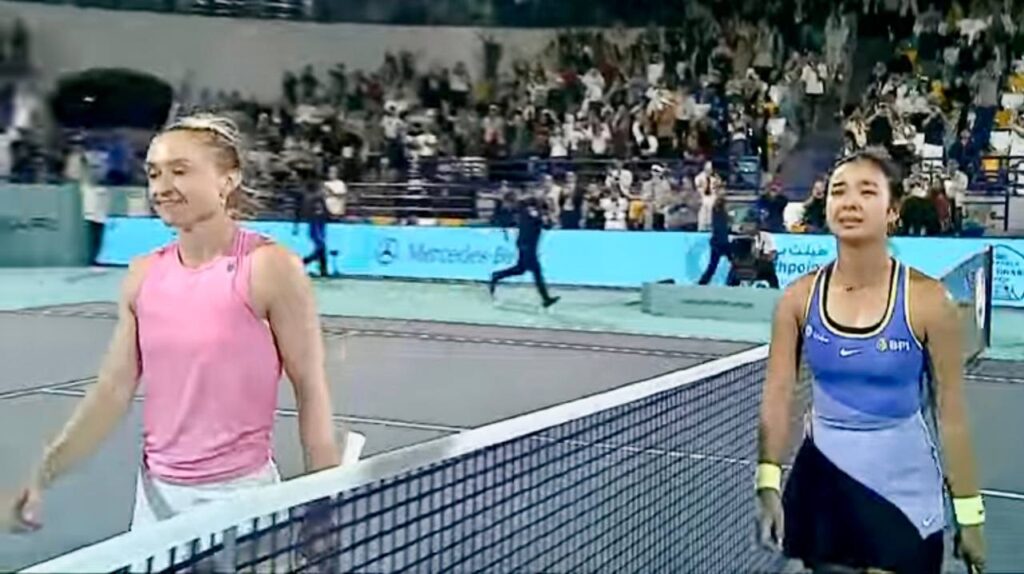
Each rally pulled the crowd closer, each Eala fist pump igniting another wave of noise. It wasn’t just support; it was participation. The gallery didn’t merely watch the comeback—it helped will it into existence.
Eala, 20, dropped the opening set 2–6 to Aliaksandra Sasnovich, the 31-year-old world No. 109 who looked composed and clinical early. On paper and on court, the Belarusian appeared in control. But the predominantly Filipino gallery—expats, overseas contract workers, and fans far from home—refused to let the Abu Dhabi night drift quietly.
With chants of “Let’s go, Alex!” ringing out after winners, rallies, and even lost points, Eala settled herself and rewrote the narrative in the second set. She played with more intent, sharper angles, and steadier nerve, clawing her way to a 6–4 win that reignited both the match and the crowd.

The third set tested belief. Sasnovich stormed ahead 4–0, seemingly easing into cruise control. Weeks ago, that might have been curtains. But this version of Eala—mentally tougher, more seasoned—would not bow out. The world No. 45 pulled level, refusing to fade in front of fans who had sacrificed their night to lift her up. Eala strung 4 games in a row after falling behind 2-5, forcing Sasnovich to dig deep to pull even, 6-6. By then, the Filipina already had momentum.
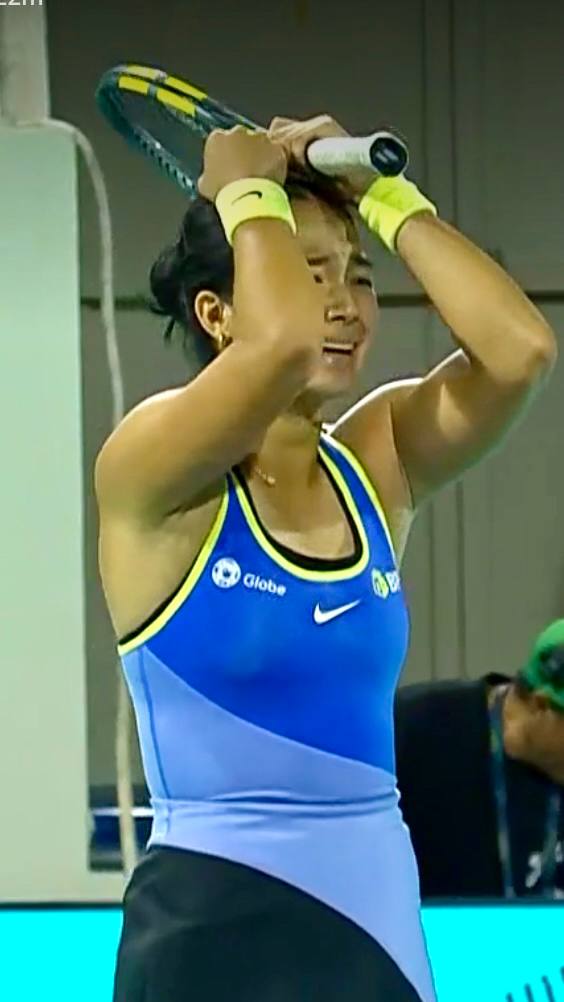
With a nation behind her, Eala leaned on lessons from the Rafa Nadal Academy and the hard-earned experience of her first full year as a professional. She dragged the contest into a tiebreak and owned it, sealing a stirring 7–6 finish that sent the Filipino section into full voice, and Eala in tears, almost sapped of energy after a grueling 3-hour match.
Statistically, Sasnovich had the edge: five aces to Eala’s zero, a 55 percent break-point conversion rate, and stronger numbers on saving breaks. But tennis isn’t won on spreadsheets.
Eala countered with a 73 percent first-serve rate, just three double faults, and an unshakeable calm when the match teetered. Sometimes, that’s enough, especially this Wednesday night in the archipelago of salt flats, extensive coastline, and mostly desert.
The victory sends her into the quarterfinals of the Abu Dhabi Open, a WTA 500 event with a USD1.2 million purse. Quarterfinalists earn 108 ranking points; the champion pockets 500. A push toward the top 30 remains speculative—dependent on results of other WTA tournaments—but after a night like this, dreaming feels justified.
Manila stayed awake. Abu Dhabi roared back. And Alex Eala walked off stronger than she arrived.