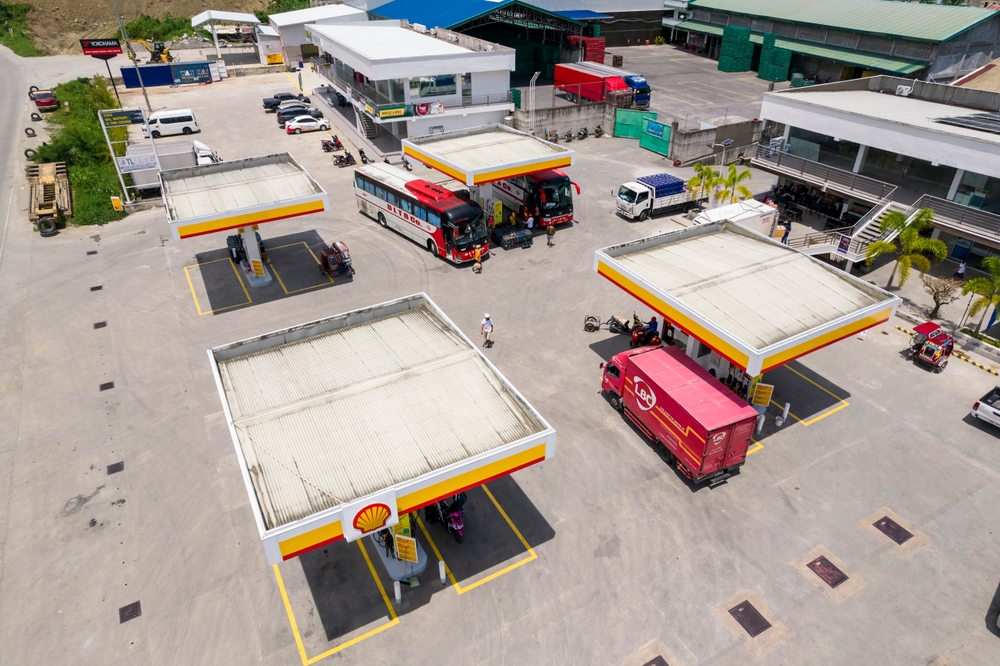
The various fuel retailers will again stagger their oil price increases this week, according to the Department of Energy (DOE).
For March 17 to 23, fuel prices are expected to rise by P12.90 to P16.60 per liter for gasoline, P20.40 to P23.90 for diesel, and P6.90 to P8.90 for kerosene, based on data submitted by oil firms.
Several companies will spread out the increases over several days:
Shell will implement increases of P16.60 for gasoline, P23.90 for diesel, and P6.90 for kerosene from March 17 to 19.
Petron will raise prices by P12.90 for gasoline, P20.40 for diesel, and P8.90 for kerosene, also from March 17 to 19.
Flying V will apply the same increases as Petron over three days starting March 17.
Total will increase P14.10 for gasoline and P20.70 for diesel.
Seaoil will raise prices by P16.30 for gasoline, P23.30 for diesel, and P6.90 for kerosene from March 17 to 18.
Jetti announced increases of P14.70 for gasoline and P23.30 for diesel, effective March 17 to 18.
The DOE said it is still waiting for announcements from other fuel companies.
Energy Secretary Sharon Garin said the agency has limited control over fuel prices because of the Oil Deregulation Law, which allows companies to set their own prices. The government can only ensure that adjustments fall within allowed ranges.
Garin said she supports reviewing the law, saying it works during stable times but may not be effective during periods of extreme price increases.
Meanwhile, the government is also exploring new sources of fuel supply, including Russia. Garin said the Philippines has already signaled its willingness to buy Russian crude oil through government-owned firms such as the Philippine National Oil Co. and private fuel companies.
The Philippines is waiting for Russia’s response. The United States recently issued a 30-day sanctions waiver allowing purchases of Russian oil at sea as global fuel prices continue to rise.
The DOE also urged the public not to hoard fuel, saying there is enough supply. Officials warned that panic buying could worsen the situation, especially for public utility vehicle drivers who need fuel daily.