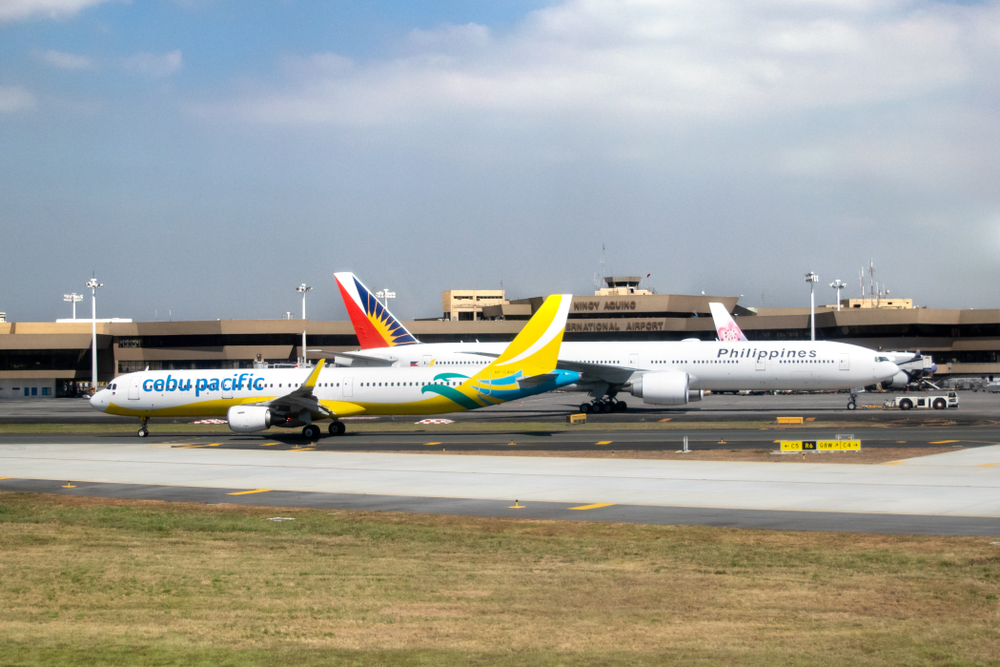
The country’s two largest airlines said on Wednesday that they have secured sufficient jet fuel to maintain operations, including long-haul flights, despite a volatile global market.
Philippine Airlines (PAL), led by Lucio Tan, stated it is closely monitoring regional developments affecting fuel supply and pricing. The flag carrier assured the public that it has secured enough supply for the foreseeable future.
PAL assured that it has secured sufficient jet fuel supply to support scheduled operations, including long-haul flights, for the foreseeable future.
“The airline recognizes that global supply conditions remain dynamic. As part of prudent planning, PAL continues to work closely with fuel suppliers, industry partners, and government stakeholders to ensure stable and efficient operations over the longer term,” PAL said.
“PAL remains committed to connecting the communities we serve,” it added.
PAL temporary suspended its flights between Manila and Riyadh until March 31, 2026, citing a volatile security situation and operational uncertainties in Middle Eastern airspace.
Cebu Pacific also said that it secured fuel supply up until the end of April, and we are already working on supply for May and beyond.
The Gokongwei-led budget carrier maintains a strong financial standing, bolstered by a modern fleet—72 percent of which consists of fuel-efficient Airbus NEOs. Additionally, 73 percent of the airline’s network remains focused on the domestic market.
Cebu Pacific earlier said that it will temporarily suspend flights between Davao and Don Mueang from April 13 to October 23, 2026, followed by the suspension of the Iloilo to Don Mueang route from April 17 through October 2026. Additionally, services from Iloilo to Singapore will be paused from June 15 to October 23, while the Clark to Hanoi route will be suspended from May until October 25, 2026.
Meanwhile, Cebu Pacific will reduce its flight frequencies on several key regional and long-haul routes, including those from Cebu to Singapore, and from Manila to Jakarta, Kuala Lumpur, Melbourne, and Sydney.
These changes are driven by the impact of the crisis on global fuel prices, which have more than doubled compared with 2025 averages.
According to the International Air Transport Association (IATA), jet fuel prices have surged to $197 per barrel as of March 20. This marks a significant 118.8 percent increase compared to the same period last year and an 105.8 percent jump compared to just last month.