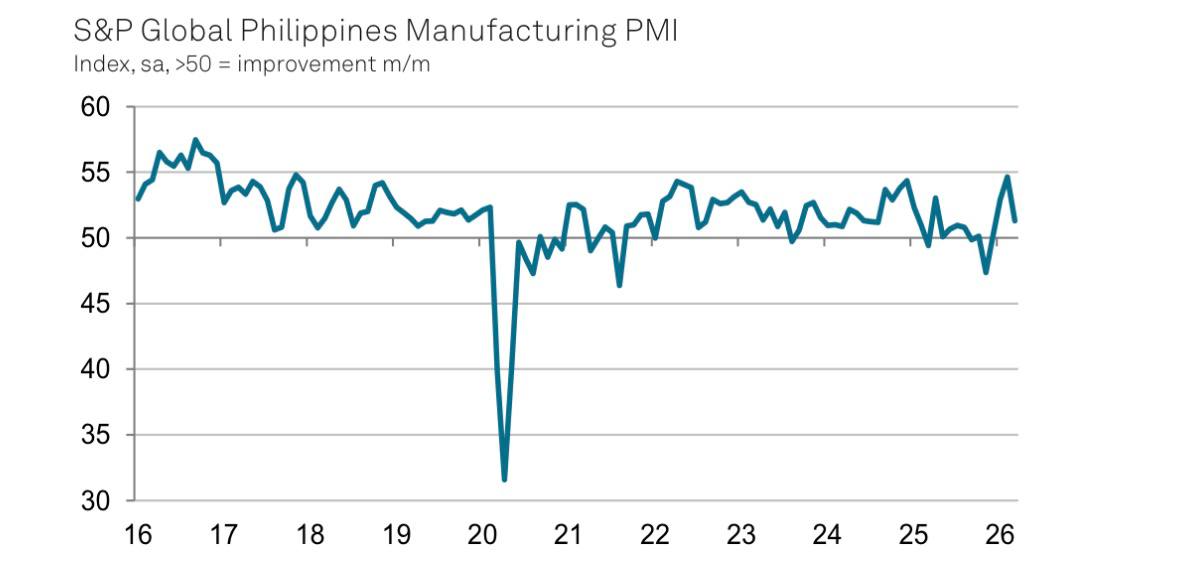
Philippine manufacturing lost momentum at the end of the first quarter, as rising energy costs and geopolitical tensions weighed on the sector, according to the S&P Global Philippines Manufacturing PMI report released April 1.
The Purchasing Managers’ Index (PMI) eased to 51.3 in March from 54.6 in February, when the sector posted its strongest expansion since November 2017. While the latest reading marked a fourth straight month of growth, it signaled a clear slowdown and only modest improvement in operating conditions.
The softer pace underscores the sector’s vulnerability to external shocks, particularly energy-related disruptions. With much of the country’s oil sourced from Gulf states, manufacturers are increasingly exposed to price volatility as tensions in the Middle East escalate.
Firms reported sharp increases in input costs, especially for fuel, gas, and raw materials.
S&P Global economist Maryam Baluch said the conflict has begun to weigh on both output and demand. Businesses cited heightened customer uncertainty, which dampened new orders, while export sales slipped back into contraction for the first time since December.
Rising costs and softer demand also prompted firms to rein in purchasing activity and temper production growth. Hiring slowed, inventories tightened, and supplier performance worsened amid ongoing supply constraints.
The sector’s trajectory will hinge on how long geopolitical tensions persist, with sustained cost pressures likely to test manufacturers’ margins and pricing power.