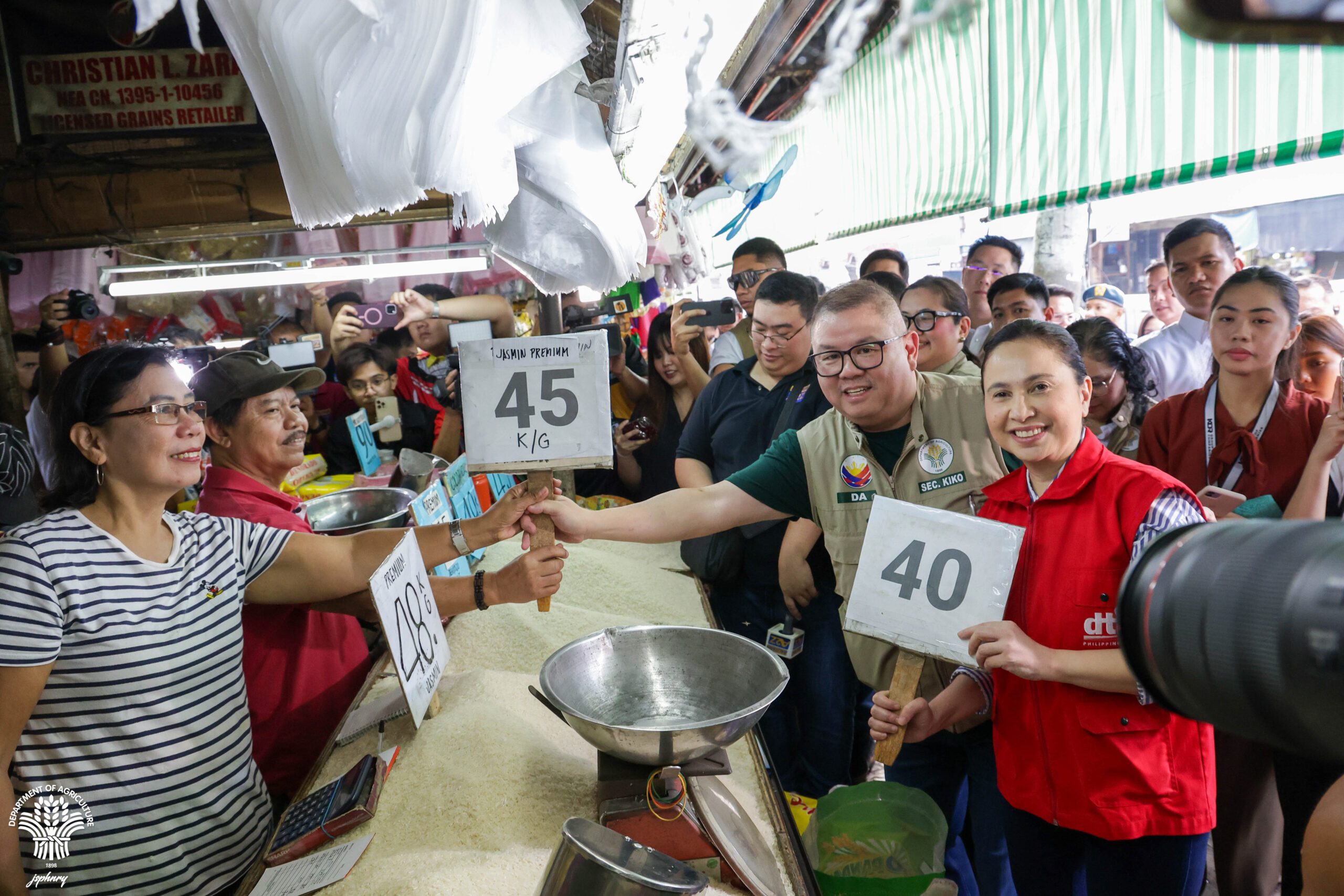
The Department of Agriculture (DA) has expanded market monitoring nationwide to strictly enforce the P50 per kilogram price ceiling for imported rice with 5 percent broken grains. In a statement Tuesday, the agency reported that compliance has steadily improved since the measure took effect, reaching 47.42 percent in the latest round of simultaneous inspections across Metro Manila and other regions. The increase is credited to more frequent checks and stronger presence of law enforcement in public markets.
Authorities have issued 36 notices of violation so far, with the highest number recorded in the Ilocos Region, followed by the National Capital Region, Central Luzon, Negros Island Region, and Bicol. Common violations include selling above the mandated price, mislabeling local rice as imported to charge more, and changing price tags upon seeing inspectors. During one check at Dagonoy Market in Manila, most stalls were reportedly closed; police officials assured they would return and submit updated reports.
Some retailers argued the cap leaves little profit, claiming suppliers charge rates that allow almost no markup. DA officials responded that those making such claims must name their suppliers so authorities can investigate importers or wholesalers possibly overcharging upstream. Mislabeling cases will be verified through laboratory tests by the Bureau of Plant Industry before formal sanctions are applied.
DA teams pledged to continue surprise inspections as long as the price cap remains in force. These efforts form part of the government’s drive to lower food inflation and ensure cheaper rice, a key household expense for most Filipino families. While compliance is rising, officials noted that enforcement remains challenging because price controls must be applied across the entire supply chain, not just at the retail level.
As of June 2, prevailing rice prices in Metro Manila ranged from P44.86 per kg for local regular milled rice to nearly P60 per kg for special varieties, with most standard imported types selling below or near the P50 cap.
This program aims to translate lower global rice costs into actual savings for consumers, though it also exposes tensions between price regulation and profit margins along the supply chain.