Coral reefs usually get the glamour shots—bright, bustling, endlessly Instagrammable.
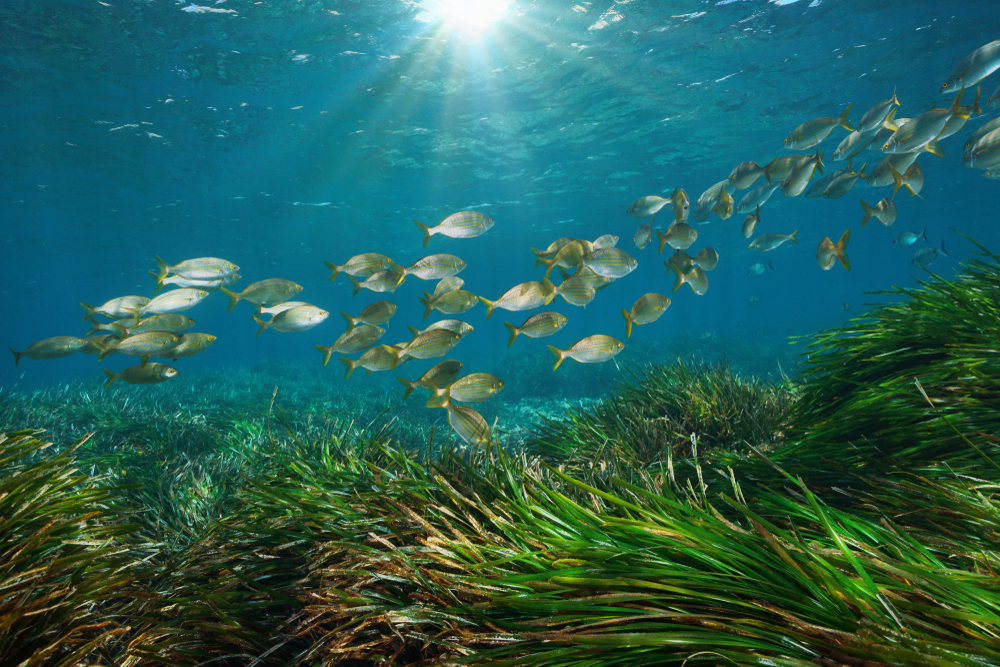
But just a few meters away, swaying with far less fanfare, seagrass meadows are doing the real grunt work. If oceans were a movie set, corals would be the stars, while seagrass runs the lighting, sound, and logistics without which nothing works.
A study published in the April issue of the Philippine Journal of Science makes a strong case for giving these underwater workhorses their overdue credit.
Focusing on 10 coastal sites in Davao Oriental, researchers found that seagrass ecosystems are not just quietly productive—they are constantly adapting to seasonal mood swings and human mess.
Enter the monsoons. During the gentler Amihan (Northeast Monsoon) months, calmer waters allow species like Cymodocea rotundata and Enhalus acoroides to spread comfortably, like beachgoers on a quiet morning. But when Habagat (Southwest Monsoon) barges in with stronger currents and rougher conditions, tougher species such as Thalassia hemprichii and Halodule pinifolia take over. Think of it as a seasonal roster change where only the most resilient keep their spots.
Then comes plastic, the uninvited guest that refuses to leave. The study found stark differences across sites, with Baganga and Boston topping the charts for both macroplastics and microplastics. These range from obvious offenders like food packaging to sneakier particles like fibers and fragments that settle into sediments and linger where fish feed and plants grow.
Yet nature, as always, shows a bit of stubborn optimism.
In Banaybanay, where seagrass is thicker and human disturbance is lighter, plastic levels were noticeably lower. Healthy meadows appear to act like ecological bouncers, limiting how much trash gets in and how long it stays.
The takeaway is not subtle. Seagrass ecosystems shift with the seasons, react to local conditions, and absorb the consequences of human behavior. That means solutions cannot be one-size-fits-all. Cutting single-use plastics, improving coastal waste systems, and tailoring conservation efforts to specific sites all matter.
Because while corals win the popularity contest, seagrass quietly keeps the ocean functioning—and increasingly, it is doing so under pressure.