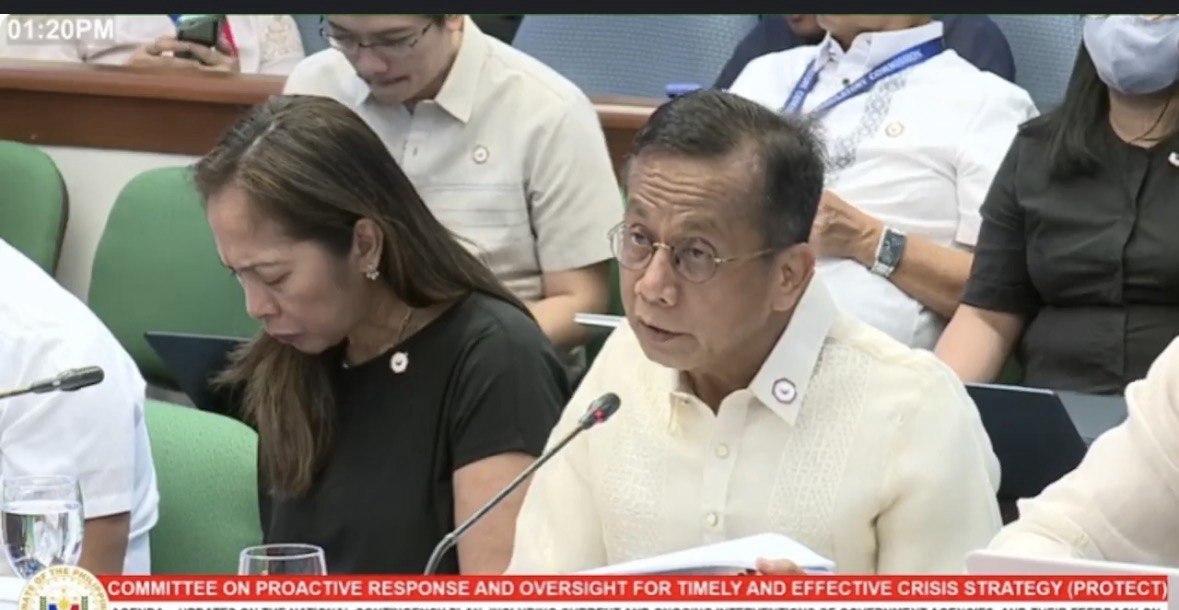
The government would need about P42 billion over the next three months to expand social protection coverage for vulnerable households, Planning Secretary Arsenio Balisacan said Monday, as policymakers weigh broader support measures amid ongoing economic pressures.
Speaking at a Senate PROTECT Committee hearing, Balisacan said the proposed expansion includes increasing monthly benefits under the Pantawid Pamilyang Pilipino Program (4Ps) to P1,500 for its roughly 3 million existing beneficiary households. This adjustment alone would require about P13.5 billion in funding.
However, he noted that a wider safety net covering households just above the poverty line—an estimated additional 4 million families—would significantly raise costs. “That could run about P41 billion or roughly P42 billion for the next three months only,” he said.
The proposal reflects a policy shift toward not only protecting the poorest households but also cushioning the “vulnerable near-poor,” who are increasingly exposed to inflation and income volatility.
Balisacan emphasized that while existing programs already provide a baseline of support, expanding coverage would be essential to prevent newly vulnerable households from slipping into poverty during periods of economic stress.
Beyond cash transfers, the plan also includes transport-related subsidies. Around P6 billion would be needed for transport service contracting over the same three-month period, aimed at stabilizing commuter fares and ensuring continuity of public transport services.
Undersecretary Mark Steven Pastor of the Department of Transportation said the agency has requested an additional P5 billion from the Department of Budget and Management to support service contracting initiatives.
The discussions come as the government continues to balance fiscal constraints with rising demand for targeted assistance, highlighting the growing complexity of social protection planning in an environment shaped by elevated prices and uneven income recovery.
The proposed expansion underscores a broader policy challenge of scaling up safety nets quickly without placing undue strain on the national budget.