The escalating crisis in the Middle East is beginning to weigh on global labor markets, with the International Labour Organization (ILO) warning that the Philippines faces growing economic risks due to its heavy dependence on overseas employment and remittance inflows.
In a recent report, the ILO said early signs already point to major disruptions in labor migration to Gulf Cooperation Council (GCC) countries, where millions of overseas Filipino workers (OFWs) are employed in sectors vulnerable to economic slowdown and geopolitical instability.
“The Philippines illustrates the risks for labour-sending economies,” the ILO said, citing sharp declines in overseas deployment, rising repatriations, and mounting pressure on remittance flows.
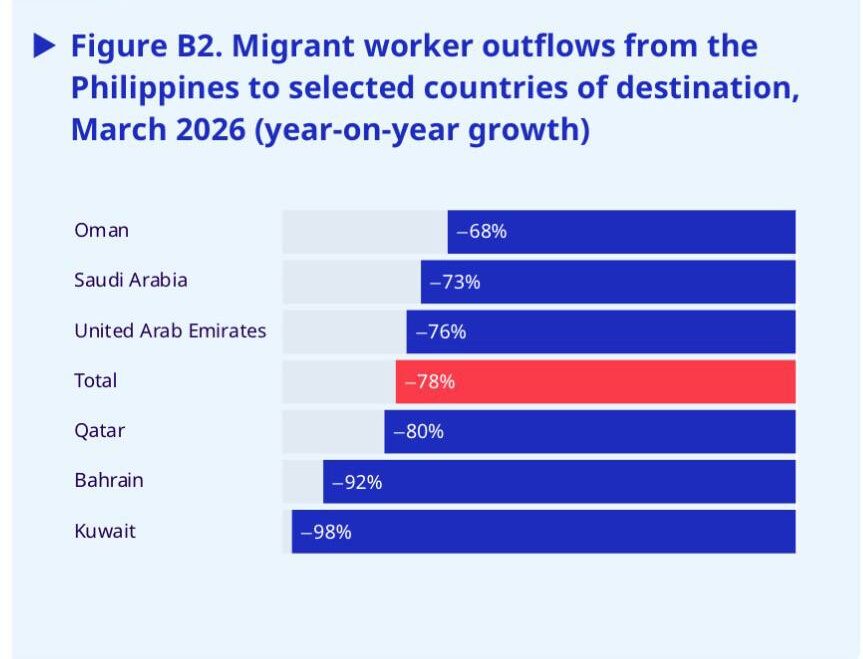
Between early March and late April 2026, nearly 5,000 Filipino workers were repatriated from Gulf countries amid escalating security concerns, flight disruptions, and weakening labor demand in industries such as construction, hospitality, transport, and services.
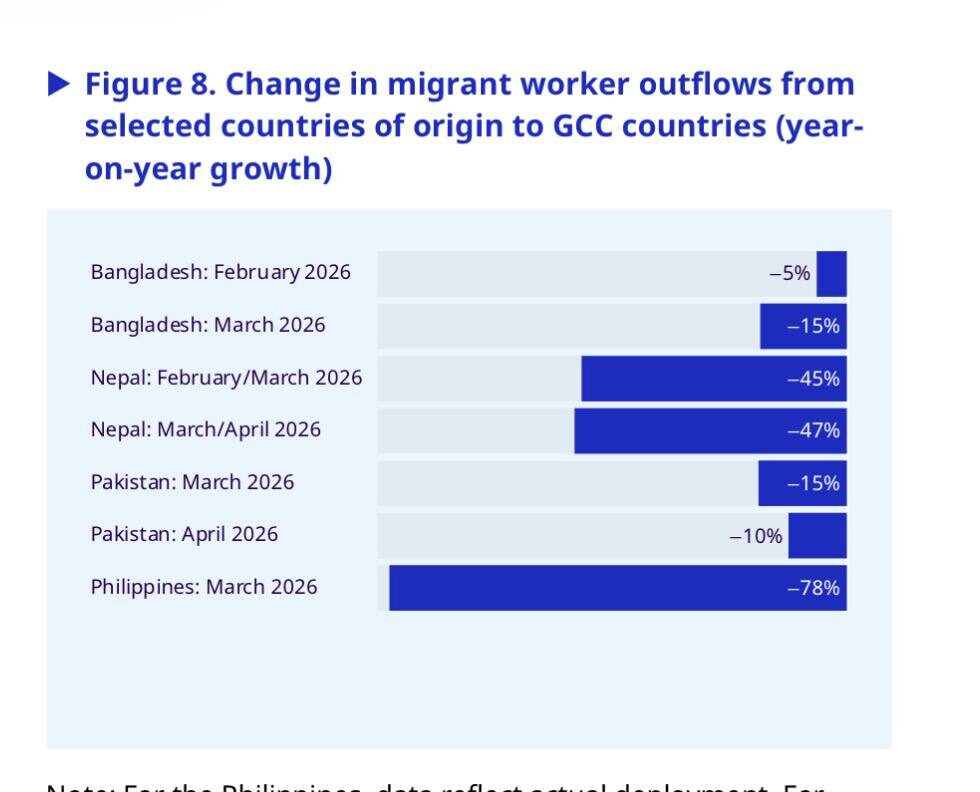
The report showed that migrant worker deployments from the Philippines to Gulf states plunged from more than 72,000 in March 2025 to around 16,000 in March 2026 — a steep 78-percent year-on-year decline.
The ILO also flagged early warning signs for remittance-dependent economies, noting that cash remittances to the Philippines fell from USD3.02 billion in January 2026 to USD2.79 billion in February.
The agency warned that prolonged disruptions in overseas hiring could further weaken remittance inflows, potentially dampening domestic consumption, fueling inflationary pressures, and slowing economic growth.
In response, Philippine authorities have activated crisis monitoring systems, repatriation and reintegration programs, emergency hotlines, and consumer support measures, including fuel subsidies and energy conservation initiatives, to cushion the impact on workers and households.