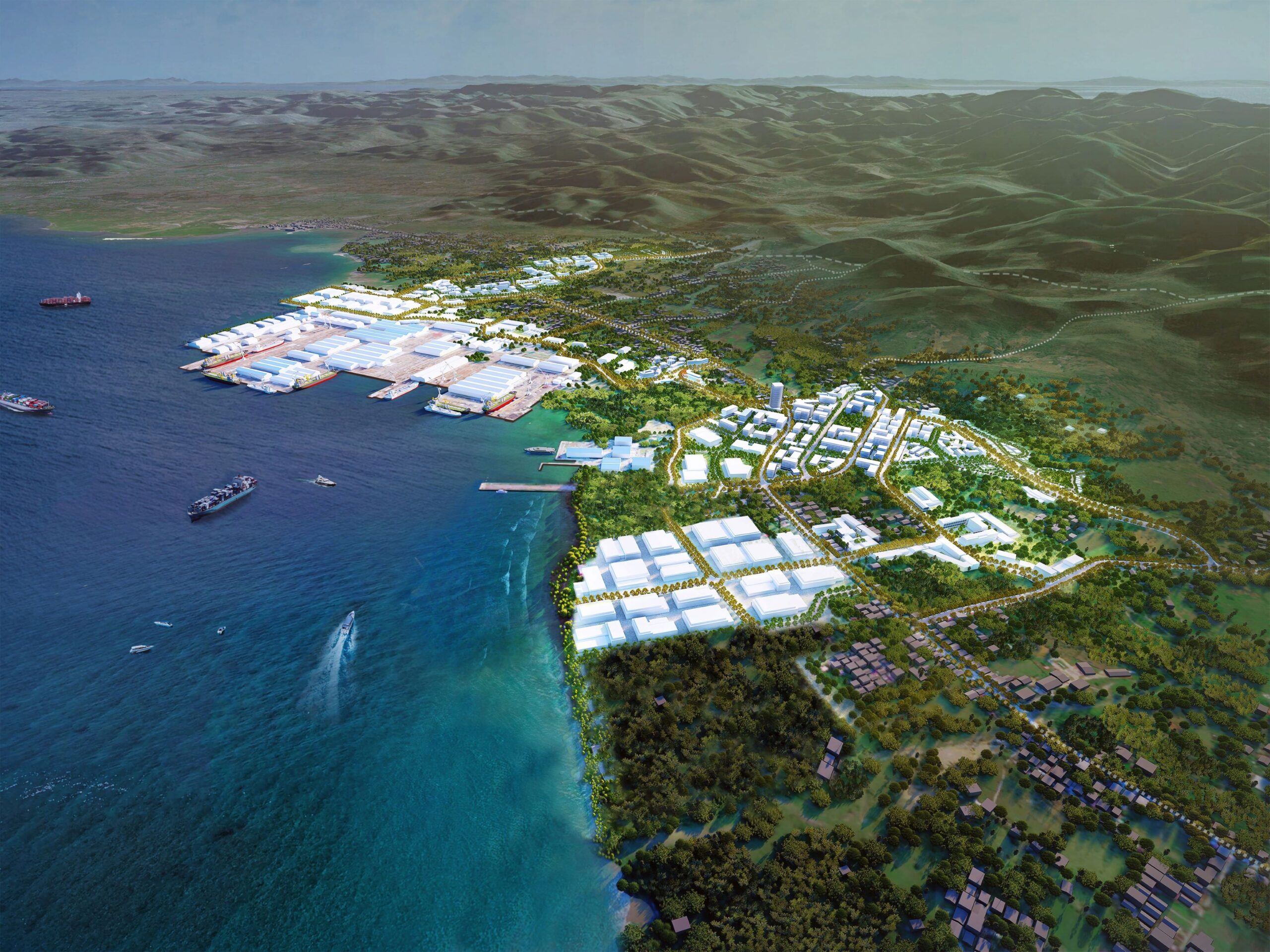
President Ferdinand R. Marcos Jr. has expanded the West Cebu Industrial Park–Special Economic Zone (WCIP-SEZ) by 64.7 hectares, a move expected to strengthen Cebu’s position as a major industrial hub and support thousands of new jobs in the Visayas.
Under Proclamation No. 1288, signed on June 3, 2026, Marcos designated two parcels of land in Barangay Buanoy, Balamban, Cebu for inclusion in the existing Cebu Special Economic Zone upon the recommendation of the Philippine Economic Zone Authority (PEZA).
The properties, identified as SK-07-000197 and SK-07-000198, cover a combined area of about 647,229 square meters, or 64.7 hectares.
The expansion brings the total area of the West Cebu Industrial Park to roughly 600 hectares, further cementing its status as one of the country’s leading industrial estates and a key base for shipbuilding and manufacturing activities.
PEZA Director-General Tereso Panga said the latest expansion reflects growing investor confidence in the Philippines and highlights Cebu’s increasing importance as an economic growth center outside Metro Manila.
“Cebu is rapidly emerging as one of the Philippines’ key growth centers, and this expansion of the West Cebu Industrial Park reinforces that momentum,” Panga said.
He added that the additional land area is expected to support up to 11,000 jobs linked to the operations of Tsuneishi, underscoring the role of economic zones in generating employment and attracting long-term investments.
The expansion also signals sustained demand for industrial space amid efforts by the government to disperse economic activity beyond the National Capital Region.
As manufacturers and exporters seek larger and more efficient production sites, provincial economic zones such as WCIP are becoming increasingly important to the country’s investment strategy.
The proclamation reinforces PEZA’s push to develop competitive regional investment hubs capable of supporting export-oriented industries, strengthening supply chains, and creating quality jobs.
The latest ecozone expansion adds momentum to the Marcos administration’s broader effort to attract investments, accelerate regional industrialization, and position the Philippines as a more competitive manufacturing destination in Southeast Asia.