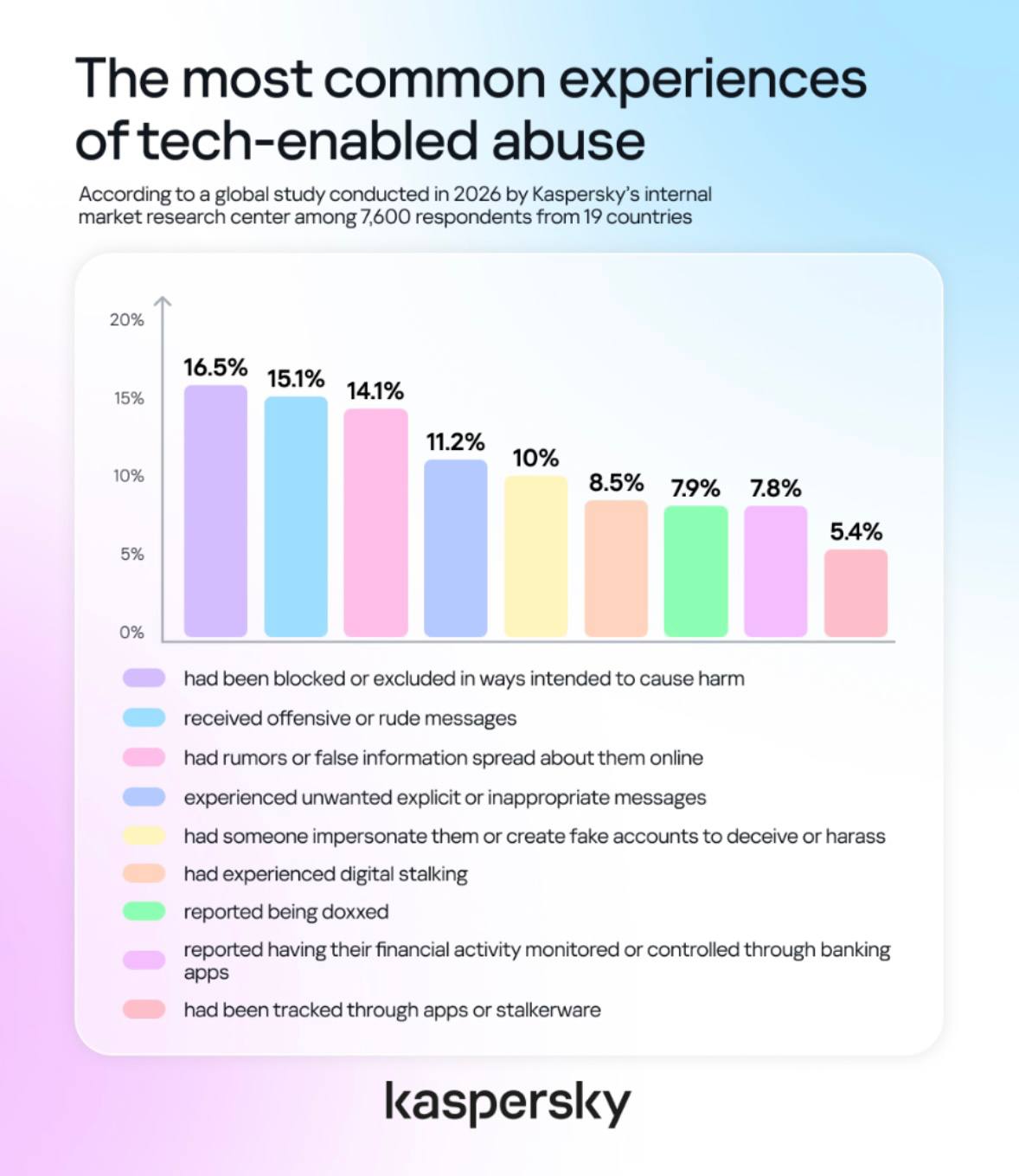
Kaspersky has released the findings of a global study showing that 45.7 percent of adults have faced some form of technology-facilitated abuse over the past 12 months. However, only 32 percent of respondents correctly understand what this type of harm entails.
Tech-enabled abuse refers to harmful actions carried out or extended through digital tools such as smartphones, social media platforms and online services. This includes behavior like online harassment, exclusion, impersonation, unauthorized monitoring and cyberstalking. Because these actions often happen within daily digital interactions and leave little obvious physical evidence, many people do not recognize them as abuse.
The report also examines the growing threat from stalkerware and related services found on the dark web. In 2024–2025 alone, more than 34,000 users worldwide were affected by stalkerware – software designed to secretly track and collect data from mobile devices. Over the past five years, this number has reached 127,000 users across more than 160 countries. The top most affected nations include Russia, Brazil and India.
Common forms of abuse reported include being intentionally blocked or excluded from digital spaces (16.7 percent) and receiving offensive messages (15.1 percent). Around 8.5 percent experienced digital stalking, while 5.4 percent were subjected to doxxing – the public release of private personal information. Doxxing services are available on dark web forums at prices ranging from $50 to $4,000.
Experts note that the lack of clear understanding of what constitutes tech-enabled abuse makes it difficult to measure the issue or support victims. To address this gap, Kaspersky is contributing expertise to the international Tech Abuse Conference hosted by UCL’s Gender and Tech Research Lab, including running an Anti-Stalkerware Workshop.
“Technology-enabled abuse is still not widely recognized as a distinct type of harm,” said Dr Leonie Maria Tanczer from UCL. “Without a shared understanding of what it includes, many experiences go unnamed, unreported and unsupported.”
Tatyana Shishkova from Kaspersky’s Global Research and Analysis Team added: “Stalkerware can be easily obtained and runs hidden in the background of devices. Most victims have no idea they are being monitored, so knowing how to spot these signs and what action to take is critical.”