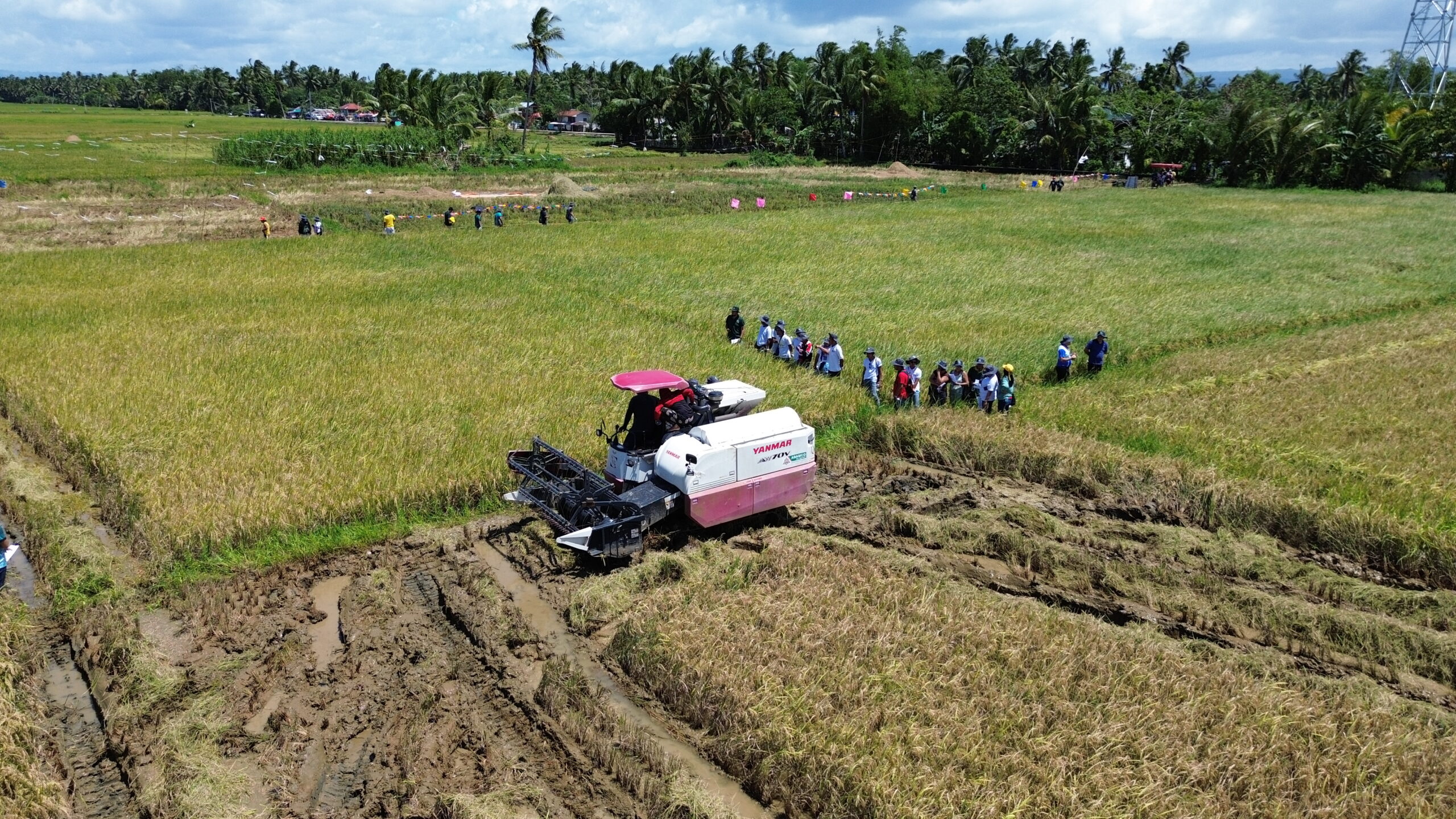
The Philippine Center for Postharvest Development and Mechanization (PHilMech) has stepped up the government’s farm modernization efforts, delivering over 1,700 farm machines across the country in the first half of 2026 to boost the productivity, resilience and profitability of local rice farming. As of June 30, the agency had distributed 1,731 units, representing nearly 76 percent of the 2,289 machines funded under the 2025 allocation of the Rice Competitiveness Enhancement Fund (RCEF). These went to 1,238 farmers’ groups, associations and local government units, with the full procurement for the 2025 budget already completed and remaining units set for release soon. The latest batch includes 900 four-wheel tractors, 700 combine harvesters, 95 recirculating dryers and 36 precision seeders, all designed to cut reliance on manual work, speed up field tasks and reduce post-harvest waste.
Efforts so far have lifted the country’s rice farm mechanization level to 2.81 horsepower per hectare by end-2025, up from 2.68 hp/ha in 2022, with combine harvesters and tractors leading the rise. PHilMech targets to hit 3.40 hp/ha as the RCEF program moves forward, bringing the country closer to the standards of its neighbors in the region. Since the program began in 2019, over 34,700 machines have been deployed nationwide, exceeding initial targets through cost savings from competitive bidding. Independent assessments show these measures have lowered labor costs by around P2 per kilo of unhusked rice, added roughly P9,000 to average earnings per hectare, and generated an estimated P2.66 billion in extra yearly income for participating farmers. It has also prevented some 31,800 metric tons of post-harvest losses annually, valued at nearly P541 million.
PHilMech chief Dionisio G. Alvindia noted every unit put in place helps farmers do more with fewer resources, cutting expenses, speeding up work and keeping more of their harvest in good condition. Agriculture Secretary Francisco P. Tiu Laurel Jr. added that mechanization is key to building a stronger rice sector, supporting older farmers facing physical demands and addressing seasonal labor shortages, while laying the groundwork for better food security, higher rural incomes and more competitive local rice.