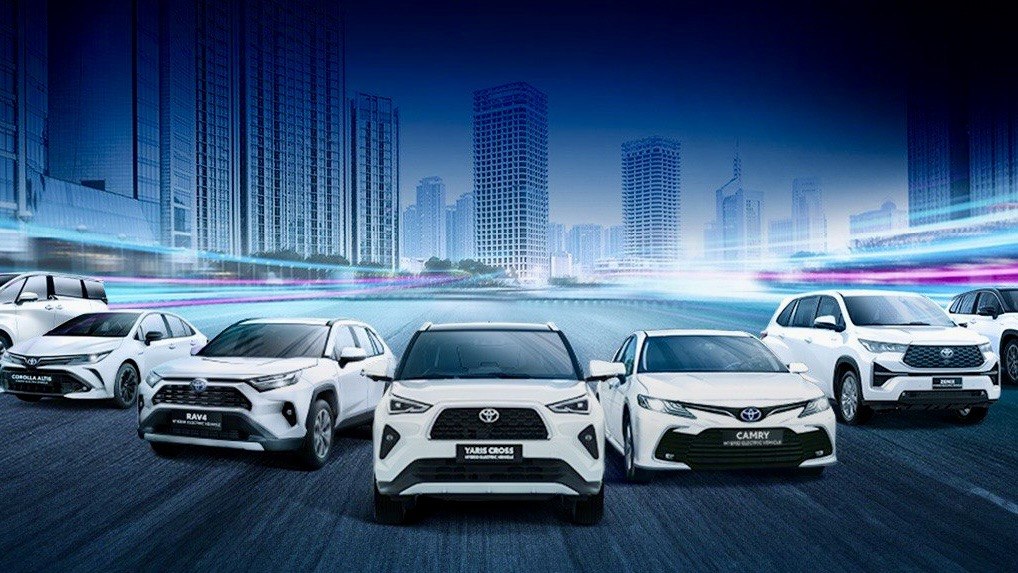
Toyota Motor Philippines Corp. (TMP) is pressing the transport regulator to allow conventional hybrid vehicles to compete for 7,500 new transport network vehicle service (TNVS) slots in Metro Manila, challenging the government’s decision to limit the latest allocation to plug-in and fully electric vehicles.
The Land Transportation Franchising and Regulatory Board (LTFRB), under Memorandum Circular 2026-084, opened the slots within Metro Manila, including the Metro Manila Urban Transportation Integration Study Update and Capacity Enhancement Project (MUCEP) area, exclusively to battery electric vehicles (BEVs) and plug-in hybrid electric vehicles (PHEVs).
Conventional hybrid electric vehicles (HEVs) are excluded.
TMP is asking the LTFRB to reconsider, arguing that HEVs are already covered by the country’s broader vehicle electrification policy.
“We acknowledge the release of MC No. 2026-084,” Toyota said, referring to the new allocation for electric vehicle taxis and TNVS units.
The automaker pointed to Republic Act 11697, or the Electric Vehicle Industry Development Act, which recognizes HEVs under the EV classification. It also cited the Electric Vehicle Incentive Strategy, which includes HEVs in the government’s vehicle electrification strategy.
Toyota said allowing more technologies could give TNVS operators greater flexibility as they transition to cleaner vehicles.
But the automaker went further, arguing that newer gasoline-powered vehicles should not automatically be left out of the discussion.
“We also believe modern low-displacement engine technologies in today’s compact ICE vehicles have significantly improved in terms of fuel efficiency and reducing emissions,” TMP said.
“Including these vehicles in the options can benefit both the operators and the riding public,” it added.
The LTFRB has said the new slots aim to meet rising passenger demand while supporting cleaner public transport.
Toyota’s appeal puts a broader question on the table: whether the shift to cleaner mobility should be limited to specific technologies or allow different vehicle technologies that meet evolving efficiency and emissions standards.