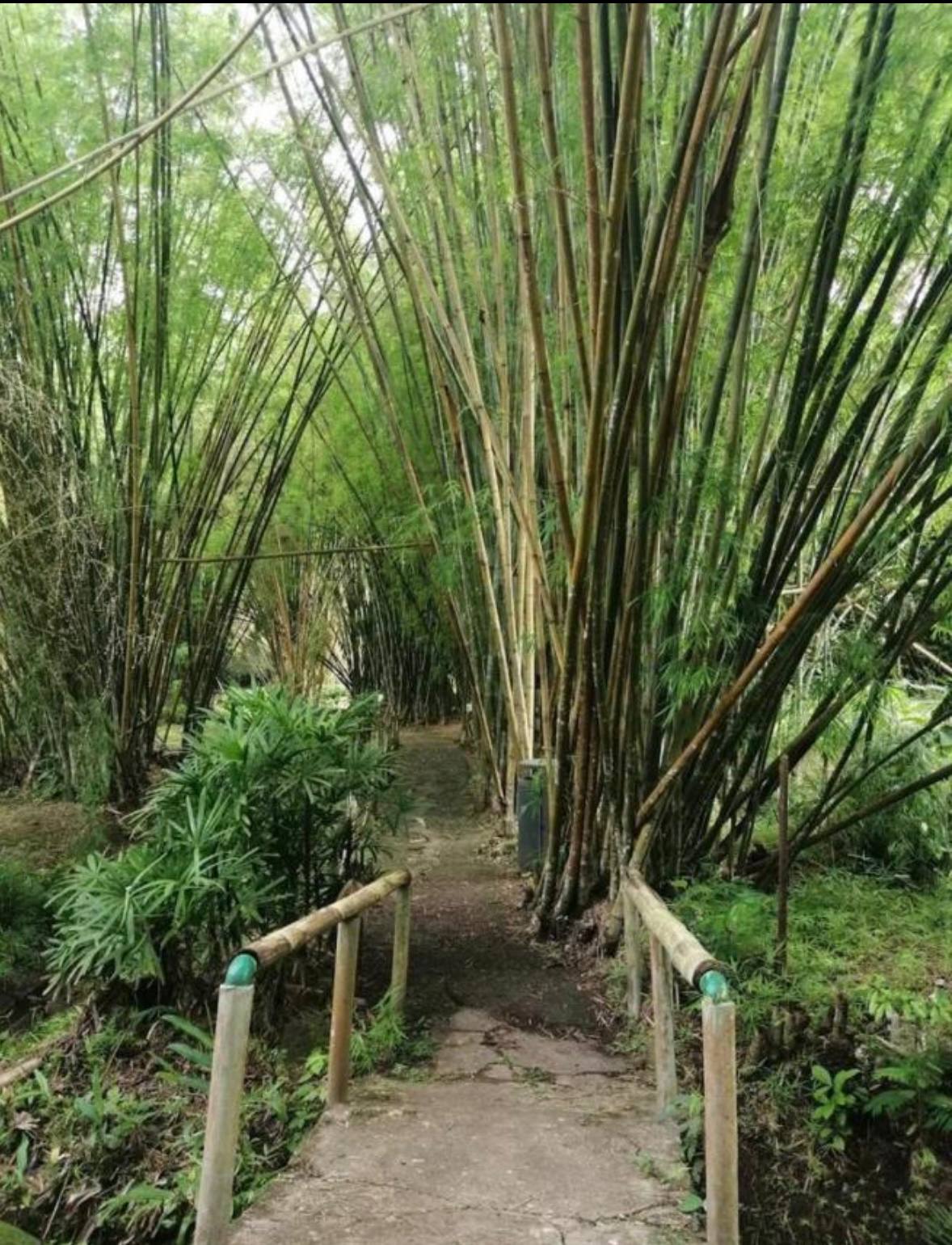
Planted years ago with no way of knowing who would one day find shade, strength or shelter beneath its fronds, a one-hectare bamboo grove at the Pasonanca Natural Park has grown into a quiet, resilient legacy for the future.
More than two decades on, the Bambusetum at Canucutan stands as a living testament to foresight and nature’s enduring power, established in 2001 by the Department of Environment and Natural Resources (DENR) Region IX through its Ecosystems Research and Development Service (ERDS). Home to 10 distinct species—including familiar varieties like kawayan kiling and kawayan tinik, alongside towering giant botong bamboo, iron bamboo, black bamboo and others—the site showcases the rich diversity of a plant often mistaken for a tree but classified as the world’s largest grass.
Bamboo ranks among nature’s most versatile and resilient resources, its roots strengthening soil and protecting watersheds while its fast growth makes it a highly renewable material. It serves a critical role in climate action by storing carbon, supports biodiversity through habitat provision, and opens livelihood opportunities through sustainable use of its sturdy stems. Long woven into daily life across communities, bamboo forms part of homes, furniture and handicrafts, yet its greatest gift may be the way it inspires people to plant, nurture and protect the land itself. Over time, the Canucutan site has emerged as a beloved ecotourism spot, drawing visitors and nature lovers who admire its beauty and landscape potential, while also functioning as a hub for environmental education, research and public awareness on conservation and sustainable management. Students, researchers, advocates and local communities have all taken part in activities here, deepening public understanding of bamboo’s ecological and economic worth.
The tradition of planting continues to grow, with organizations and groups such as the Zamboanga Press Club adding seedlings to the grove in recent activities—each addition enriching a landscape that will thrive long after those who planted it have moved on. In March this year, DENR Secretary Juan Miguel “Mitch” T. Cuna visited the facility and expressed deep appreciation for the work of the Forest and Wetland Research, Development and Extension Center (ERDB-FWRDEC) in maintaining the site. He urged continued enhancements so the Bambusetum may serve even more people and communities. This encouragement has driven upgrades supported by ERDB Director Dr. Lormelyn C. Claudio, led by FWRDEC Center Head Dr. Amildasa D. Annil, and carried out under the supervision of Orlando C. Tan, Jr., alongside dedicated station personnel in Zamboanga.
For DENR IX Regional Executive Director Marie Angelique C. Go, sustaining this unique place depends on lasting partnerships. “DENR IX will continue its joint collaboration with ERDB to help maintain, develop and preserve the Bambusetum site, recognizing its importance for bamboo conservation, research, education and environmental sustainability,” RED Go stated. The grove continues to evolve as existing species are preserved and new varieties introduced, with a long-term vision of transforming the demonstration site into a full Bamboo Forest—one where ecological, economic and educational value can be experienced and shared far into the future.
As the world marks World Bamboo Day this September 18, the grove offers a gentle yet powerful reminder: not everything planted today is meant for those who plant it. Some things are grown for people we may never meet—capturing the quiet strength of bamboo, and the enduring purpose of those who choose to nurture a story meant for generations yet to come.