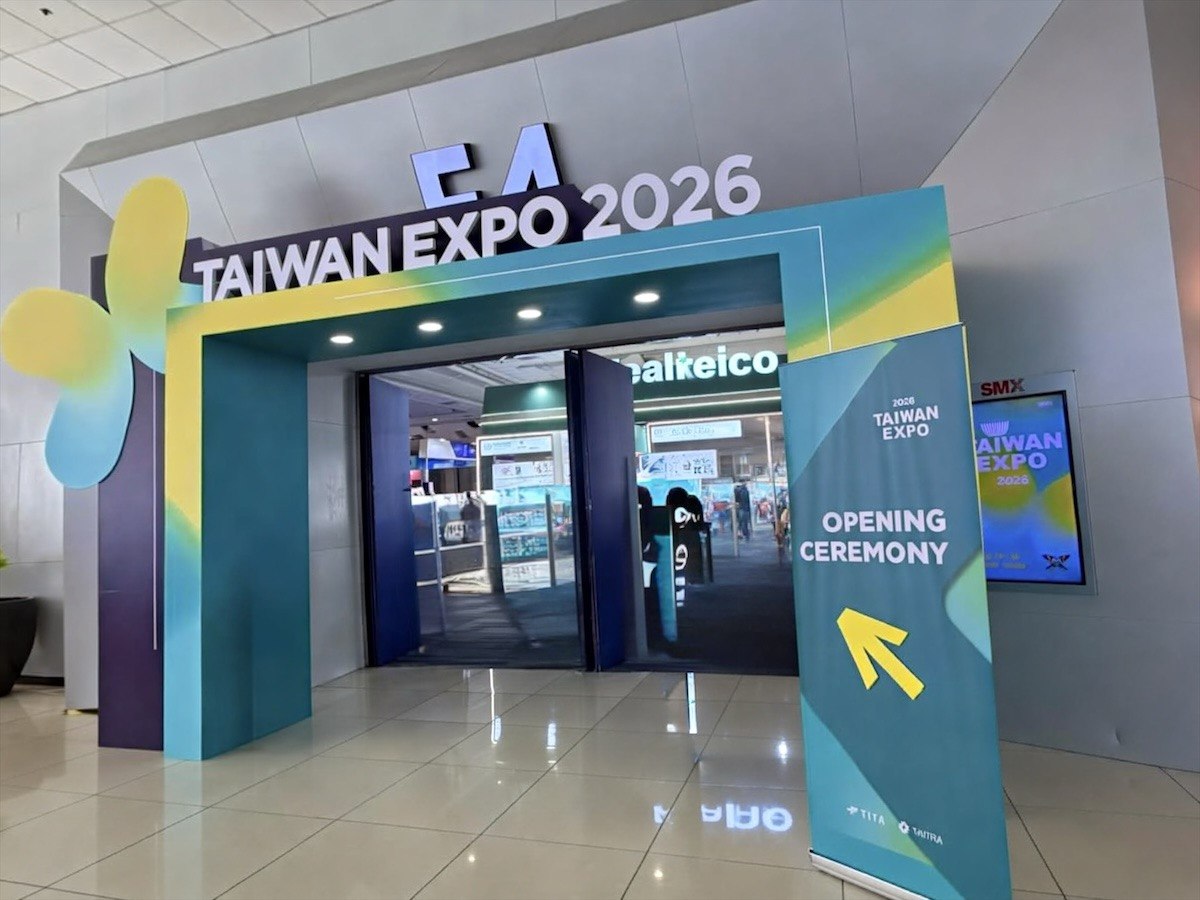
Taiwanese companies are looking to expand in the Philippines by targeting gaps in energy, healthcare, agriculture, and digital infrastructure, with 125 firms showcasing technologies at Taiwan Expo 2026 in Manila.
The three-day exhibition, which opened Thursday at the SMX Convention Center Manila, features artificial intelligence, smart manufacturing, renewable energy, healthcare, agriculture, and consumer technologies as Taiwan seeks to deepen commercial ties with the Philippines.
The country’s expanding digital economy is one potential growth market. It reached P2.74 trillion in 2025, or 9.8 percent of gross domestic product, creating demand for automation, connectivity, and industrial technologies.
Taiwanese exhibitors are presenting AI visual recognition, collaborative robots, industrial monitoring, and smart security systems aimed at companies seeking greater automation and operational efficiency.
Energy presents another opening. About 1.55 million Philippine households remained without electricity in 2024, while the government targets a 35-percent renewable share in power generation by 2030.
Taiwanese firms are showcasing sodium-ion batteries, energy management systems, and decentralized power technologies that could help integrate renewables and extend electrification, particularly in underserved areas.
Healthcare is another target market, with Filipino households still shouldering 41.2 percent of current health expenditure in 2025. Exhibitors are presenting technologies designed to improve medical services and efficiency.
Agriculture is also on the list, with autonomous farm equipment, agricultural automation, and food-processing technologies positioned as tools to raise productivity.
TAITRA chairman James C.F. Huang said trust would be critical to expanding Taiwan-Philippines economic ties beyond established supply chains into technology, services, and consumer markets.
The opportunity for Taiwanese companies is clear, but converting technology showcases into sustained Philippine business will depend on affordability, local adoption, and the ability to fit solutions to the country’s infrastructure needs.