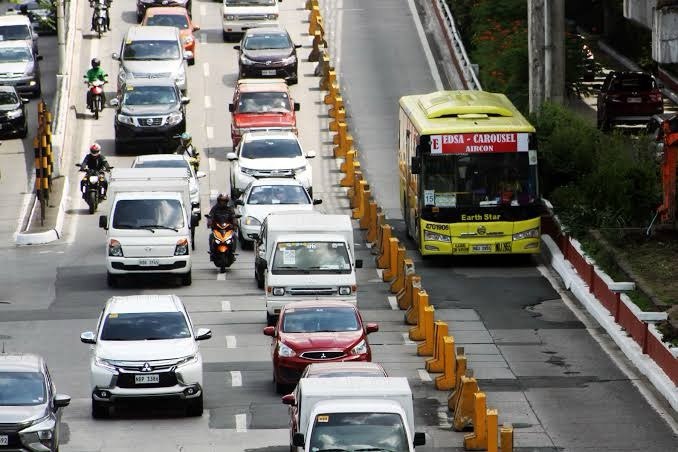
The Management Association of the Philippines (MAP) has called the proposed zero budget for the EDSA Busway “inexplicable,” warning that underfunding one of Metro Manila’s busiest mass transit systems could worsen congestion and raise costs for commuters and businesses.
MAP backed Transportation Secretary Giovanni Lopez’s call for funding, saying sustained government investment is needed to preserve the busway’s priority over private vehicles along one of the capital’s most congested corridors.
“For a vital public service as the EDSA Busway, to have a zero budget will be inexplicable to the public,” MAP said in a statement Friday.
The business group said the busway currently carries about 200,000 passengers a day, highlighting its role in moving workers and commuters across Metro Manila. Daily ridership peaked at 321,186 passengers on April 21, 2025, it said.
MAP argued that scarce road space should be allocated toward high-capacity public transportation rather than policies that could encourage greater dependence on private vehicles.
“All measures must be given to ensure the primacy of the government’s policy of mass transit over private vehicle use on our limited road space,” the group said. “To do less would only add to the massive traffic problem.”
The group also urged the government to complete the busway’s upgrade to what it calls the “gold standard,” including improvements that could make public transport more attractive to motorists.
MAP has advocated a higher-capacity EDSA Busway with dedicated stations and better commuter facilities, arguing that a more efficient system could encourage a shift from private cars to mass transit.
The group said improvements to the EDSA corridor could also provide a model for upgrading public transportation along other major Metro Manila routes.
For business, MAP said, the issue extends beyond the busway itself, as unreliable or inadequate mass transit can translate into longer travel times, reduced worker productivity and higher commuting costs across the capital.
With congestion remaining a persistent drag on Metro Manila mobility, the group said government spending decisions on mass transit should reflect the scale of the problem.