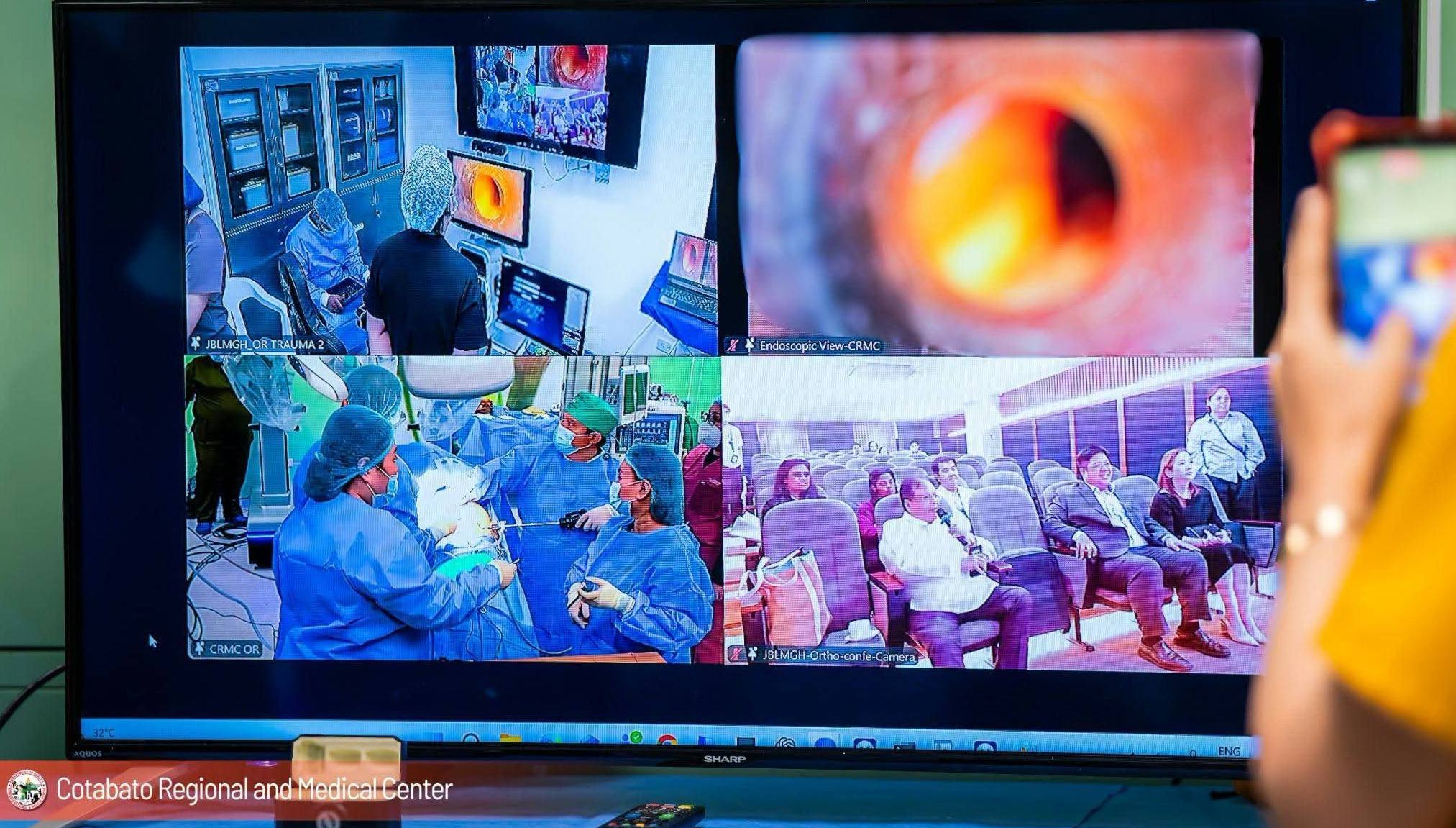
Most advanced surgical care in the Philippines stays concentrated in major cities, leaving patients in Mindanao and other far‑flung regions forced to travel long distances, pay steep costs, and leave their families. In time‑sensitive cases, distance alone can worsen patient outcomes.
A historic medical milestone has bridged that gap, with Globe Business providing the dedicated mission‑critical network for the country’s first‑ever inter‑regional telesurgery spanning over 1,400 kilometers. The simultaneous two‑way robotic surgery connected Jose B. Lingad Memorial General Hospital in San Fernando, Pampanga, and Cotabato Regional and Medical Center in Cotabato City. Surgeons in Pampanga remotely operated on a Cotabato patient while the Cotabato surgical team performed a separate robotic procedure on a patient in Pampanga, launching a decentralized care model that brings high‑level surgical expertise across regional boundaries.
“Digital infrastructure has become the backbone of essential public services,” said Globe Business Vice President Glenn Estrella. “Linking surgical teams across Luzon and Mindanao in real time proves reliable networks can expand access to specialized medicine, letting hospitals and specialists serve patients regardless of location.”
Spearheaded by RBGM Medical Express Sales Inc., SS Innovations, JBLMGH, and CRMC, the initiative extends beyond a single demonstration of the SSi Mantra 3.0 Surgical Robotic System, which translates surgeons’ hand movements into precise micro‑movements at the opposite operating table. RBGM will sustain the breakthrough through local training, technical support, and the rollout of decentralized surgical units in regional healthcare facilities.
Globe Business set up a private direct data link between the two hospitals, shielding the surgical transmission from ordinary internet congestion. The connection hit latency as low as 0.76 milliseconds, supporting sharp 3D 4K video, clear operating‑room audio, tactile feedback, and lag‑free instrument control, with backup network routes active throughout the procedure to maintain signal stability.
“Network performance directly equals patient safety and surgical precision during remote operations,” Estrella stressed. “Ultra‑low latency and redundant cross‑island routing give medical teams the confidence to collaborate across regions, allowing local hospitals to retain patients while drawing on top surgical expertise nationwide.”
The breakthrough supports the Department of Health’s National Objectives for Health, which pushes digital health systems to expand equitable public‑hospital care. While 63 out of 70 DOH‑retained hospitals already use telemedicine for consultations, the successful Pampanga‑Cotabato telesurgery shows high‑complexity robotic surgery can safely reach regional medical centers.
For Philippine hospitals adopting telemedicine and surgical robotics, stable, low‑latency connectivity will remain essential to safe, reliable patient care across the archipelago.