When Irwin Lee became president and chief executive of Universal Robina Corp. (URC) in 2018, succeeding Lance Gokongwei, the Gokongwei Group’s flagship food company was generating roughly P107 billion in annual revenues.
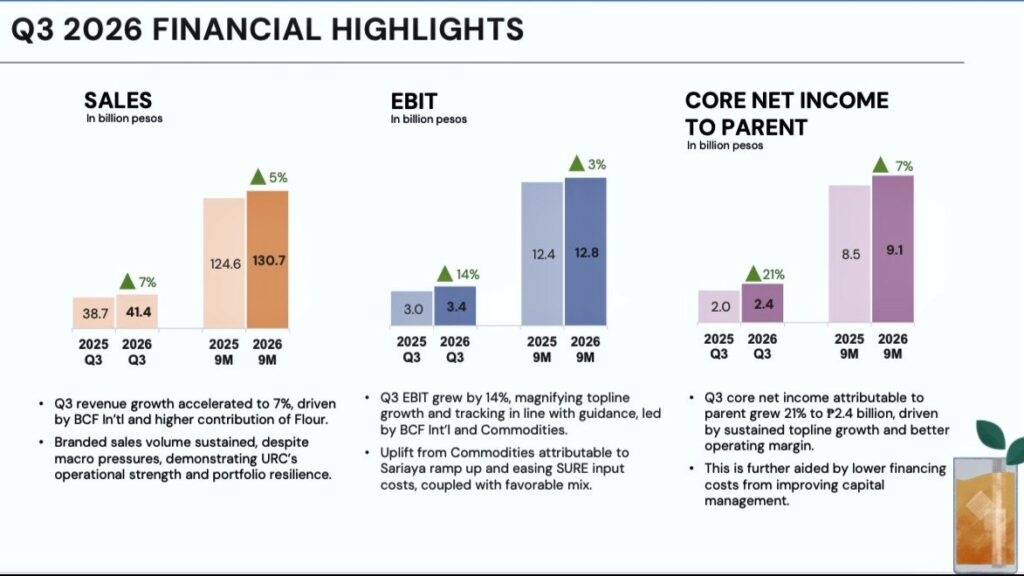
Eight years later, as URC marks its 70th anniversary, revenues are poised to cross P175 billion. That is an impressive P70-billion addition under Lee’s watch, achieved without the luxury of a particularly cooperative business environment.
In fact, the past eight years have often felt like an endurance test in keeping time while the world plays a different tune.
Lee has had to steer URC through the COVID-19 pandemic and its supply-chain disruptions, the Russia-Ukraine war and its commodity price shocks, and the latest Middle East conflict, which sent diesel prices soaring from about P50 to P120 per liter. Persistent inflation, currency swings and increasingly cautious consumer spending have added their own complications.
For a company selling everything from snacks and biscuits to flour, sugar and animal feeds, these are not exactly background noises. They go straight to the bottom line.
Fortunately, Lee knows something about keeping rhythm. Away from the boardroom, he is a drummer with two bands, URC’s own URJam and an outside group called WIPs, short for Work in Progress. He occasionally attempts the Phil Collins trick of drumming while singing, although managing a multinational food business arguably requires enough multitasking already.
But music is more than an occasional escape. Lee sees a useful management lesson in the drummer’s role.
“A drummer keeps time, a drummer keeps pace, a drummer keeps the rhythm going,” he says.
That philosophy has largely defined his approach to running URC. Rather than chasing headline-grabbing acquisitions or betting the balance sheet on oversized projects, Lee has favored operational discipline, measured investments and the financial flexibility to absorb the next surprise.
URC maintains tight working-capital controls, keeps net debt below 0.5 times EBITDA and spends roughly P6 billion to P8 billion annually on capital expenditures. Investments are phased to build capacity without overwhelming cash flow, from the Malvar mega site to flour and sugar mills, animal feeds facilities and biscuit expansions in Malaysia.
It is a strategy built around keeping the business moving without losing its footing.
The international business provides another source of resilience. Overseas operations account for roughly 20 to 25 percent of revenues, offering a natural foreign-exchange cushion when the peso weakens. Malaysia’s Munchy’s, in particular, has reinforced its position in the biscuit market while expanding its reach across ASEAN.
Yet Lee’s route to the URC corner office was itself something of a departure from the usual corporate script.
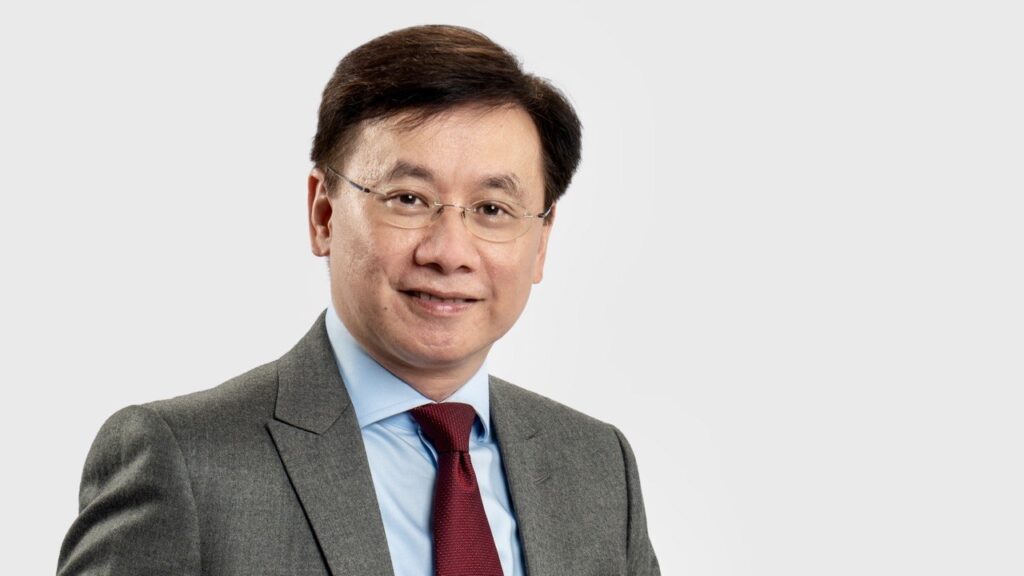
A summa cum laude accounting graduate of De La Salle University, he built much of his career at Procter & Gamble, where he spent a decade in China before taking on assignments in Japan and South Korea. He subsequently spent eight years overseeing operations in the United Kingdom, Ireland and Northern Europe.
After heading Rustan Supercenters, he joined URC and, in 2018, became its first president and CEO from outside the Gokongwei family.
The transition came as Lance Gokongwei moved to the chairmanship and James Go became chairman emeritus, while founder John Gokongwei Jr. retained the same honorary title, making room for a new professional steward of the business.
Lee has since put his international experience to work, but his biggest bet remains the Philippines. About 80 percent of URC’s capital spending goes to the domestic market, where he sees enduring opportunities in a young population, an expanding middle class and continuing social mobility.
That confidence comes with a clear-eyed understanding of the Filipino consumer. With household budgets under pressure, affordability is no longer just a marketing consideration.
It is a competitive necessity.
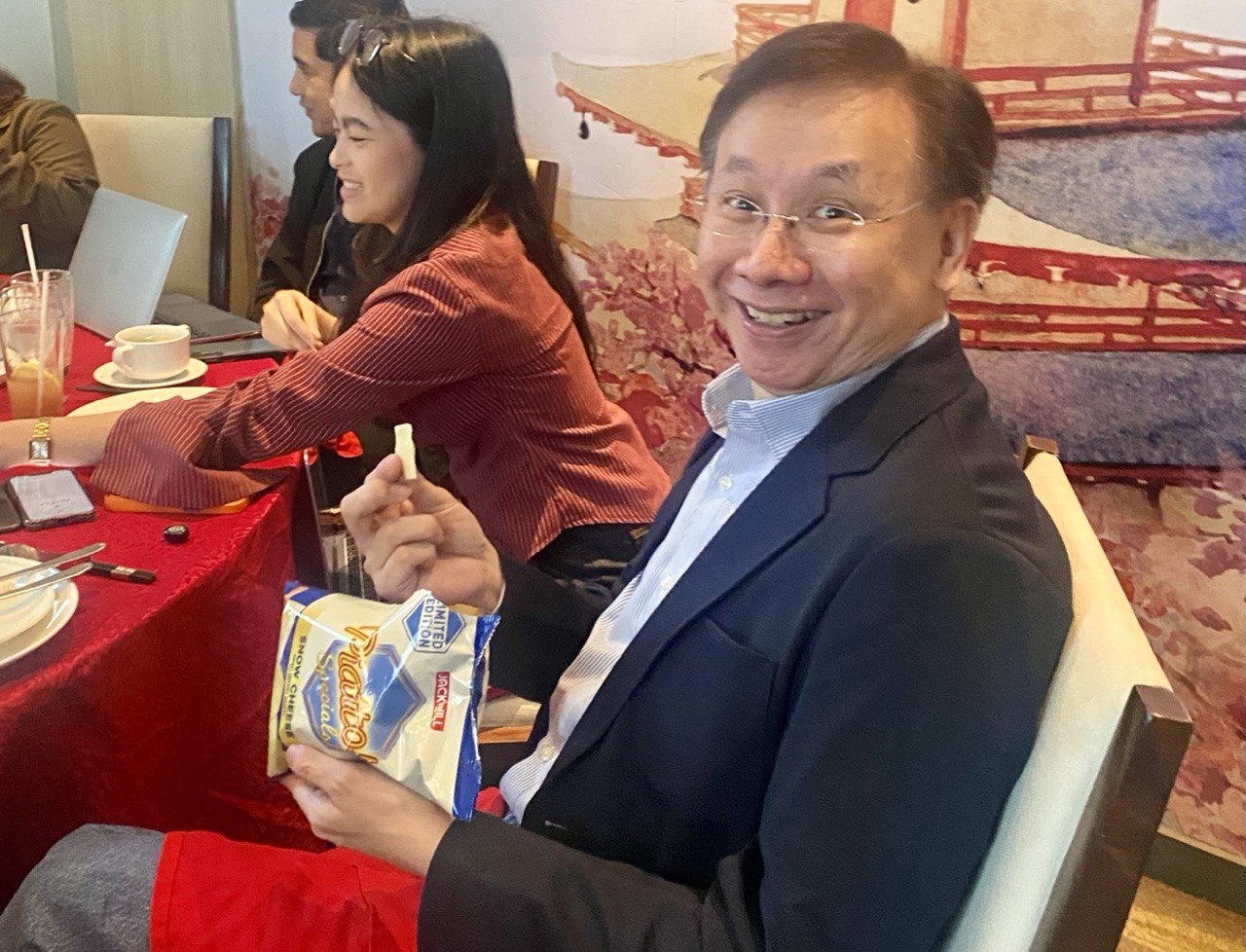
URC’s P10 product packs help keep its brands within reach, while innovations such as Piattos Snow Cheese give consumers something new without asking them to abandon familiar price points.
The underlying calculation is simple: brand loyalty is valuable, but it must still fit the household budget.
Shareholders, meanwhile, have enjoyed six consecutive years of dividend increases, complemented by share buybacks that help support earnings per share. It is another indication that Lee’s preference for financial discipline is not simply about preserving cash but also about delivering returns.
“We believe that there’s something that we can do and that we can control our own fate,” Lee told journalists on a rainy Friday afternoon.
It is a decidedly pragmatic outlook for a business operating in an economy where commodity prices, geopolitical tensions and consumer sentiment can change the tune overnight.
And when circumstances demand a different approach, Lee has a distinctly Filipino answer: “Pwedeng ibang diskarte.”
Perhaps that is the most revealing part of his leadership style. Discipline does not mean rigidity, just as keeping time does not mean playing the same tune regardless of what the rest of the band is doing.
At 70, URC is still growing, investing and adapting. Under Lee, the challenge has been to keep a large, complex food business in step with an unpredictable world, while making sure it does not lose its appetite for growth.
Eight years into the job, he appears to have settled on a winning arrangement: know the rhythm, respect the tempo, and never be afraid to improvise when the music changes.