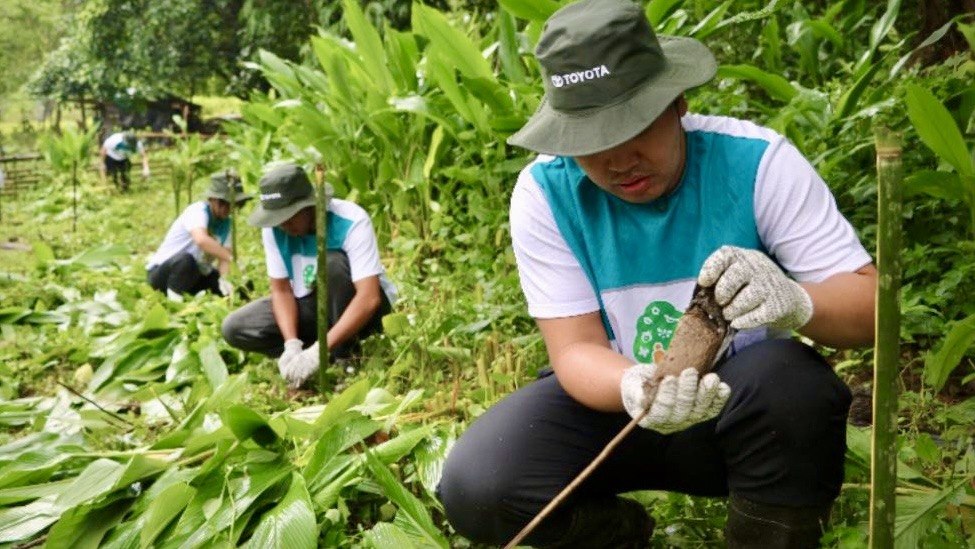
Toyota Motor Philippines Foundation is expanding its environmental restoration program in Calabarzon, adopting 70 hectares of upland forest and coastal mangroves under five-year agreements with the Department of Environment and Natural Resources (DENR).
The agreements with DENR-Calabarzon cover a 50-hectare National Greening Program site in Tanay, Rizal, and a 20-hectare mangrove rehabilitation area in Unisan, Quezon, along Tayabas Bay, a key biodiversity area.
The foundation will work with the agency and local partners to sustain planting activities, replace seedlings that do not survive, and rehabilitate the two ecosystems over the next five years.
Planting is already underway at both locations. In Tanay, the foundation has planted 33,500 seedlings since 2023, including replacements, exceeding its initial commitment of 31,250.
In Unisan, it has planted 28,000 mangrove seedlings since 2024, working toward a five-year target of 50,000.
The latest agreements build on two earlier five-year adoptions in Siniloan, Laguna, and Calatagan, Batangas, which were completed earlier this year. Toyota reported an 85-percent overall seedling survival rate across the two sites, where it planted 60,000 seedlings covering 58 hectares.
“Our commitment goes beyond the number of trees we plant. It is about ensuring that our efforts contribute to healthier ecosystems, preserve natural habitats, and create lasting environmental impact for future generations,” foundation president Jose Maria Aligada said during the signing.
The new commitments expand the All Toyota Green Wave Project, launched in 2015 to mobilize the company’s Philippine network in environmental protection and restoration.
Toyota said its subsidiaries, dealers, and suppliers have planted more than 600,000 trees and mangrove seedlings nationwide through the initiative, including more than 113,000 this year alone. Dealers account for over 321,000 of the trees planted.
The foundation’s latest adoptions underscore the importance of maintaining restoration efforts beyond initial planting. Seedling survival, replacement, and long-term ecosystem rehabilitation will determine whether the commitments translate into lasting gains for forests and coastal habitats.