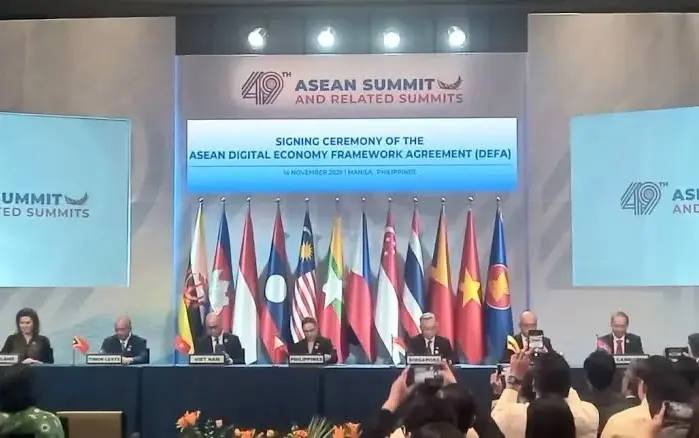
Philippine businesses must tighten their email security and data management rules following the signing of a landmark regional digital trade pact, according to email and collaboration software provider Zimbra.
Signed during the 49th ASEAN Summit in Manila, the Digital Economy Framework Agreement (DEFA) is designed to make it easier for data to move across Southeast Asian borders while setting shared cybersecurity standards. While the pact will not take full effect until member nations ratify it in 2027, Zimbra executives warn that the agreement immediately raises the stakes for how companies protect digital communications.
Combining cross-border data sharing with cybersecurity rules presents major risks if companies do not secure their basic entry points. According to threat intelligence firm SOCRadar, webmail login pages accounted for roughly 17 percent of all phishing sites targeting the Philippines between August 2025 and August 2026. Because corporate email acts as a central hub for cross-border business, a single stolen password allows hackers to impersonate trusted colleagues, intercept sensitive messages, reset passwords for other company systems, and target external business partners.
To counter these threats, Zimbra Chief Product Officer Bret Cunningham advises companies to assume some employee passwords have already been leaked online. Organizations need to actively check for compromised credentials, force password resets, and add a second layer of login verification—such as multi-factor authentication—to every mailbox. Companies must also limit the number of staff with high-level system access and apply their strictest security rules to administrators and executives who approve or release sensitive data.
For companies operating across multiple Southeast Asian countries, the rollout of the new pact will likely feel uneven. Because individual ASEAN member states will ratify and enforce DEFA at different speeds, regional businesses will temporarily face varying data rules and security expectations depending on where their offices are located.
Zimbra executives emphasize that companies cannot afford to wait for slow-moving government timelines or rely on weak local standards, noting that cybercriminals use the same attack methods in every country. A security gap in one regional branch leaves the entire organization exposed. Furthermore, business partners in neighboring countries are expected to demand proof that shared data is properly protected before doing business.
Even as DEFA makes moving information across borders easier, Zimbra Chief Revenue Officer Anthony Chadd notes that organizations remain legally and operationally accountable for their data, regardless of where their servers sit. Regional businesses should establish one unified security standard across all their ASEAN offices. Leaders must know exactly where their email data is hosted, who holds administrative control over it, and whether that data can be easily moved if local laws or partner requirements shift.