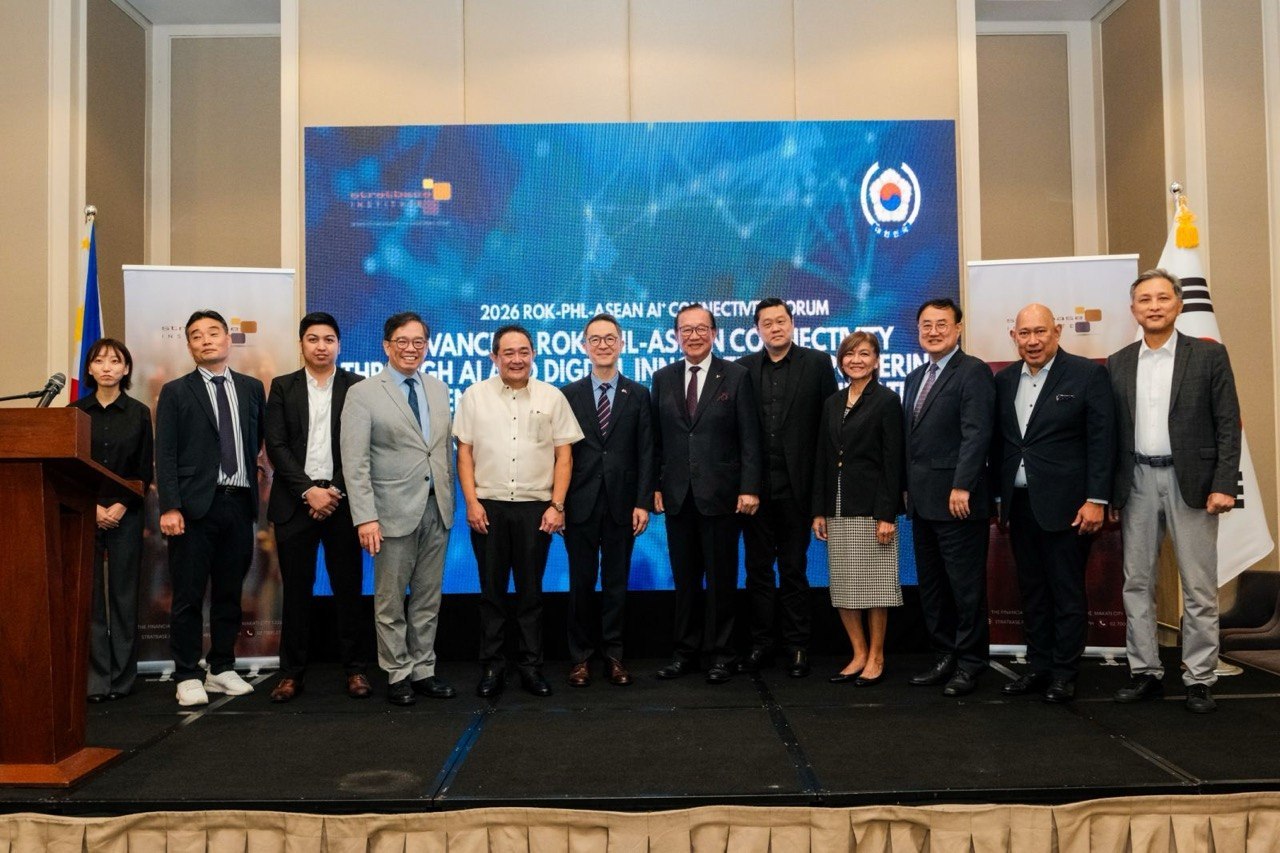
The Philippines and South Korea are exploring stronger cooperation to make artificial intelligence more accessible to small businesses, seeking to help them overcome market barriers, reach overseas customers, and participate more actively in the growing ASEAN digital economy.
The initiative targets micro, small and medium enterprises (MSMEs), which account for 99.5 percent of Philippine business establishments but often lack the technology, financing and expertise available to larger companies.
Information and Communications Technology Secretary Jay de Claro said the ASEAN Leaders’ Declaration on AI-Powered MSME Growth, adopted under the Philippines’ ASEAN chairship, recognizes the need to make artificial intelligence more inclusive.
AI “must not become an advantage reserved for large companies, but must also become an opportunity for our smallest businesses,” he said.
Speaking at the 2026 ROK-Philippines-ASEAN AI+ Connectivity Forum in Makati City, South Korean Ambassador Lee Dong-gy expressed Seoul’s interest in deepening cooperation with Manila on artificial intelligence and cybersecurity.
He cited South Korean President Lee Jae-myung’s proposed ASEAN-ROK AI Companionship initiative, which seeks to strengthen regional collaboration in developing and applying AI technologies.
Stratbase Group President and CEO Victor Andres “Dindo” Manhit said MSMEs need more than access to digital tools to compete internationally. They also require training and financing to reach foreign customers, process cross-border payments efficiently, and qualify as suppliers to larger enterprises.
Foreign Affairs Undersecretary for Policy Leo Herrera Lim said the proposed ASEAN Digital Economy Framework Agreement aims to help expand the region’s digital economy to USD2 trillion by 2030 through more seamless cross-border transactions and interconnected payment systems.
Philippine Chamber of Commerce and Industry Chairman Emeritus George Barcelon said the country already has more than two million digital merchants, giving local businesses a platform to expand their reach.
He said AI could help smaller firms overcome language barriers and connect with overseas buyers, while cooperation with South Korea could support digital skills development, better logistics and simpler cross-border trade.
The challenge, however, is ensuring that smaller enterprises can afford and effectively use these technologies rather than allowing the digital divide to widen as AI adoption accelerates.