Medicine has long warned us about smoking, drinking, and standing up too fast. Now add another hazard to the list: really good jokes.
In a letter to The American Journal of Medicine, cardiologists Ronald Lo and Todd Cohen revive one of the strangest diagnoses in the medical canon—laughter-induced syncope, la condition in which laughing so hard you briefly lose consciousness is not a metaphor but a chartable event.
Their patient was a 29-year-old, previously healthy man who witnessed a coworker slip and hit his head on a sink. What followed was not concern, but comedy gold: an uncontrollable fit of laughter involving leaning forward, crouching, and—three seconds later—collapsing to the floor with transient loss of consciousness and a bit of arm twitching for dramatic effect.
Moments later, he was awake, oriented, and apparently ready to get back to work, as if nothing had happened except the punchline landing too well.
The emergency department, less amused, ran the usual gauntlet: labs, ECG, echocardiogram—all normal. The culprit emerged only with tilt-table testing, which confirmed neurocardiogenic (vasovagal) syncope.
Translation: the autonomic nervous system overreacted, blood pressure and heart rate dipped, cerebral perfusion briefly followed, and gravity did the rest.
This case earns extra credit for joining an extremely exclusive club. It is only the third reported caseof laughter-induced syncope in the literature.
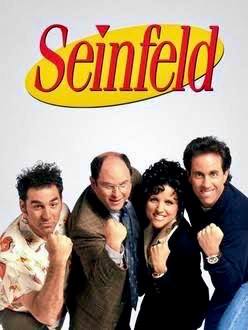
The first, described in 1997, involved a 62-year-old man who repeatedly fainted while laughing at Seinfeld, a contribution to medicine so culturally specific it earned the eponym “Seinfeld syncope.” That patient, however, had significant cardiovascular disease, muddying the comedic waters.
The second case, in 2005, featured a healthy 32-year-old barber undone by a particularly funny story from a client. Like the current patient, he had no structural heart disease, normal labs, and a sense of humor powerful enough to knock him over—literally.
Together, these cases suggest that while laughter may be the best medicine, it can occasionally overshoot the dose.
Physiologically, laughter-induced syncope is less slapstick and more plumbing. Intense laughter increases intrathoracic pressure—much like coughing, straining, or a Valsalva maneuver—triggering an exaggerated autonomic response. Parasympathetic tone surges, sympathetic tone retreats, heart rate and blood pressure fall, and the brain briefly experiences a power outage.
The good news? This is a benign condition. Symptoms resolve within seconds, recurrence often diminishes over time, and no one is advised to stop watching sitcoms entirely.
Management is reassuringly unexciting. Patients are counseled to recognize prodromal symptoms (lightheadedness, dizziness), avoid triggers like prolonged standing or rapid postural changes, stay well hydrated, liberalize salt intake, and consider compression stockings.
Medications that promote vasodilation may be discontinued.
For those with recurrent episodes, beta-blockers can be used to blunt the reflex by reducing myocardial contractility and catecholamine surges, short-circuiting the Bezold–Jarisch reflex before the punchline lands too hard.
Laughter-induced syncope sits at the intersection of neurology, cardiology, and comedy—rare, dramatic, and ultimately harmless. It reminds clinicians that not every collapse is catastrophic, not every faint is sinister, and sometimes the most dangerous thing in the room is a really funny moment.
So laugh freely—but if a joke makes the room spin, maybe take a seat.