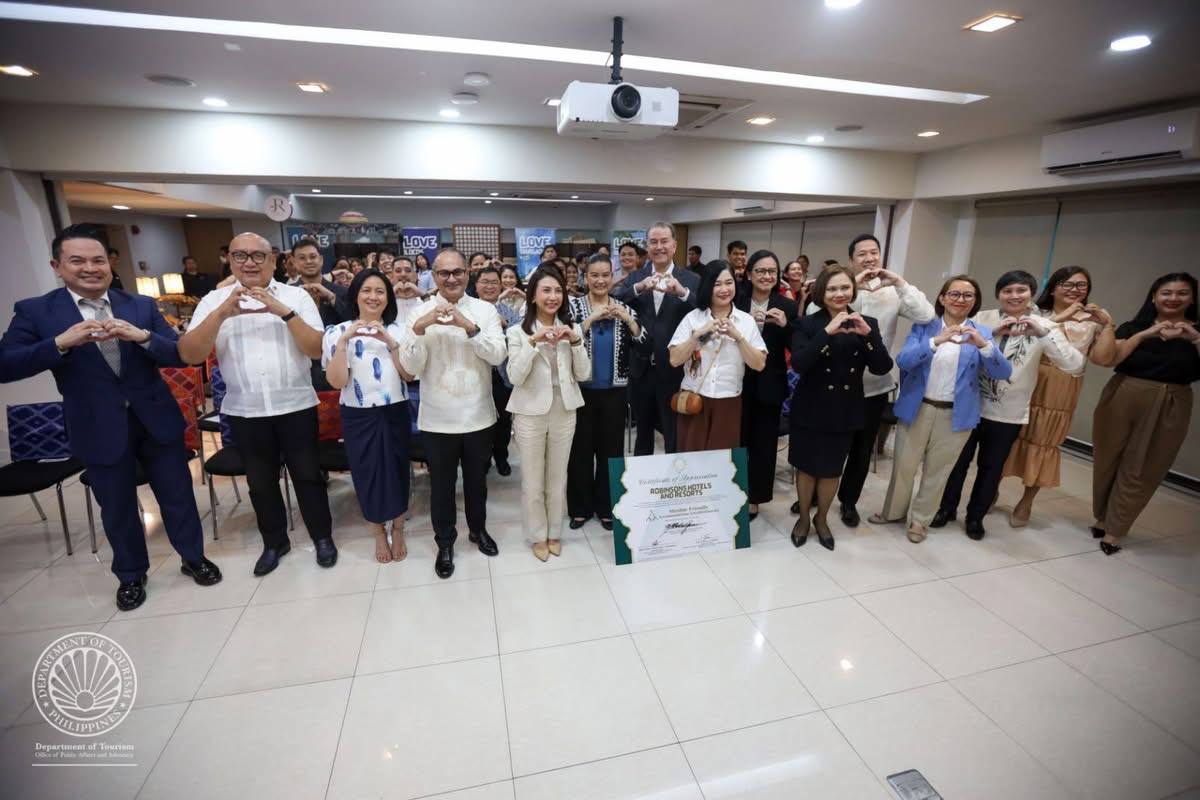
Robinsons Hotels & Resorts (RHR) has strengthened its position in the country’s hospitality sector after earning the Department of Tourism’s (DOT) Muslim-Friendly Accommodation Establishment (MFAE) Recognition for 21 of its properties nationwide.
The accreditation, granted under DOT Memorandum Circular No. 2024-003, follows months of inspections and capacity-building initiatives designed to align hotel operations with Muslim-friendly standards. These include the provision of designated prayer spaces, proper ablution areas, halal or Muslim-friendly food options, and enhanced staff awareness to ensure culturally sensitive service for Muslim guests.
Tourism Secretary Christina Garcia Frasco, who led the ceremonial awarding on Tuesday, January 20, said the recognition marks a significant milestone in advancing inclusive and culturally responsive tourism in the Philippines. She noted that such initiatives are crucial as the country positions itself to attract a broader spectrum of international travelers.
The milestone builds on a Memorandum of Understanding signed between the DOT and RHR during the Arabian Travel Market in Dubai in April 2025.
Under the agreement, both parties committed to transforming RHR’s signature and partner properties into Muslim-friendly establishments while jointly promoting the Philippines as a competitive destination for Muslim travelers worldwide.
The recognition underscores RHR’s strategic shift toward inclusivity as a growth driver. With Muslim travelers representing one of the fastest-growing segments in global tourism, industry analysts see Muslim-friendly accreditation as both a social and commercial advantage.
By standardizing facilities and services across multiple locations, RHR aims to provide consistency and confidence for Muslim guests traveling for leisure or business. The move also complements the DOT’s broader efforts to diversify source markets and encourage longer stays through improved visitor experiences.
As global tourism becomes increasingly values-driven, RHR’s accreditation signals how Philippine hotel groups are adapting to evolving traveler expectations—positioning inclusivity not just as a compliance measure, but as a core component of long-term competitiveness in the hospitality sector.