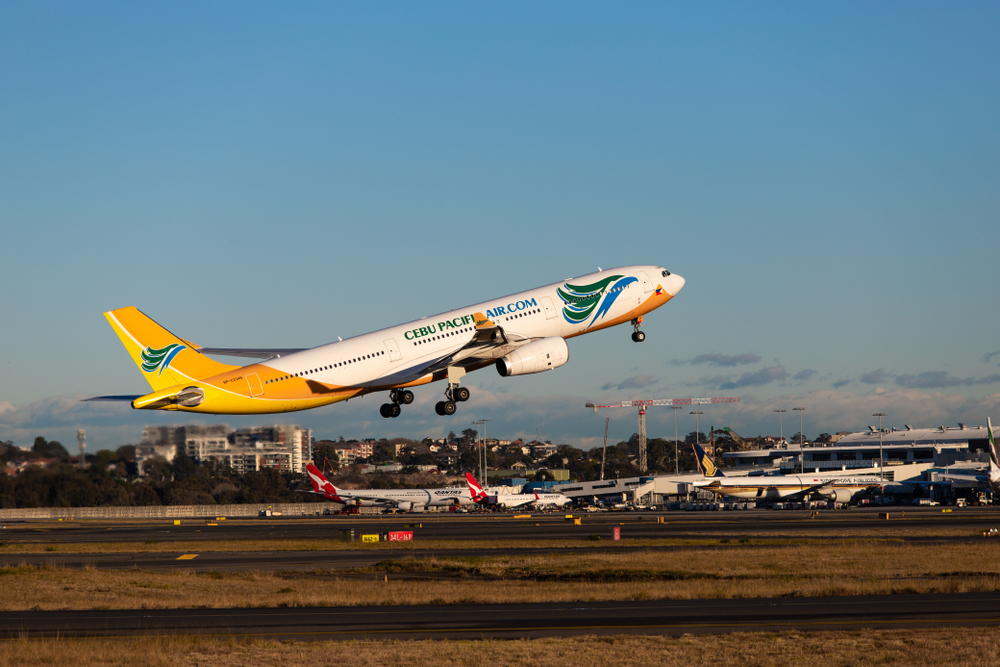
Cebu Pacific reported robust passenger growth in March but flagged a cautious outlook for the months ahead as volatile fuel prices threaten to pressure margins.
The Philippines’ leading airline flew over 2.5 million passengers during the month, up 11.5 percent year-on-year, driven by seasonal travel demand and sustained momentum in its international network. Seat load factor (SLF) improved to 82.1 percent from 81.4 percent, alongside a 10.6 percent increase in capacity.
Despite the strong showing, the airline signaled a shift toward prudence in the second quarter.
“We are taking a cautious and measured approach amid a volatile fuel price environment,” said chief executive officer Mike Szucs, noting that Cebu Pacific has begun optimizing flight frequencies and focusing on routes with stronger demand.
Domestic traffic remained a key growth driver, rising 11.6 percent on higher capacity, while international passenger volumes grew 11.3 percent. The latter saw a sharper improvement in efficiency, with SLF climbing to 81 percent due to more disciplined capacity expansion.
For the first quarter, Cebu Pacific carried over 7.5 million passengers, an 8.4 percent increase from a year earlier. Load factors averaged 83.7 percent, reflecting steady demand even as the airline expanded seat capacity by 10 percent.
Founded in 1996, Cebu Pacific pioneered the “low fare, great value” model in the Philippines and has since flown over 280 million passengers. It now operates the country’s widest domestic network, serving 36 local and 26 international destinations, supported by a relatively young fleet of 101 aircraft.
This scale gives the airline flexibility to adjust routes and capacity as market conditions shift. Still, fuel remains a critical variable.
With oil prices swinging amid global uncertainties, Cebu Pacific’s near-term strategy centers on balancing growth with cost discipline—ensuring it can sustain traffic gains without eroding profitability in a more volatile operating environment.